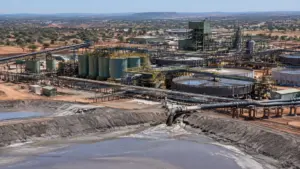
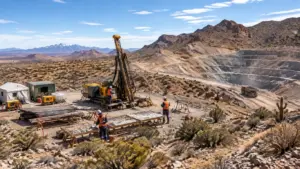
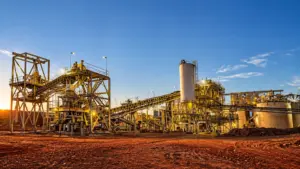
An industrial tailings recovery operation requires integrated controls for water, energy, permitting, closure and disclosure.

Konkola Copper Mines (KCM) has signed a $498 million engineering, procurement and construction contract with China NERIN Engineering for a copper recovery plant at its Chingola operations in Zambia. The facility is designed to recover about 70,000 tonnes of copper per year from existing tailings and is expected to become one of Africa’s largest plants of its kind.
The project is a significant milestone for copper supply and legacy tailings stewardship. It is also a practical test of whether mining companies can convert an environmental liability into a productive asset without creating new risks in water management, energy consumption, permitting, closure planning or public disclosure.
KCM has not publicly disclosed a firm commissioning date. The contract covers engineering, procurement, construction, commissioning support, performance testing and workforce training, but the project remains at the EPC stage. That distinction matters for investors, regulators and operators assessing execution risk.
Why KCM’s tailings plant matters for ESG compliance
Tailings recovery can improve resource efficiency by extracting copper from material that has already been mined and processed. It may also reduce the metal content and volume of legacy tailings requiring long-term management.

KCM’s broader operation already integrates underground and open-pit mining, concentrators, smelting, refining and tailings leach facilities at Nchanga. The company’s official operations overview describes Nchanga as an integrated copper complex with tailings leach infrastructure. KCM also reports ISO 14001:2015 environmental management certification and copper production of 129,000 tonnes in its FY2026 profile.

However, reprocessing does not eliminate environmental obligations. It changes the risk profile.
A new recovery plant may require:

- Hydraulic reclamation or hydro-sluicing of stored tailings;
- Slurry pumping and pipeline infrastructure;
- Acid supply and solution management;
- New residue storage or deposition areas;
- Additional water-control structures;
- Power for pumps, agitators, heating and dewatering; and
- Updated closure and post-closure plans.
The compliance question is therefore not simply whether copper can be recovered. It is whether the project can demonstrate control over the full material and water balance from excavation through final residue placement.
Wet-leach recovery: the technical trade-off
The KCM contract refers to leaching technology, but detailed process specifications for the new $498 million plant have not been publicly released. A separate technical study by KCM engineers, presented at ALTA 2024, provides useful context for the operating trade-offs.
The study examined old refractory tailings containing average copper grades of approximately 0.61%. It reported that elevated-temperature leaching produced materially higher recovery than ambient-temperature leaching under the tested conditions.
At a treatment rate of 15,000 tonnes per day, the study modelled:
- About 19,951 tonnes of annual copper production from elevated-temperature leaching;
- About 9,756 tonnes annually from ambient-temperature leaching;
- Average acid consumption of approximately 59 kilograms per tonne for elevated-temperature leaching;
- Average acid consumption of approximately 23 kilograms per tonne for ambient leaching; and
- A 10-year NPV of $358 million for elevated-temperature leaching versus $154 million for ambient leaching at an assumed copper price of $8,500 per tonne.
These figures relate to a technical case study, not a published flowsheet for the new plant. They nevertheless illustrate the central ESG and operational decision: higher recovery can require more heat, acid, pumping and materials-of-construction resilience.
A process route that looks attractive on copper recovery may be less attractive if it increases energy intensity, acid consumption or residue-management complexity beyond the assumptions used in the project approval.

Wet-leach circuits must be assessed through recovery, reagent, energy and residue performance together.
Water is the first execution control
Tailings reprocessing is fundamentally a water-management project. Stored material must be mobilised, transported and separated. Leach circuits require controlled solution volumes, while thickeners, ponds, pipelines and residue facilities must operate within defined water-balance limits.
KCM’s own technical study included hydro-sluicing facilities, a slurry pump station and a 16-kilometre pipeline in its implementation scope. It also identified the need for an alternative tailings storage facility with full environmental consideration.
For operators, the minimum decision package should include:
- A daily and seasonal water balance;
- Sources, users, recycle streams and discharge points;
- Design capacity for extreme rainfall and flood events;
- Seepage monitoring and groundwater response thresholds;
- Contingency capacity for pump or power failure; and
- A clear reconciliation between the approved design and actual operating data.
Water reporting should not be limited to annual consumption. A credible compliance dashboard should distinguish fresh-water intake, recycled water, process water, dewatering volumes, evaporation, seepage recovery and permitted discharge.
This is where the Global Industry Standard on Tailings Management becomes relevant. The standard requires lifecycle risk management, environmental and social monitoring, measurable performance objectives and public disclosure of material findings. It does not prescribe a single universal KPI list. Operators must define facility-specific indicators linked to critical controls and Trigger Action Response Plans.
Energy and acid supply can determine the permit-to-operate
Wet leaching is also exposed to power reliability. Pumps, agitators, heating systems, dewatering infrastructure and solution circulation all depend on stable electricity. KCM’s Nchanga smelter maintenance notice shows how closely the company’s existing tailings leach operations are connected to acid supply and processing continuity.
During the smelter shutdown, KCM said it would continue supplying the Tailings Leach Plant through externally sourced acid and production from a 500-tonne-per-day acid plant. For a new facility, that dependency should be addressed in the design basis rather than treated as an operating contingency.
Project teams should test:
- Grid availability and interruption scenarios;
- Backup generation or alternative power arrangements;
- Acid production, storage and transport capacity;
- Energy intensity per tonne of copper recovered;
- Heat-loss assumptions in elevated-temperature circuits; and
- Emissions associated with additional power or fuel demand.
These metrics should be integrated into permitting and financial models. A plant that meets nameplate recovery targets but cannot secure power or acid during disruptions may fail both its production plan and its environmental commitments.
Permitting must cover the changed operation
In Zambia, environmental approval is not a procedural formality. The Mines and Minerals Development Act requires prior written environmental approval before mining or mineral processing activities begin. The Zambia Environmental Management Agency, or ZEMA, is responsible for reviewing environmental assessments and issuing the relevant decision and licences.
Tailings recovery may be described as remediation or resource efficiency, but it can still represent a material change in the approved operation. The permitting package should address:
- Disturbance of legacy tailings;
- New slurry pipelines and pumping stations;
- Process water and acid handling;
- Changes to air, water and land emissions;
- New or expanded residue storage;
- Community health and safety;
- Emergency response arrangements; and
- Rehabilitation of both old and new facilities.
The Zambia EITI 2023–2024 report also records regulatory attention to tailings storage management, reinforcing the importance of design submissions, operating controls and compliance evidence.
Closure liability does not disappear after recovery
Tailings recovery can lower long-term liability, but only if the post-processing residue is demonstrably safer and properly funded.
The GISTM requires operators to plan for closure and post-closure, including financial capacity for planned closure, early closure, reclamation and monitoring. The standard also expects closure designs to consider extreme hydrological and seismic loading.
For KCM, the critical closure questions include:
- How much tailings will remain after recovery?
- Will the residual material have lower acid-generation or metal-leaching potential?
- Where will final residues be stored?
- What water treatment will be required after operations?
- Who owns the monitoring obligation if the plant closes early?
- Are closure estimates updated for the new infrastructure?
A recovery project should therefore have a separate closure cost estimate, not simply rely on the existing mine closure provision. It should also identify the point at which the company becomes responsible for a new residue facility and the financial security supporting that obligation.

Reprocessing legacy tailings can reduce historic risk while creating new closure obligations.
Linkable data table: KCM tailings recovery compliance test
| Measure | Publicly available information | Compliance implication | Decision trigger |
|---|---|---|---|
| EPC contract value | $498 million | Establishes the scale of capital and delivery risk | Confirm scope, contingencies and financing conditions |
| Planned copper output | 70,000 tonnes per year | Requires reconciliation of feed grade, recovery and operating days | Test ramp-up assumptions against representative sampling |
| Project stage | EPC contract signed; commissioning date not disclosed | Avoids treating a contract award as operational capacity | Publish construction and commissioning gates |
| Legacy tailings study grade | Approximately 0.61% copper | Supports resource definition but may not represent all stored material | Expand drilling, sampling and metallurgical testing |
| Elevated-temperature leach recovery in study | Average 70.84% copper leach efficiency | Higher recovery may increase heat and acid requirements | Set energy, acid and recovery KPIs together |
| Ambient leach recovery in study | Average 34.64% copper leach efficiency | Lower energy demand may be offset by lower production | Compare lifecycle economics and residue impacts |
| Tailings study throughput | 15,000 tonnes per day | Indicates the scale of slurry and water systems required | Validate pump, pipeline and storage capacity |
| GISTM framework | 15 principles and 77 auditable requirements | Requires lifecycle governance, monitoring and disclosure | Map project controls to the ICMM conformance protocols |
| Zambia environmental approval | ZEMA approval required before processing activity | Construction and production depend on environmental authorisation | Maintain a permit register tied to project gates |
Base, bull and bear execution cases
| Scenario | Operating assumptions | ESG and compliance outcome | Management priority |
|---|---|---|---|
| Base case | Construction progresses under the EPC contract; recovery ramps gradually; water, power and acid systems require optimisation | Compliance is achieved through staged monitoring, updated permits and transparent disclosure | Integrate commissioning data with water, energy and closure controls |
| Bull case | Representative tailings feed supports design recovery; infrastructure performs near target; permitting remains aligned with construction | Legacy risk declines faster while copper output and resource efficiency improve | Protect operating discipline and avoid expanding before controls are proven |
| Bear case | Feed variability, power interruptions, acid constraints or residue-storage delays reduce throughput | Schedule slippage, permit amendments, higher closure costs or community concern emerge | Preserve contingency capacity, disclose deviations and revalidate the design basis |
These are operational scenarios, not investment recommendations. Their value lies in linking project economics to measurable compliance conditions.
What decision-makers should require before approval
The KCM project offers a useful framework for mining companies evaluating tailings recovery across copper, lithium, nickel and other critical-mineral operations.
Before approving construction or expansion, management should require:
- A reconciled tailings inventory supported by representative sampling;
- A full water and mass balance;
- Energy and reagent intensity targets;
- Independent review of the process design and residue facility;
- A permit register connected to construction and production gates;
- A closure plan covering both legacy and newly generated residues;
- Facility-specific KPIs aligned with GISTM principles;
- Emergency response plans tested with local authorities; and
- Public disclosure that separates signed capacity, installed capacity and operating production.
The central lesson is straightforward: tailings recovery is not automatically ESG-positive. It becomes a credible compliance and stewardship strategy only when the company can demonstrate that recovery, water, energy, permitting, closure and disclosure are being managed as one operating system.
For KCM, the $498 million plant is therefore more than a copper-growth project. It is a test of whether legacy tailings can be transformed into supply without transferring risk to future operators, surrounding communities or the public balance sheet.