Gold held above $4,300 an ounce after the Federal Reserve raised its benchmark interest rate by 25 basis points and signaled that further tightening may be needed to contain inflation.

The Federal Open Market Committee lifted the federal funds target range to 3.75%-4.00%. Reuters live coverage reported that 16 of the Fed’s 18 policymakers projected at least one additional quarter-point increase by the end of 2026, underscoring the central bank’s willingness to keep policy restrictive despite growing pressure on economic activity.
The move created a sharp test for metals markets. Higher real interest rates and a potentially firmer U.S. dollar typically weigh on gold and silver, which do not generate income. Yet spot gold rose about 1.2% to roughly $4,342-$4,354 an ounce ahead of the decision, while spot silver gained about 1.6% to approximately $64.55 an ounce, according to market coverage from Reuters and Kitco.
The contradictory signals : tighter monetary policy alongside record-level precious-metals prices : are becoming central to the outlook for miners, royalty companies and metals investors.
Market snapshot
| Asset | Reported level or move | Main market driver |
|---|---|---|
| Gold | About $4,342-$4,354/oz; up roughly 1.2% | Safe-haven demand, softer Treasury yields and inflation concerns |
| Silver | About $64.55/oz; up roughly 1.6% | Precious-metals momentum and industrial-demand exposure |
| Federal funds target | 3.75%-4.00% after a 25-basis-point hike | Continued focus on inflation |
| Copper | Near a three-week low; down about 6% from its early-September record | Tariff speculation and Chinese import demand |
| Policymaker outlook | 16 of 18 officials see at least one more quarter-point hike | Prospective “higher-for-longer” policy |
Levels and changes reflect the market context reported by Reuters live coverage and Kitco around the Fed decision.

Why gold is rising despite higher real rates
The traditional relationship between gold and interest rates has become less reliable during the current rally.

When real yields rise, the opportunity cost of holding gold generally increases. Investors can earn more from cash and government bonds, while the dollar may strengthen as global capital seeks higher U.S. returns. Those forces usually create a headwind for bullion.
Gold’s resilience above $4,300 suggests that other forces are offsetting the rate effect. Persistent inflation concerns, geopolitical risk and uncertainty around fiscal and trade policy have supported demand for assets viewed as stores of value. Lower oil prices and softer Treasury yields before the Fed decision also helped precious metals, reducing some of the immediate pressure from the expected rate increase.

The market is therefore distinguishing between the level of rates and the reason rates are rising. A rate hike driven by a strong economy can be negative for gold. A hike that reinforces concerns about inflation, policy credibility or future growth can still leave room for safe-haven demand.
Kitco’s market coverage placed gold in the low-$4,300s, with trading toward the $4,342 area during the session. That leaves bullion highly sensitive to changes in Treasury yields, the dollar and the Fed’s communication about future policy.
The key question is whether the central bank’s projections produce a sustained rise in real yields or whether investors interpret the tightening cycle as a response to inflation risks that remain difficult to control.
What another hike could mean for gold miners
A second hike would not automatically translate into a lower gold price, but it would raise the volatility risk for gold equities.
Mining shares typically offer greater sensitivity to changes in bullion prices because operating costs are relatively fixed over short periods. When gold rises while fuel, labor and processing costs remain stable, margins can expand quickly. The reverse is also true: a pullback in bullion can compress valuations even when production remains steady.
Higher rates also affect the financing side of the industry. Developers and smaller producers may face greater borrowing costs, more demanding project-return thresholds and a narrower pool of available capital. Companies with large construction budgets or near-term refinancing needs are more exposed than established producers with strong balance sheets.
The market read-through is more favorable for low-cost producers and royalty companies. Royalty and streaming businesses typically provide capital to mining operators in exchange for a percentage of future production or revenue. Their lower direct exposure to energy, labor and sustaining-capital costs can make cash flow more defensive than that of traditional producers.
That is the basic “company call-out” investors are likely to focus on: large, low-cost gold producers and established royalty names such as Franco-Nevada and Wheaton Precious Metals may be better insulated from operating-cost inflation than highly leveraged developers, although their share prices remain exposed to valuation, financing and commodity-market risk. This is a market comparison, not an investment recommendation.

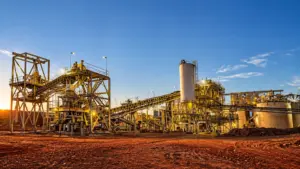
Modern gold-mining and processing infrastructure operating after dark.
For producers, the most important metrics will be all-in sustaining costs, production guidance, reserve replacement and capital discipline. A high gold price does not guarantee stronger equity performance if a company is struggling with grade declines, permitting delays or cost overruns.
Skillings has previously examined the broader relationship between bullion prices, inflation and monetary policy in its gold price outlook. The same framework applies now: headline metal prices matter, but cash margins and execution determine which companies capture the benefit.
Silver carries a different demand profile
Silver has followed gold higher, but its industrial exposure gives the market a second transmission channel.
Silver is used in electronics, solar equipment, electrical contacts and other industrial applications. That means it can benefit from manufacturing and energy-transition investment, but it can also suffer when higher borrowing costs slow industrial activity.
The metal’s advance toward $64.55 an ounce reflects strong momentum in precious metals, but the industrial component makes silver more economically sensitive than gold. Investors will be watching whether physical demand remains firm as manufacturers manage elevated prices and whether solar and electrification demand continues to absorb supply.
For silver miners, the mix of revenue matters. A company producing silver as a primary metal may respond differently to price changes than a copper, lead or zinc producer where silver is a byproduct. Byproduct production can provide an important revenue credit, but it is usually tied to the economics of another mine.
The result is a market in which silver equities may offer more upside torque than gold equities during a sustained metals rally, but also greater exposure to industrial slowdowns and base-metals volatility.

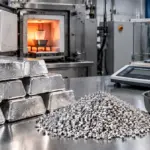
Industrial components illustrate silver’s exposure beyond investment demand.
Copper is sending a different signal
Copper has not shared the same momentum as gold and silver.
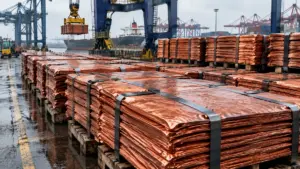
LME copper has pulled back roughly 6% from its early-September record and steadied near a three-week low. Market flows have been shaped by tariff speculation and Chinese import demand, with traders assessing whether near-term buying is strong enough to offset uncertainty over trade policy and global growth.
The copper market deserves careful treatment because reports on trade flows and policy remain uneven. There is no basis here to claim a new record copper price or a Chinese export ban. Instead, the immediate story is one of a market adjusting to changing expectations around tariffs, inventories and Chinese demand.
Copper’s sensitivity to economic growth makes it a useful counterpoint to gold. Gold is responding to uncertainty and the need for portfolio protection. Copper is more dependent on industrial activity, construction, power investment and manufacturing.
That divergence also affects mining-company valuations. A gold producer can benefit from safe-haven demand even as economic concerns rise. A copper producer may face a more complicated outlook if higher rates delay infrastructure spending or weaken construction, despite copper’s long-term importance to grids, electric vehicles and energy-transition systems.

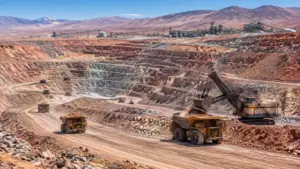
Copper mine benches, stockpiles and processing infrastructure in an arid region.
Skillings’ coverage of the copper tariff test and the 2026 copper price outlook provides further context for the interaction between trade policy, smelter economics and project valuations.
What markets will watch next
The Fed’s decision has shifted attention from whether rates would rise to how long restrictive policy will remain in place.
For precious metals, the next signals will come from Treasury yields, the dollar, inflation data and the Fed’s forward guidance. If real yields rise sharply, gold and silver may face renewed pressure even if geopolitical and inflation risks remain elevated. If yields stabilize while concerns about currency purchasing power persist, bullion could continue to attract defensive capital.
For miners, the focus will be on margins rather than price headlines. Investors will assess whether elevated gold prices are translating into stronger free cash flow, debt reduction and disciplined growth. Royalty companies will be judged on the quality of their counterparties, the diversity of their asset portfolios and the durability of future production streams.
Copper will remain tied to trade and Chinese demand. Any improvement in physical buying could support prices, but tariff uncertainty and tighter financial conditions remain important risks.
The market is now balancing two competing narratives: monetary tightening designed to restrain inflation and precious-metals prices signaling that investors remain concerned about inflation, policy risk and the durability of economic growth. That tension is likely to keep gold, silver and mining equities volatile even as the long-term case for critical minerals and copper remains intact.