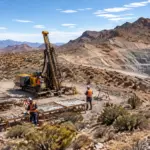
Artisanal gold-mining activity in Nigeria’s Niger State, where a security crackdown has raised questions about detention conditions, accountability and community risk.

At least 33 people suspected of illegal gold mining died while in the custody of Nigeria’s Security and Civil Defence Corps after raids in Niger State, triggering protests in the state capital and a federal investigation into the circumstances of the deaths.
The detainees were arrested during operations in the Wushishi–Lukoto area west of Minna on Sept. 15 and 16, according to reporting by Reuters. Their bodies were taken to General Hospital in Minna.
The death toll remains disputed. Several reports have cited at least 33 fatalities, while Niger State Gov. Umaru Bago said 37 people had died. Authorities have not yet released a single, definitive count.
The cause of death is also unresolved. The Niger State command of the NSCDC initially referred to a suspected disease outbreak. The agency’s national headquarters later said the cause had not been established and would be determined through medical and laboratory examinations.

Nigeria’s Interior Minister Olubunmi Tunji-Ojo suspended Niger State NSCDC commandant Suberu Siyaka Aniviye pending a full investigation.

Protests follow deaths in custody
The deaths sparked protests in Minna, where demonstrators, including miners and relatives of the detainees, demanded answers and accountability. Some vehicles and other property were damaged, and security forces were deployed to restore calm.
Gov. Bago declared three days of mourning in the state and postponed planned political activity, according to AFP reporting.

The police opened a separate investigation, while the NSCDC said it had begun an internal review. The parallel inquiries will need to establish not only the medical cause of death but also the conditions in which the detainees were held, how quickly officials responded and whether proper procedures were followed during the raids and detention.
The distinction is important. A confirmed infectious disease outbreak would raise questions about medical screening, isolation, notification and emergency response. If overcrowding, inadequate ventilation or other detention conditions contributed to the deaths, the investigation would also have to examine custodial management and command responsibility.
Reports cited by AFP referred to preliminary intelligence suggesting that overcrowding and poor ventilation may have played a role. That account has not been established as fact, and Nigerian authorities have said medical examinations are required before determining what happened.
What is known about the incident
| Issue | Current information | Status |
|---|---|---|
| Location | Minna, Niger State, Nigeria | Confirmed in multiple reports |
| Arrests | Suspected illegal gold miners detained after raids in the Wushishi–Lukoto area | Reported |
| Reported deaths | At least 33; the state governor cited 37 | Final toll not settled |
| Initial explanation | Suspected disease outbreak | Not medically confirmed |
| Other reported concern | Overcrowding and inadequate ventilation | Under investigation |
| Official action | NSCDC state commandant suspended | Confirmed |
| Investigations | Federal, police and NSCDC inquiries | Ongoing |
| Public response | Protests and deployment of security forces in Minna | Reported |
The investigation is unfolding against a broader security and governance campaign. Nigeria has been intensifying efforts to curb illegal artisanal mining, which officials say contributes to environmental damage, lost public revenue and insecurity.
Crackdown exposes a difficult policy balance
Niger State is rich in mineral deposits and has attracted thousands of artisanal miners, many of whom work outside formal licensing and safety systems. Gold production in the area also intersects with wider concerns about criminal networks, informal taxation and the movement of unreported minerals into international markets.
The government’s case for enforcement is substantial. Unregulated mining can damage farmland and waterways, weaken public oversight and deprive communities and the state of revenue. Informal pits can also become unsafe as operators expand shafts without geotechnical studies, engineered support, ventilation systems or emergency access.
But enforcement can create its own risks when authorities treat miners primarily as security suspects rather than workers operating within a complex economic system.
The deaths in Minna place detention practices at the center of Nigeria’s mining-governance debate. Operators, regulators and investors will be watching whether the inquiry is transparent, whether families receive information and compensation, and whether the government publishes findings that can be independently assessed.
A crackdown that improves safety and formalizes production could strengthen the sector’s long-term credibility. A crackdown associated with mass deaths in custody, opaque investigations or indiscriminate enforcement could deepen distrust in mining communities.

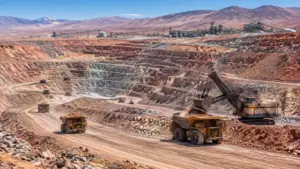
A security presence near a rural mining area reflects the growing overlap between mineral enforcement, public order and community relations.
Human-rights risk is becoming an investment issue
For companies and investors assessing Nigerian or wider West African gold exposure, the incident is not only a human-rights concern. It is also a material governance risk.
The immediate questions include:
- How are artisanal miners identified, detained and processed?
- Are detainees given access to medical care and legal representation?
- Are mine-site raids supported by documented evidence and clear procedures?
- Are local authorities equipped to manage large groups of detainees safely?
- How are families and communities notified after deaths or injuries?
- Are security personnel trained in human-rights standards?
- Can companies demonstrate that gold entering their supply chains is not linked to abuse, coercion or unlawful payments?
These questions affect more than government agencies. Formal mining companies, traders, refiners, banks and technology providers can all face exposure if their supply chains intersect with material produced through illegal or abusive activity.
The Organisation for Economic Co-operation and Development’s responsible-minerals guidance emphasizes risk-based due diligence for companies sourcing minerals from conflict-affected and high-risk areas. While the Minna deaths involve state custody rather than a specific corporate mine, the event highlights the kind of operating environment that due-diligence systems are designed to identify.
Companies evaluating assets in Nigeria and neighboring markets may therefore need to look beyond licenses, resources and production forecasts. They will also need to examine security arrangements, community agreements, government relationships, artisanal-mining interfaces and grievance mechanisms.
Artisanal mining safety crisis extends across the region
The incident comes as artisanal and small-scale mining safety remains a major concern across Africa.
Earlier this week, a gold-mine collapse in Sudan’s West Kordofan killed at least 60 people, according to Reuters sources, with other reports putting the toll higher. The collapse was linked in reporting to unstable underground workings, limited safety measures and inadequate rescue capacity.
The circumstances differ from the Nigerian deaths, but the wider pattern is similar: large numbers of people depend on informal gold mining while working with limited technical support, weak enforcement and few emergency resources.
Across West Africa, governments have attempted to respond through licensing reforms, seasonal restrictions, mine closures and formalization programs. Such measures can reduce hazards if they provide realistic legal pathways for miners to work safely. Enforcement that removes livelihoods without offering alternatives can instead push activity into more remote and dangerous areas.
The policy challenge is particularly acute in regions where gold prices are high and employment opportunities are limited. A miner may face a choice between entering an unsafe pit or losing a critical source of household income. That economic reality does not excuse illegal activity, but it helps explain why enforcement alone has repeatedly struggled to end informal mining.

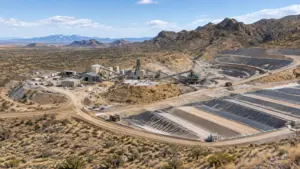
Uncontrolled artisanal mining can leave open pits, disturbed ground and damaged water systems, increasing pressure for stronger regulation.
What operators and investors should monitor
The Nigerian investigation could have consequences for the country’s mining policy and for perceptions of West African gold exposure more broadly.
Key indicators include:
- The final medical findings and death toll. Authorities will need to clarify whether disease, detention conditions or multiple factors contributed to the deaths.
- The scope of accountability. The suspension of the state commandant is an initial step, but the inquiry may examine decisions by officers, medical personnel and other officials.
- Transparency of the investigations. Public confidence will depend on whether the findings are released promptly and supported by evidence.
- Changes to detention and raid procedures. Any new rules on medical screening, capacity limits, ventilation or emergency response would signal whether authorities are addressing systemic risk.
- Community engagement. Mining companies and officials will need to rebuild trust with residents who see enforcement as a threat to livelihoods or personal safety.
- Supply-chain controls. Traders and refiners may face additional scrutiny over the origin and handling of Nigerian gold.
Nigeria remains an important and potentially underdeveloped mining market, with gold alongside deposits of tantalite, copper, lithium and other minerals. Its resource potential is significant, but the investment case depends on more than geology.
Skillings’ coverage of gold mining and central-bank demand has focused on prices, production economics and the strategic importance of the metal. The Minna incident underscores another part of the equation: social license, public-sector conduct and the credibility of institutions responsible for regulating the industry.
The deaths in custody are first and foremost a human tragedy. They also expose the consequences of weak safeguards at the intersection of mining, security and local livelihoods. Until Nigerian authorities establish what happened and demonstrate that similar failures will not recur, the incident will remain a significant test of the country’s mining governance and of investor confidence in West African gold.
Sources: Reuters; AFP; OECD responsible-minerals guidance.