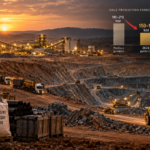
Copper concentrate handling systems at a large-scale smelting complex.

By Charles Pitts
Copper’s record price is being accompanied by an unusual split in the supply chain: miners are gaining pricing power while smelters are struggling to secure the material they need to operate.
Treatment and refining charges, or TC/RCs, have fallen from historical levels of roughly $300-$400 per dry metric tonne to zero on some annual contracts and deeply negative levels in the spot market. Some industry coverage citing data from the Indian Primary Copper Producers Association has put spot assessments near -$221.89 per dry metric tonne, although market benchmarks vary by grade, location, contract terms and calculation methodology.
At the same time, copper has traded near a record $14,875 per tonne, according to market reporting and Skillings’ own price tracking. The combination is reshaping the economics of copper production, concentrating value with miners that sell concentrate while exposing standalone smelters to a severe margin squeeze.

Why negative TC/RCs matter
Treatment charges are normally paid by miners to smelters. They compensate processors for converting copper concentrate into blister copper, anode and eventually refined cathode. Refining charges are usually calculated separately, often in cents per pound of contained copper.

When TC/RCs fall, smelters are competing more aggressively for limited feedstock. When they turn negative, the commercial relationship reverses: the smelter effectively pays for access to concentrate.
The market has moved through that threshold rapidly. The 2026 annual benchmark agreed between Antofagasta and a Chinese smelter was reported at $0 per tonne and 0 cents per pound, compared with approximately $21.25 per tonne and 2.125 cents per pound in 2025. That benchmark was already a sharp break from the positive charges that prevailed through much of the previous cycle.

Spot conditions have been weaker still. Shanghai Metals Market-linked coverage and other market assessments have placed clean concentrate TCs at deeply negative levels, with several readings in the range of minus $100 to minus $170 per tonne. The near-minus-$221.89 assessment cited in IPC coverage illustrates the extreme end of the market rather than a single universal benchmark.
The distinction matters. A headline TC, a combined TC/RC calculation and the economic charge attached to a specific concentrate shipment are not always comparable. But they point in the same direction: available concentrate is scarce relative to the amount of smelting capacity seeking feed.

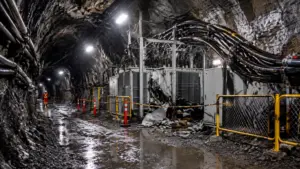
Copper mine and concentrator infrastructure in an arid, mountainous setting.
Chilean output is tightening the feedstock market
The immediate problem is not a lack of smelting capacity. It is a shortage of concentrate.
Chile remains the world’s largest copper-producing country, but output has struggled to recover to earlier highs. Industry reporting has described Chile’s second-quarter production as its weakest in at least 19 years. Official figures cited in market analysis showed May output of about 423,623 tonnes, down 12.9% year over year, while cumulative production for the first five months was approximately 2.04 million tonnes, down nearly 8.8% from the comparable period.
That weakness has consequences beyond Chile. The global concentrate market depends on a relatively small number of major mines, and disruptions at large operations can remove a meaningful share of expected annual supply. Declining grades, water constraints, maintenance requirements, technical incidents and project delays have limited the market’s ability to replace lost volumes quickly.
The result is a structural mismatch:
- Mine supply is growing slowly or underperforming expectations.
- Chinese and other Asian smelting capacity has expanded.
- Smelters are competing for fewer available tonnes of concentrate.
- Miners can demand better commercial terms because alternative buyers are scarce.
The situation is also visible in the relationship between concentrate charges and refined copper prices. A high copper price does not automatically protect a smelter. The smelter must first obtain concentrate, and the cost of securing that material can absorb much of the value created by selling refined metal.
Smelter margins are being squeezed from both sides
Smelters generate revenue from several sources, including TC/RCs, copper sales, by-products and operational efficiencies. Negative treatment charges remove one of the most stable elements of that revenue mix.
Some processors can offset the pressure through sulphuric acid sales, precious-metal credits or access to lower-cost power. Others can increase scrap consumption, although scrap availability and quality impose limits. These offsets may keep facilities operating, but they do not eliminate the underlying problem.
The International Energy Agency has warned that low treatment charges are creating strategic pressure for smelters, particularly where facilities were built on the assumption of sustained access to concentrate at positive processing fees.
For miners that sell concentrate, the impact is different. A low or negative TC can increase the share of the copper price captured before shipping, although realized revenue still depends on concentrate grade, recovery, penalties, freight, payable metal terms and contract structure.
Integrated producers sit between the two positions. They may benefit from strong mine margins while absorbing the weaker economics of their own smelting operations. The internal transfer price can soften the impact, but the industry-wide imbalance remains visible in consolidated results and capital-allocation decisions.
Chinese coordination is the key swing factor
China is central to the outlook because it accounts for a large share of global copper smelting and refining capacity. Chinese smelters have continued producing refined copper at high levels even as concentrate availability has tightened.
That approach cannot continue indefinitely if processors are losing money on each additional tonne. The critical question is whether smelters coordinate maintenance, reduce operating rates or impose broader curtailments.
If Chinese smelters act collectively, the consequences could move through the market in two directions. First, lower concentrate demand could help stabilize TC/RCs. Second, reduced refined copper output could tighten the cathode market and support prices, particularly if exchange inventories remain low.
If discipline fails, smelters may continue competing for feedstock to protect market share, preserve employment or maintain long-term customer relationships. That would prolong negative charges and keep pressure on processor margins. It could also result in excess refined supply if demand weakens at the same time.
This makes Chinese operating rates one of the most important variables in the copper price forecast. The market is not only asking whether mines can produce more. It is asking whether smelters will accept sustained losses to keep processing.

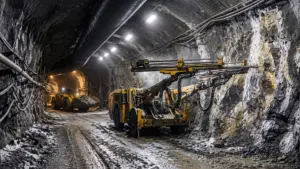
Industrial furnace and material-handling systems inside a copper smelter.
Tariff-related stockpiling is distorting regional premiums
The copper price rally has also been influenced by anticipated U.S. tariff measures. Buyers and traders have moved refined copper toward the United States to secure supply ahead of possible duties, creating a policy-driven premium for metal that can be delivered into the U.S. market.
Those flows can make global conditions appear tighter or looser depending on location. Copper shipped to the United States is not available to buyers in Asia, even though it remains part of global inventory. Regional premiums therefore become a more important signal than the headline LME price alone.
Market reporting has cited a Yangshan import premium near $118-$121 per tonne, while domestic Shanghai physical premiums have reached approximately 645 yuan per tonne during periods of tight nearby availability. These figures indicate that buyers were willing to pay above futures-linked prices for prompt metal, although such premiums can also reflect temporary logistics and stockpiling effects.
The Skillings copper market analysis similarly identified backwardation, low exchange inventories and regional trade flows as important indicators of physical tightness.
The risk for decision-makers is that a record LME price may combine several different forces: genuine concentrate scarcity, strategic demand, tariff positioning and temporary regional dislocation. Those forces can reinforce each other, but they do not have the same durability.
Copper price scenarios
The following framework separates the likely price paths from the underlying operating conditions.
| Indicator or scenario | Reference level | Market interpretation |
|---|---|---|
| Historical TC benchmark range | $300-$400/t | Normalized positive processing economics |
| 2025 annual benchmark | About $21.25/t and 2.125¢/lb | Sharp deterioration from prior norms |
| 2026 annual benchmark | $0/t and 0¢/lb | No processing fee on benchmark-linked material |
| Recent negative spot range | Roughly -$100 to -$170/t | Smelters competing for scarce concentrate |
| Extreme spot assessment cited in IPC coverage | Near -$221.89/t | Severe stress in selected spot transactions |
| Copper record tracked by Skillings and market reports | About $14,875/t | Tight supply plus tariff-related premium |
| Base case | $11,000-$13,000/t | High but more normalized price after policy distortion fades |
| Bull case | $14,000-$15,500/t | Further mine disruptions, low stocks and smelter curtailments |
| Bear case | About $9,000-$11,000/t | Demand weakness, substitution and failure of smelter discipline |
Base case: $11,000-$13,000 per tonne
The base case assumes that copper remains structurally supported but retreats from its most extreme highs. U.S. tariff-related stockpiling eases, regional premiums normalize and some supply returns. However, weak Chilean output, limited project growth and low concentrate availability prevent prices from returning to historical averages.
Under this scenario, TC/RCs remain unusually low, but Chinese smelter coordination prevents the market from deteriorating indefinitely.
Bull case: $14,000-$15,500 per tonne
The bull case requires a continuation of mine disruptions, further declines in Chilean production or additional delays at major operations. It would also assume that smelter curtailments reduce refined supply faster than demand weakens.
Persistent tariff uncertainty, low exchange inventories and strong demand from grids, data centers and electrification infrastructure could keep regional premiums elevated and support prices near or above the previous record.
Bear case: $9,000-$11,000 per tonne
The bear case is linked to weaker global manufacturing, delayed infrastructure spending and a failure by smelters to impose meaningful discipline. If processors keep operating at high rates while demand slows, refined copper supply could rise even as negative TC/RCs persist.
Higher prices could also accelerate substitution with aluminum in selected applications and bring more scrap into the market. Those responses would not solve the long-term supply challenge, but they could reduce near-term price pressure.
The economic divide between miners and smelters
Negative smelter fees are more than a pricing anomaly. They are a signal that the copper industry’s bottleneck has moved upstream.
Miners with marketable concentrate have greater negotiating leverage, particularly when their material is clean, high grade and available under flexible delivery terms. Standalone smelters face the opposite problem: they may have the equipment and capacity but not enough feedstock to run profitably.
For integrated producers, the effect depends on the balance between mine output and processing exposure. For policymakers, the challenge is strategic. Persistent negative TC/RCs could weaken smelting capacity in regions that want greater supply-chain security, even while copper prices signal strong demand for the metal.
The next decisive indicators will be Chinese operating rates, Chilean production, concentrate contract settlements, regional premiums and visible inventories. Until those indicators improve together, the copper market is likely to remain defined by scarcity, and by an unusual transfer of value from smelters to miners.