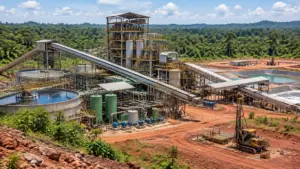
Ewoyaa is being advanced as Ghana’s first commercial lithium-producing mine.

By Charles Pitts
Huayou Cobalt has cleared a major Australian regulatory hurdle in its proposed US$210 million acquisition of Atlantic Lithium, moving the Chinese battery-materials group closer to control of the Ewoyaa lithium project in Ghana.
Atlantic Lithium said Australia’s Foreign Investment Review Board, or FIRB, had issued a no-objection notification for the proposed scheme acquisition. The approval satisfies one condition under the parties’ scheme implementation deed, but it does not complete the takeover.
The transaction still requires shareholder approval, court sanction and additional regulatory clearances in China, Ghana and West Africa. Atlantic Lithium has indicated that a shareholder meeting is expected in November, with implementation targeted for December if the remaining conditions are met.
The distinction matters for Ewoyaa. The project has secured key permits and parliamentary ratification, but it has not yet reached a final investment decision, or FID, on construction and production.

Deal facts
| Item | Details |
|---|---|
| Buyer | Zhejiang Huayou Cobalt |
| Target | Atlantic Lithium |
| Transaction value | Approximately US$210 million |
| Structure | Australian scheme of arrangement |
| Indicative consideration | About US$0.25486 per share, or A$0.354 |
| Core asset | Ewoyaa Lithium Project, Ghana |
| Australian approval | FIRB no-objection notification received |
| Shareholder vote | Expected in November |
| Target implementation | Expected in December, subject to conditions |
| Product | Spodumene concentrate produced in Ghana |
The deal follows a broader push by Huayou to secure upstream battery-materials supply. The company has built an integrated position across cobalt, nickel and lithium, with mining, refining and precursor-material operations serving battery manufacturers.
For Huayou, Ewoyaa offers access to a permitted West African spodumene project with proximity to Ghanaian transport infrastructure and the port of Takoradi. For Ghana, the proposed transaction could bring a well-capitalised operator into the country’s first large-scale lithium development, while intensifying scrutiny over ownership, value addition and the destination of the concentrate.
Ewoyaa’s significance for Ghana
Ewoyaa is located in Ghana’s Central Region, approximately 100 kilometres west of Accra and about 110 kilometres from Takoradi port. Atlantic Lithium’s project information identifies a JORC-compliant mineral resource of 36.8 million tonnes grading 1.24% lithium oxide, supported by more than 168,000 metres of drilling.
The project’s definitive feasibility study outlines conventional open-pit mining and processing through crushing and dense-media separation. The planned product is spodumene concentrate, a feedstock that can be converted into lithium chemicals for use in electric-vehicle batteries and energy-storage systems.
Ghana’s Parliament ratified the Ewoyaa mining lease in March, making it the first lithium mining lease in the country to receive parliamentary ratification. The project also has an environmental permit, a mine operating permit, a land-use certificate and a water-use permit, according to Atlantic Lithium and Ghanaian regulatory reporting.
Those milestones substantially reduce permitting uncertainty. They do not, however, guarantee that construction will begin immediately or that the mine will reach commercial production. Capital deployment, engineering, procurement, construction contracting, community commitments and final board approval remain important steps.

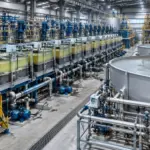
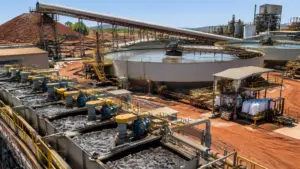
Ewoyaa’s planned flowsheet is based on conventional crushing and dense-media separation.
Control of supply and offtake
The proposed acquisition would give Huayou control of Atlantic Lithium, the developer and operator of Ewoyaa. Separate arrangements involving Elevra Lithium are also relevant because they cover an interest in the Ghana portfolio and rights linked to future spodumene concentrate.
Atlantic Lithium has previously disclosed that its funding agreement with Elevra enables offtake covering 50% of annual spodumene concentrate production at market prices, subject to the funding and earn-in arrangements. A Huayou-controlled structure would therefore place a major battery-materials producer closer to both the mine and a significant portion of its future product.
That vertical integration could matter in a lithium market where refiners have periodically faced shortages of suitable spodumene feedstock. Recent market reporting has placed SC6 spodumene delivered to China broadly in the low-to-mid US$2,000-per-tonne range, below a 2026 peak near US$2,640 but still high enough to support renewed interest in development-stage hard-rock projects.
Prices remain sensitive to mine restarts, Chinese conversion capacity, electric-vehicle sales, energy-storage demand and the timing of new supply from Australia, Africa and South America. Ewoyaa’s commercial case will therefore depend not only on its resource and permits, but also on its ability to produce a consistent concentrate at competitive costs.
The project is currently permitted for mining and on-site concentrate processing. Public project information does not establish a binding commitment to build a lithium carbonate or lithium hydroxide refinery in Ghana. That distinction is central to the country’s value-addition debate.
Downstream processing remains a policy question
Ghanaian authorities have signalled that lithium development should deliver more than a raw-material export stream. The government has sought greater local participation, stronger fiscal returns and value addition across strategic minerals.
At Ewoyaa, the current development concept centres on producing spodumene concentrate in Ghana for shipment to downstream converters. A chemical refinery could capture more value domestically, but it would require additional capital, technical expertise, reagent supply, energy and water infrastructure, as well as a clear commercial route to battery-grade products.
The proposed Huayou takeover could strengthen the argument for downstream integration because Huayou already operates in battery chemicals and precursor materials. It also raises questions about where conversion would occur and how Ghana would participate in the higher-value stages of the supply chain.
The answer may depend on future agreements between Huayou and Ghanaian authorities rather than on the takeover itself. Ownership of a mine does not automatically establish a refinery, cathode-materials plant or battery manufacturing operation.

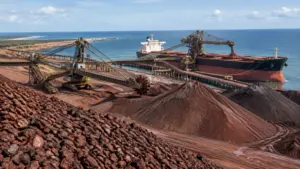
Takoradi provides an important logistics link for Ghana’s potential spodumene exports.
Chinese capital meets Western diversification policy
The transaction also highlights a growing tension in critical-minerals markets.
Western governments have encouraged new lithium, copper, nickel and rare-earth supply outside China to reduce exposure to concentrated refining and processing capacity. The United States, European Union and allied governments have developed financing, permitting and offtake initiatives designed to support alternative supply chains.
At the same time, Chinese companies remain among the most experienced and financially capable developers of battery-materials projects. Their involvement can accelerate mine construction, provide technical expertise and connect new operations to established chemical-conversion networks.
Huayou’s proposed acquisition therefore presents two competing interpretations. From one perspective, it could help bring Ghanaian lithium into production more quickly through access to integrated capital and processing expertise. From another, it could place a strategically important West African resource under the control of a Chinese battery-industry group at a time when Western policymakers are seeking greater supply-chain diversification.
For Ghana, the practical priority will be securing durable economic benefits while maintaining control over permitting, taxation, local content, environmental obligations and future processing commitments.
What remains before closing
FIRB approval removes one major condition, but the takeover is not yet complete. The principal remaining milestones include:
- Court approval in Western Australia. The scheme must receive formal judicial sanction before it can be implemented.
- Atlantic Lithium shareholder approval. Shareholders are expected to receive a scheme booklet before voting at the proposed meeting.
- Chinese regulatory approvals. Huayou must complete the relevant outbound-investment and other regulatory processes in China.
- Ghanaian approvals. The transaction remains subject to approvals and related matters involving Ghanaian authorities, including the Securities and Exchange Commission and Ghana Revenue Authority.
- ECOWAS competition clearance. Regional competition approval is also expected to be required.
- Transaction implementation. Completion is targeted for December, subject to all conditions being satisfied.
- Project FID. Even after the takeover closes, Huayou and its partners must approve the construction and financing plan for Ewoyaa.
The final milestone is the one most relevant to future production. Regulatory clearance for a corporate transaction changes ownership prospects; it does not commit the new owner to a construction schedule or establish a firm first-production date.

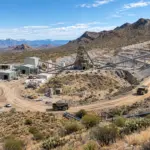
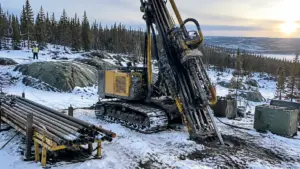
Ewoyaa’s hard-rock geology supports a conventional spodumene-concentrate flowsheet.
A strategic step, not the finish line
Huayou’s Australian clearance advances a transaction that could reshape the ownership and financing of Ghana’s emerging lithium industry. If completed, the acquisition would give a major Chinese battery-materials company control of a well-advanced spodumene project with permits, parliamentary backing, infrastructure access and an existing offtake framework.
But several conditions remain outstanding, and Ewoyaa still needs a final investment decision before construction can proceed.
The next phase will show whether Huayou’s involvement produces a faster path to Ghanaian concentrate production, a broader downstream commitment or both. It will also test how Ghana balances foreign capital and project execution against its goal of retaining more value from critical-mineral resources.
Sources: Atlantic Lithium’s Ewoyaa project overview, FIRB approval summary, and Skillings’ earlier report on the Huayou-Atlantic transaction.