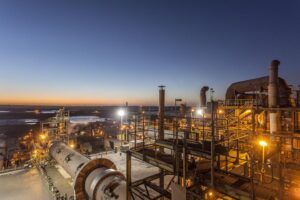
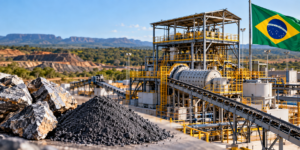
Westwin Elements plans to spend $502 million over the next five years on the Westwin Natchez nickel refinery, a commercial-scale, high-purity nickel plant in Natchez, Mississippi. The project targets a real gap in the US critical minerals supply chain: the country barely refines any of its own nickel today.

What the Westwin Natchez Nickel Refinery Will Produce
The Natchez project would produce 18,000 tonnes a year of Class 1 high-purity nickel in its first stage. Westwin targets 2029 for commissioning. The company completed a bankable feasibility study. It has also secured a long-term lease at the Belwood Industrial Site, about 145 km southwest of Jackson, near Natchez’s inland port on the Mississippi River.
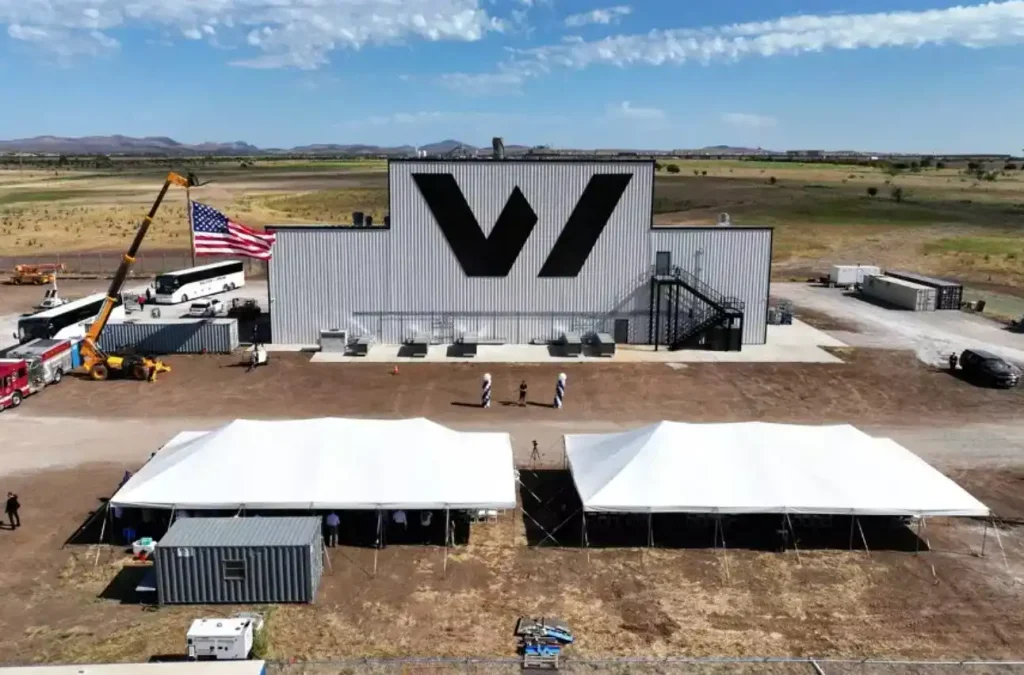
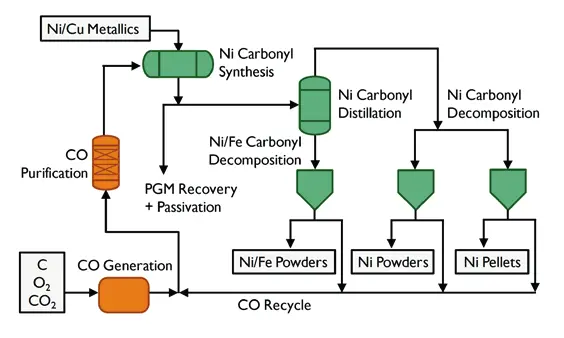
The plant builds directly on work already underway at Westwin’s demonstration facility in Lawton, Oklahoma. That 20-tonne-per-year operation has completed multiple production runs using carbonyl refining technology. It produces nickel powder at 99.9% purity or better. Westwin designed Natchez to scale that same process to commercial volume on US soil for the first time.
“Westwin was founded with the mission of delivering a win for the West and restoring the blue-collar American dream by bringing a critical industry back home,” CEO KaLeigh Long said in the company’s announcement. “The Natchez site gives us the capacity to produce American-made Class 1 nickel at scale, strengthening a critical domestic supply our country needs while creating high-paying careers.”
Why Class 1 Nickel Is the Part That Matters
Not all nickel works the same way, and that distinction is central to why the Westwin Natchez nickel refinery matters. Class 1 nickel is refined to at least 99.8% purity. That grade is required for stainless steel, specialty alloys, aerospace components, defense applications, and increasingly, EV battery cathodes. Class 2 nickel is a lower-purity byproduct form. Most of those applications can’t use it without further processing.
More Read
The US currently produces almost none of its own Class 1 supply. The US Geological Survey’s most recent Mineral Commodity Summaries puts the country’s only active nickel mine, Michigan’s Eagle Mine, at roughly 8,000 tonnes of nickel concentrate in 2024. Smelters in Canada and overseas process that concentrate; US refineries do not. USGS pegs net US nickel import reliance at 48% once recycled scrap is counted, but notes that primary nickel reliance runs “nearly 100%” excluding scrap. Canada supplies 44-46% of US primary nickel imports today, with Norway, Australia, and Brazil supplying most of the rest.

If builders complete Natchez as planned, it would become one of the first facilities actually refining Class 1 nickel at commercial scale inside the United States. That’s a different achievement than mining nickel-bearing ore and shipping it elsewhere for the processing step that makes it usable.
The Financing Behind Natchez
Westwin says it has raised or secured $100 million since its 2022 founding. That capital came through equity, convertible instruments, and financing backed by private investors and family offices, separate from the $502 million Natchez build itself. More significantly, the company reports $1.7 billion in binding, multiyear sales agreements already in place. Those include a seven-year agreement with metals trader Traxys covering 10,000 tonnes of high-purity nickel briquettes annually, plus a separate agreement covering nickel powder and briquettes.
More Read

Westwin says it already has binding feedstock and offtake agreements to support Natchez’s first production stage. The company is continuing financing, engineering, and site development work as it moves toward construction. It projects the first stage will create 134 full-time jobs at an average salary of about $84,000.
Why Nickel Made the Critical Minerals List
Nickel’s spot on the US critical minerals list traces to its role in high-strength steel, rechargeable batteries, aerospace components, defense systems, and specialty alloys. A loss of supply access in these areas would carry real industrial consequences, not just economic ones. Indonesia dominates global nickel mine production. USGS estimates Indonesian output grew roughly 13% in 2025 alone, as new operations continued to ramp up, pushing global mine production to an estimated 3.9 million tonnes. That concentration mirrors a pattern across other critical minerals: production and processing capacity sit in a small number of countries, and downstream industries stay exposed whenever access tightens.
What to Watch With the Westwin Natchez Nickel Refinery
Natchez is a feasibility study and a signed lease today, not yet a built refinery. Commissioning isn’t targeted until 2029. That gives the project roughly three years to clear financing, permitting, and construction before it can start closing the supply gap it targets. The binding offtake agreements with Traxys and others send a stronger signal than an announcement alone, since they represent committed buyers rather than speculative capacity. They still don’t guarantee the plant gets built on schedule or at the projected cost.
Watch Westwin’s Lawton demonstration plant for the clearest early signal. Natchez is explicitly designed to scale the same carbonyl refining process Lawton already runs, rather than commercialize something unproven. Scaling a working process carries meaningfully lower risk than commercializing new technology. But lower risk isn’t the same as low risk for a facility that doesn’t exist yet.