
Brazil’s Supreme Federal Court has temporarily suspended the installation licence for Belo Sun Mining’s Volta Grande gold project in Pará state. The project now sits in a holding pattern until a settlement agreement with Brazil’s Indigenous rights authority receives judicial approval.

The court partially granted a request from Brazil’s Federal Public Prosecutor’s Office. It suspended an earlier lower-court ruling that had reinstated Volta Grande’s installation licence. The suspension holds until Belo Sun’s agreement with Brazil’s National Foundation of Indigenous Peoples, known as Funai, clears the Federal Regional Court of the 1st Region.
Belo Sun said the settlement has already been submitted to that court. Approval is pending.
What the Ruling Says
Justice Edson Fachin wrote the court’s decision. He cited the scale of the project as the basis for caution. Continuing implementation at this stage, he said, would risk serious harm to public order and the environment, given the project’s potential impacts on the region.
Fachin also pointed to cumulative pressure from the nearby Belo Monte hydroelectric dam, one of the largest in the world. He argued that where existing impacts are already substantial, new projects require a higher standard of assessment before they proceed.
More Read
The court’s action does not close the path to development. It conditions the reinstatement of the licence on the completion of an approved settlement process between the company and Funai. That process is underway.

What the Project Is
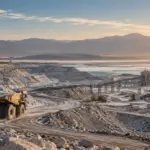
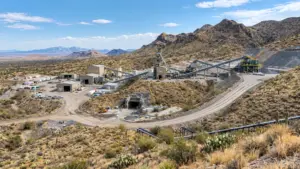
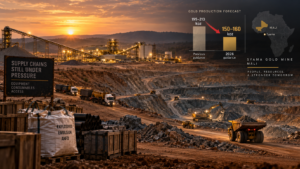
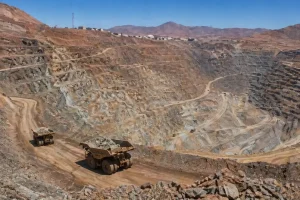
Volta Grande holds proven and probable gold reserves of approximately 3.8 million ounces. At design capacity, the open-pit operation would produce between 205,000 and 205,155 ounces of gold per year across a projected 17-year mine life. Belo Sun has committed approximately $300 million in capital to the project. The company describes it as potentially the largest open-pit gold mine in Brazil.
Belo Sun is listed on the Toronto Stock Exchange under BSX.
More Read

The Legal History
This dispute has been running for more than a decade. In June 2014, a federal court upheld demands from the Federal Public Prosecutor’s Office to halt environmental licensing until Belo Sun completed an Indigenous Component Study meeting Funai’s requirements. In July 2022, a Pará state court overturned a separate licence suspension following earlier concerns about community consultations.
The latest suspension follows a civil lawsuit from federal prosecutors. They sought to annul Volta Grande’s preliminary environmental licence and block further licensing until the study requirements were satisfied.
Each successive ruling has turned on the same question: has the project adequately assessed its potential impacts on nearby Indigenous communities? The courts have not accepted the answer, and the Supreme Court now conditions any progress on the settlement process.
What Belo Sun Says
Clovis Torres, appointed interim CEO in June after his predecessor left Brazilian operations, said the company welcomed the court’s recognition of the settlement hearing’s relevance. Torres is a lawyer and co-founder of Mello Torres, with senior legal experience at Vale. He described Belo Sun as advanced in its discussions with Funai.
The company said both parties are already fulfilling their obligations under the settlement terms. Belo Sun has also committed to making no physical interventions at the project site while the conciliation process continues.
What This Means for the Project
The suspension is conditional and reversible. The settlement between Belo Sun and Funai has been filed with TRF-1. If that court approves it, the basis for the suspension falls away.
However, approval is not guaranteed and its timing is uncertain. The settlement must satisfy the court that Funai’s requirements have been met and that Indigenous communities have been appropriately consulted. That is a substantive test, not a procedural one.
The ruling also reflects a wider pattern in Brazilian mining regulation. The Supreme Court’s engagement signals that the federal judiciary is taking an active role in overseeing whether environmental and Indigenous consultation standards are genuinely met, rather than treating licence reinstatement as a routine matter. That has implications beyond Volta Grande.
Projects in environmentally sensitive regions of the Amazon and Cerrado will face similar scrutiny if they have not completed thorough Indigenous impact assessments before seeking licences. The Belo Monte comparison in Justice Fachin’s ruling is a signal that cumulative impact — not just project-level impact — is now a relevant legal consideration.
What the Industry Should Watch
TRF-1 settlement approval. This is the immediate gate. Until the Federal Regional Court approves the Belo Sun-Funai agreement, the installation licence remains suspended. The pace and outcome of that approval will determine whether the project can resume any practical preparation for development.
The completeness of the Indigenous Component Study. The underlying demand from the Federal Public Prosecutor since 2014 has been that Funai’s requirements for the study be fully satisfied. The settlement presumably addresses this, but the specifics of what has been agreed — and whether the courts accept it as sufficient — will define the project’s forward path.
Cumulative impact as a legal standard. Justice Fachin’s reference to Belo Monte sets a precedent worth tracking. If Brazilian courts begin assessing new projects against the accumulated environmental burden of existing infrastructure in the same region, the licensing calculus changes for every project in affected watersheds — not only Volta Grande.
Belo Sun’s capital position. The company has committed to no physical interventions at the site while negotiations proceed. That commitment protects the process but also suspends any progress toward construction readiness. How long Belo Sun can sustain that position operationally and financially while the settlement works through the courts will determine whether the project retains its current scope.
A Conditional Path, Not a Closed Door
The Supreme Court did not cancel Volta Grande’s licence or order the project abandoned. It suspended a reinstatement pending a specific judicial outcome. That is a precise legal instrument, and the settlement route the court identified remains open.
What the ruling confirms is that the project’s licensing history — eleven years of legal disputes over Indigenous consultation — has accumulated enough unresolved risk that Brazil’s highest court is not prepared to let it proceed without settlement approval in hand. Belo Sun needs that approval. Whether it arrives, and when, is what the market should be watching.
Sources
Mining.com — Brazil Court Halts Belo Sun’s $300M Gold Project
Belo Sun Mining corporate statement — bsxgf.com / TSX: BSX