Residents of Hood County, Texas, have filed a lawsuit against Marathon Digital Holdings (NASDAQ: MARA), accusing the Bitcoin mining company of creating intolerably loud noise that disrupts daily life. The lawsuit, brought by Citizens Concerned About Wolf Hollow in the District Court of Hood County, highlights the severe impact of the continuous noise generated by Marathon’s operations.

Persistent Noise and Health Impacts
The plaintiffs, represented by Earthjustice, a nonprofit environmental law firm, argue that Marathon’s mining activities have caused significant harm to the local community. They claim that residents have suffered permanent health effects, including hearing loss, insomnia, headaches, tinnitus, and vertigo. According to the lawsuit, the constant noise and vibrations from the mining facility have caused extreme discomfort, anxiety, and fatigue. Social isolation has also become an issue, as friends and family avoid visits due to the unbearable noise levels.
In such a short time, Bitcoin mining has completely altered our community for the worse,” one Granbury resident lamented. “Day and night, we are subjected to relentless noise that is physically harming us. We aren’t asking for much—just for Marathon to take responsibility and restore our peace and well-being.”
A Troubled Facility
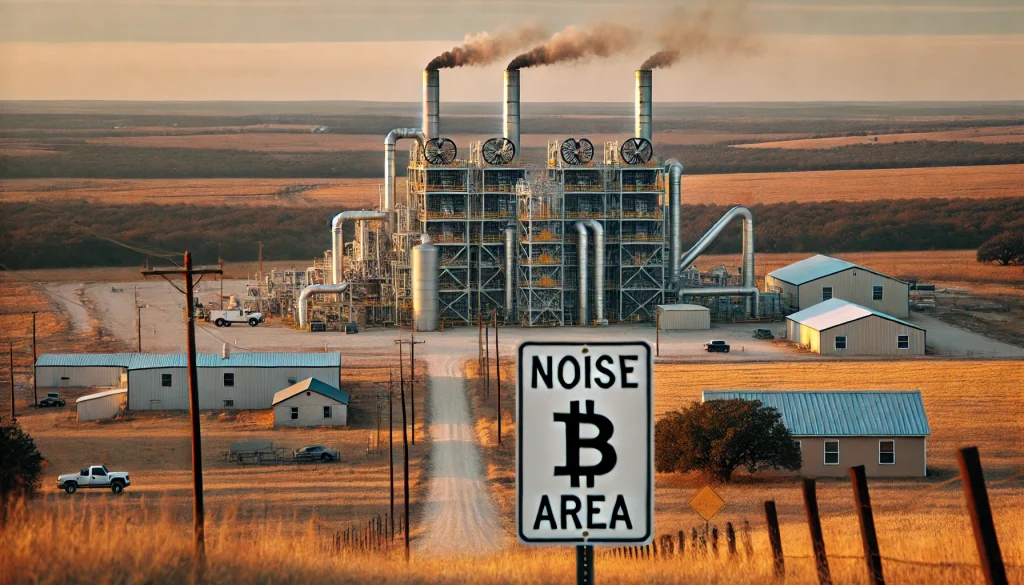
The mining facility in question, powered by a 1,115-megawatt combined-cycle gas and steam turbine generation plant in Granbury, was initially constructed by Compute North in 2022. However, after Compute North filed for bankruptcy that same year, the facility changed ownership multiple times before Marathon acquired it in January. Since Marathon took over, complaints about noise pollution have intensified.
This is not the first legal battle Marathon has faced regarding the Hood County site. Earlier this year, residents sued David Fischer, the site manager, accusing him of creating a “living nightmare.” Although a jury ultimately acquitted Fischer of all charges, the grievances of the residents were acknowledged. The focus of this latest lawsuit is now on Marathon itself.
More Read

Broader Context: Mining Operations Under Scrutiny
The Marathon case is part of a growing wave of legal challenges against cryptocurrency miners across the U.S. In Murphy, North Carolina, residents filed a similar lawsuit against miners over constant noise from Bitcoin mining operations, likening it to “living on top of Niagara Falls.” One resident compared the noise to “sitting on the tarmac with a jet engine in front of you. But the jet never leaves. It’s just constant annoyance.”

Other environmental groups have also taken action. In Pennsylvania, Stronghold Digital Mining and state regulators were sued for excessive noise pollution and releasing harmful chemicals into the environment. Internationally, a Bitcoin mining facility in Northern Norway was shut down following persistent noise complaints from residents in Stokmarknes.
Legal and Environmental Concerns
Rebecca Ramirez, an associate attorney with Earthjustice, emphasized that corporations like Marathon should not impose harmful living conditions on communities. “No corporation has the right to subject their neighbors to conditions that jeopardize their health and well-being,” she said. Rodrigo Cantú, senior attorney at Earthjustice, echoed this sentiment, arguing that persistent exposure to noise pollution harms both human health and the environment.
More Read

This lawsuit underscores the growing tension between the cryptocurrency mining industry and the communities in which it operates. The high energy consumption and environmental impact of mining have drawn increasing criticism. While Bitcoin mining has become a lucrative industry, residents near mining sites are often forced to bear the brunt of the associated noise and environmental issues.
Looking Ahead
As the lawsuit against Marathon progresses, it could set a precedent for how cryptocurrency mining companies operate in residential areas. If successful, the case may encourage other communities facing similar challenges to take legal action. Meanwhile, Marathon and other mining companies will likely face mounting pressure to mitigate the environmental and social impacts of their operations.
The outcome of this case will be closely watched by industry insiders and environmental advocates alike. With cryptocurrency mining continuing to expand, conflicts over noise pollution and environmental concerns are likely to increase, forcing companies to reconsider their approach to community relations.