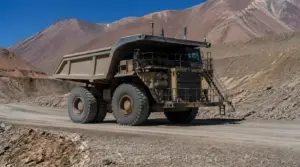
The mining explosive market is undergoing a pivotal transformation, driven by rising global demand for minerals, the push for safer mining practices, and the integration of digital technologies. With the market projected to reach US$ 328.1 billion by 2031, growing at a CAGR of 3.3%, industry players are focusing on innovations that enhance operational efficiency, safety, and environmental performance.

A Market Evolving with Purpose
From traditional ANFO (Ammonium Nitrate Fuel Oil) to advanced electronic detonators and integrated blast management systems, the mining explosive market now offers solutions designed to optimize fragmentation, minimize environmental disruption, and improve safety across mining sites.
In open-pit and underground mining, where precise blasts are critical, companies are adopting next-generation technologies that enhance blast design control, reduce airblast and vibration, and improve post-blast analysis through real-time data monitoring.
“Explosives are no longer just commodities; they are sophisticated tools for productivity enhancement,” said an executive at Orica, one of the leading market players. “Our customers expect us to deliver not just explosives but intelligence — data, analytics, and predictive insights that optimize every blast.”
Related News
- Canadian Companies Brace for Trump’s Tariffs: Strategies and Survival Tactics
- Why the U.S. Can’t Afford to Lose Canada’s Critical Mineral Aluminum
- WEC Water Optimizes Waste Water Treatment at Burkina Faso Gold Mine
- How Remote Sensing is Transforming Sustainable Mining
Key Drivers Behind Market Growth
Several macro and microeconomic factors are converging to support sustained growth in the mining explosive market:
More Read

1. Surging Global Mining Activity
Rising demand for metals and minerals — essential to infrastructure development, electric vehicles, and renewable energy technologies — is spurring mining investments across regions such as Asia-Pacific, Africa, and Latin America. This uptick in mining directly fuels demand for high-performance explosives and systems.

2. Technological Advancements
The introduction of smart explosives—systems that integrate IoT sensors, AI-driven blast modeling, and real-time data analytics—is revolutionizing blast optimization. In 2023, Dyno Nobel launched its integrated blast management software, enabling operators to model, monitor, and adjust blast parameters with unprecedented precision.
3. Safety and Environmental Regulations
With increasing scrutiny from environmental agencies and workplace safety regulators, mining operators are turning to low-emission explosives, environmentally friendly formulations, and digital safety systems that mitigate risks and ensure compliance.
More Read
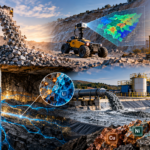
4. Cost and Efficiency Pressures
Amid rising operational costs, mining firms are prioritizing solutions that optimize energy use and minimize material waste—factors directly influenced by the quality and precision of their blasting systems. Advanced blast optimization software and predictive maintenance solutions are becoming indispensable for cost-conscious operators.
Regional Landscape: Asia-Pacific Leads the Charge
While North America and Europe remain significant players in the mining explosive market, the Asia-Pacific region is emerging as the fastest-growing hub. Countries such as China, Australia, and India are expanding mining investments in response to soaring domestic and international demand for minerals like gold, copper, and rare earths.
“In Asia-Pacific, the focus is on both scaling up mining activity and introducing cleaner, safer technologies,” said a market analyst at Fitch Solutions. “The regulatory push toward sustainability is particularly strong in Australia, where miners face stringent emissions targets.”
Market Leaders and Innovators
Several global companies are shaping the competitive landscape of the mining explosive market. Notable players include:
- Orica Ghana Limited – Known for its advanced detonator systems and blast analytics platforms.
- MAXAM – Recently expanded its portfolio with environmentally friendly explosives.
- Enaex – A leading innovator in emulsion explosives and advanced blast services.
- Dyno Nobel – A pioneer in digital blast management technology.
- African Explosives Limited (AEL) – Focused on tailored solutions for the African mining sector.
Emerging Trends: Digitalization, Sustainability, and AI Integration
Looking ahead, three dominant trends are set to shape the future of the mining explosive market:
Digitalization and Smart Explosives
The fusion of real-time monitoring, cloud-based blast planning, and predictive analytics is enabling mining companies to fine-tune blasts with surgical precision. AI algorithms are being used to predict rock fragmentation, reducing the risk of under- or over-blasting.
Green Explosives
The drive for sustainability is pushing companies to innovate with biodegradable components, reduced-emission formulations, and recyclable packaging. MAXAM, for instance, is at the forefront of these developments with its eco-friendly product line launched in 2024.
Safety-Centric Systems
Safety remains a critical focus area, with newer systems embedding automated diagnostics, remote detonation capabilities, and AI-powered hazard detection, minimizing human exposure to hazardous environments.
A Market in Transformation
The mining explosive market stands at the intersection of technological innovation, regulatory pressure, and evolving mining economics. As demand for critical minerals rises, and mining operators pursue safer, cleaner, and more efficient blasting solutions, the market is poised for steady growth through 2031.
With digital integration, sustainability-first products, and a relentless focus on safety driving future developments, the industry’s evolution is not only reshaping the economics of mining but also setting new benchmarks for environmental and workforce protection.