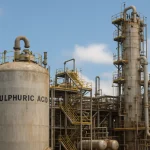
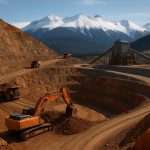
Kurnool, Andhra Pradesh – India is preparing to turn on its first large private gold mine at Jonnagiri, a development that could modestly reduce the country’s chronic dependence on imports. Operated by Geomysore Services (India) Pvt. Ltd., with Deccan Gold Mines Ltd. (DGML) as a key shareholder, the project has received environmental clearance and Consent to Operate from the Andhra Pradesh Pollution Control Board. DGML management expects initial output of 0.75–1.0 tonne of gold annually, with potential expansion as the plant ramps up. News of the milestone sent DGML’s share price higher this week.

Why Jonnagiri gold mine matters for India’s external account
India is the world’s second-largest consumer of gold, buying between 600 and 800 tonnes annually. Yet domestic mine production is almost negligible—hovering at 1–2 tonnes per year, according to the World Gold Council (WGC). That gap forces the country to rely heavily on imports, often swelling the current account deficit and pressuring the rupee during demand spikes.
The macro backdrop has turned more favourable. In July 2024, New Delhi cut the import duty on gold to 6% from 15%, seeking to curb smuggling and formalise trade. More recently, official data showed India’s gold imports fell 57% year-on-year in August 2025, contributing to a narrower merchandise trade deficit. Even if Jonnagiri gold mine’s output is modest in absolute terms, it adds local supply at a moment when policy is aligned toward reducing foreign exchange outflows.
What Jonnagiri adds—and what it doesn’t
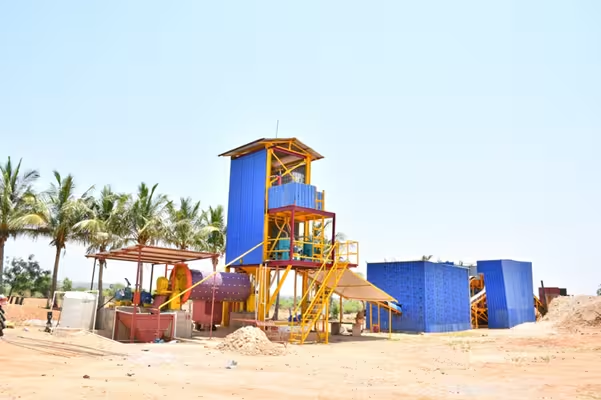
The Jonnagiri gold mine project is designed around a 1,000 tonnes/day processing plant, with approvals in place for a possible scale-up to 2,000 tpd. The ore is described as free-milling with gravity-recoverable gold, making it suitable for a conventional flow sheet of gravity separation followed by cyanidation.
At steady state, the mine’s 0.75–1.0 tonne per year output would lift India’s mine production by 50–65% from today’s baseline. However, in the context of hundreds of tonnes imported annually, the contribution remains incremental.
More Read

For industry observers, the significance lies elsewhere: Jonnagiri gold mine demonstrates that large-scale private gold mining is possible in India, setting a precedent that could attract exploration capital to other under-mapped Archean belts in southern India.

The import-substitution math
While one tonne of gold barely dents India’s import volumes, three factors make the mine strategically relevant:
- Price/volume dynamics – With global gold prices hitting record highs through 2024–25, jewellery demand has softened while investment demand has risen. In such cycles, domestic supply—even small—helps reduce the strain on imports.
- Policy synergy – Lower duties and tax reforms aim to formalise flows. Locally mined gold provides a domestic feedstock for refiners and jewellery hubs, reinforcing government policy.
- Signalling effect – A functioning private mine demonstrates that India can build a viable gold mining industry, reducing perceived risks for investors.
Risks and execution hurdles
Early-stage gold projects face commissioning challenges—from metallurgical recovery rates to water and power logistics. Jonnagiri’s flow sheet is proven in theory, but ramp-up curves will determine unit costs.
More Read

Volatile bullion prices also pose a threat: if global gold prices fall sharply, operating margins could compress before economies of scale are achieved. Finally, while principal clearances are in hand, ongoing compliance around tailings, water use, and rehabilitation will be closely watched by regulators and communities.
Market read-through
The launch has already boosted DGML’s stock, reflecting the scarcity value of a listed India-based gold producer. But the bigger picture is a confluence of factors: a lower import duty, reduced import tonnage in recent months, and the symbolic commissioning of the first large private mine. Together, these could help smooth India’s external balances during peak buying seasons, even if the tonnage remains modest.
Skillings analysis
Signal over size – Jonnagiri won’t change India’s import math by volume, but it changes the narrative: private gold mining is investable, and that could unlock exploration capital.
- Policy alignment pays – With duty at 6% and shifting demand, every domestic ounce matters. Even symbolic supply supports government efforts to formalise and stabilise the market.
- Execution is king – Jonnagiri’s success depends less on geology than on operational discipline—achieving stable recovery rates and controlling costs will decide whether this becomes a replicable model.
Looking ahead
As the mine ramps up, attention will turn to whether Jonnagiri gold mine can consistently deliver its promised output. With the festive and wedding season set to lift gold demand into the December quarter, even modest domestic production could take on outsized importance. For India’s mining industry, the bigger prize is not this year’s ounces but the confidence to pursue the next wave of gold exploration projects.