India just made a big bet on garbage. Well, mining garbage, anyway.

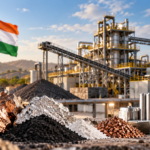
The Union government rolled out the country’s first-ever Tailings Policy this week, a sweeping framework designed to pull critical minerals out of the massive piles of waste that have been sitting around Indian mines for decades. We’re talking about tailings ponds, old mine dumps, overburden heaps, slags, even anode slimes and red mud. Stuff that was written off as worthless 20 or 30 years ago is suddenly looking a lot more interesting.
And honestly? This is the kind of move the global mining industry has been watching for. India is essentially saying: we’re done importing everything, and we’re going to squeeze every last bit of value out of what we’ve already dug up.
Why Tailings Are Suddenly Worth a Second Look
Here’s the thing about tailings: they’re not just “waste.” They’re the leftover slurry of fine rock particles, water, and processing chemicals that remain after you crush ore and extract the good stuff. For most of mining history, companies pulled out whatever was economically viable at the time and dumped the rest.
But here’s where it gets interesting. Those tailings often contain what the industry calls “companion minerals”: stuff that wasn’t worth chasing back when copper was the only prize. Copper tailings, for example, can contain selenium, tellurium, cobalt, rhenium, gold, and silver. Zinc ore leftovers might be sitting on germanium, indium, and cadmium.
More Read



Twenty years ago, nobody cared about cobalt. Now it’s one of the most sought-after battery metals on the planet. Same story with lithium, rare earth elements, and nickel: all critical inputs for solar panels, wind turbines, EVs, and the entire green energy supply chain.
India’s new policy recognizes that these minerals exist in abundance in places that have already been disturbed by mining. No need to dig new holes when you’ve got billions of tons of material just sitting there.
The Policy Framework: What’s Actually in the Plan
The Tailings Policy establishes a structured approach to identifying, sampling, analyzing, and economically evaluating these secondary resources. It’s not just a press release: there’s actual machinery being deployed here.
The Indian Bureau of Mines, the Central Mine Planning and Design Institute (CMPDI), and the Atomic Minerals Directorate have all been tasked with conducting sampling and analysis of existing mine sites across the country. They’re going to map tailing ponds, assess mineral content, and figure out what’s actually recoverable.
This is critical because these companion minerals don’t always show up where you’d expect. They can exist beyond conventional mining areas, scattered across legacy sites that haven’t been touched in years. The policy calls for coordinated action across multiple ministries to make sure nothing falls through the cracks.
The government framed this as part of its Union Budget commitment to critical mineral security. Translation: India is tired of being dependent on foreign suppliers (read: China) for the minerals that power its energy transition.

The Strategic Play: Lithium, Cobalt, Rare Earths, and Nickel
Let’s be clear about what India is really chasing here. The policy specifically targets lithium, cobalt, rare earth elements, and nickel. These aren’t random picks: they’re the four horsemen of the clean energy economy.
Lithium powers EV batteries. Cobalt stabilizes those same battery chemistries. Rare earth elements are essential for permanent magnets in wind turbines and electric motors. Nickel is everywhere in high-energy-density batteries.
India currently imports the vast majority of these materials. That’s a strategic vulnerability in a world where supply chains are getting weaponized and everyone’s scrambling for the same resources. By recovering these minerals from domestic tailings, India can reduce import dependence, strengthen supply chain resilience, and keep more value inside its own borders.
The math isn’t complicated: extracting minerals from already-mined material costs less than opening new sites, generates less environmental disruption, and maximizes the return on historical mining investments. It’s resource efficiency on a national scale.
Circular Economy Meets Hard-Rock Mining
This policy represents a genuine philosophical shift in how India approaches mining. For decades, the industry operated on a linear model: dig it up, process it, dump the waste, move on. The Tailings Policy flips that script toward a circular economy where “waste” becomes feedstock for the next cycle of extraction.
It’s the same logic driving zero-carbon mining equipment investments and tailings reclamation projects in Australia and Canada. The difference is that India is now formalizing this approach at the national policy level rather than leaving it to individual companies.

The environmental benefits are significant. Tailings ponds are notorious for their risks: dam failures, groundwater contamination, long-term liability. By actively processing these materials, India can reduce the environmental footprint of legacy mining while generating economic value. It’s the rare policy win that checks both the sustainability box and the resource security box.
What This Means for the Global Mining Industry
India isn’t the first country to look at tailings reclamation, but this policy signals a broader trend that miners and investors everywhere should be watching.
As critical mineral demand explodes: driven by EV adoption, renewable energy buildouts, and AI infrastructure (those data centers need a lot of copper, by the way): the economics of secondary extraction are shifting fast. Minerals that weren’t worth chasing at $2,000 per ton might look very different at $8,000 per ton.
Countries with significant mining histories: the U.S., Australia, Chile, South Africa, Canada: are all sitting on decades of accumulated tailings. India’s policy could serve as a template for similar frameworks elsewhere, especially as governments get more serious about critical mineral supply chains.
For mining companies, this creates both opportunity and pressure. The opportunity is obvious: secondary extraction from existing sites can be faster, cheaper, and less politically contentious than greenfield development. The pressure comes from increased regulatory attention on historical waste and rising expectations that companies will maximize resource recovery rather than walking away from legacy sites.
The Road Ahead
India’s Tailings Policy is a statement of intent, but execution will determine whether it actually moves the needle. The sampling and analysis phase will take time. Building the processing infrastructure to recover these minerals economically requires capital and technical expertise. Coordination across multiple ministries and state governments is always messier than it looks on paper.
But the strategic logic is sound. India has massive mineral potential locked up in decades of accumulated mining waste. Unlocking that potential reduces import dependence, creates domestic jobs, and supports the country’s clean energy ambitions.

For the rest of the mining world, this is a reminder that the definition of “ore” isn’t fixed. It changes with technology, with commodity prices, and with policy frameworks. What’s garbage today might be tomorrow’s critical resource.
India just decided to stop waiting and start digging: through its own trash.
Stay tuned to Skillings Mining Review for continuing coverage of global mining policy developments and critical mineral supply chain trends.