By Charles Pitts | January 25, 2026

Washington just sent a $2.5 billion message to Beijing, and the global mining industry is paying close attention.
On January 15, 2026, a bipartisan coalition of U.S. lawmakers introduced the Securing Essential and Critical U.S. Resources and Elements (SECURE) Minerals Act, a sweeping piece of legislation designed to break America’s dangerous dependence on Chinese-controlled critical mineral supply chains. At its heart sits a proposed Strategic Resilience Reserve (SRR), a new government-backed mechanism armed with billions in funding to stockpile, finance, and strategically develop domestic mining and processing capacity.
The timing isn’t accidental. China currently controls over 60% of the world’s mined rare earth elements and an eye-watering 90% of their processing. That kind of market dominance has transformed critical minerals into an economic weapon, one that Beijing has shown increasing willingness to deploy through export restrictions and price manipulation.
The SECURE Act represents Congress’s most aggressive attempt yet to reclaim ground in a supply chain war that many industry observers say America has been losing for decades.
More Read

The Strategic Resilience Reserve: What It Actually Does
The legislation would establish the Strategic Resilience Reserve Corporation, a wholly owned government entity operated by a seven-member board appointed by the President and confirmed by the Senate. Think of it as a hybrid between a national stockpile and a development bank, with teeth.

The SRR isn’t just about hoarding minerals in a warehouse somewhere in Nevada. The reserve would deploy a combination of:
- Financial contracts to support domestic mining and processing projects
- Strategic stockpiling of critical materials for national defense and industrial needs
- Market analysis and intelligence to identify vulnerabilities before they become crises

More Read

The legislation explicitly prioritizes domestic projects and U.S.-based supply chains, but it’s not naively protectionist. The bill acknowledges reality: for certain minerals where U.S. import dependence effectively hits 100%, the reserve may support carefully vetted foreign sources as a bridge solution while domestic capacity scales up.
One of the more forward-thinking provisions incorporates recycling and unconventional feedstocks into the reserve’s mandate. Battery recycling, mine tailings reprocessing, and other secondary sources could qualify for SRR support, a nod to the circular economy principles that are reshaping how the mining industry thinks about resource extraction.
Why Now? China’s Supply Chain Stranglehold
The case for the SECURE Act writes itself when you examine the numbers.
China doesn’t just mine rare earths: it refines them. The country processes roughly 90% of the world’s rare earth elements, giving it effective veto power over everything from electric vehicle motors to F-35 fighter jets. But the dominance extends far beyond rare earths:
| Critical Mineral | China’s Global Processing Share |
|---|---|
| Rare Earth Elements | ~90% |
| Refined Lithium | ~65% |
| Graphite (battery-grade) | ~70% |
| Refined Cobalt | ~70% |
These aren’t obscure industrial commodities. Lithium, graphite, and cobalt form the backbone of the clean energy transition. Every EV battery, every grid-scale storage system, every next-generation defense platform depends on materials that flow predominantly through Chinese refineries.
And Beijing knows it.
Over the past two years, China has weaponized this position with increasing aggression. On one front, Chinese producers have flooded the global lithium market with excess supply, crashing prices and rendering Western mining projects economically unviable. On another, Beijing has deployed export restrictions on rare earths and gallium, artificially inflating prices and creating supply uncertainty for Western manufacturers.
It’s a classic economic pincer movement: subsidize your way to market dominance, then squeeze when your competitors are most vulnerable.
Bipartisan Backing and the Path Forward
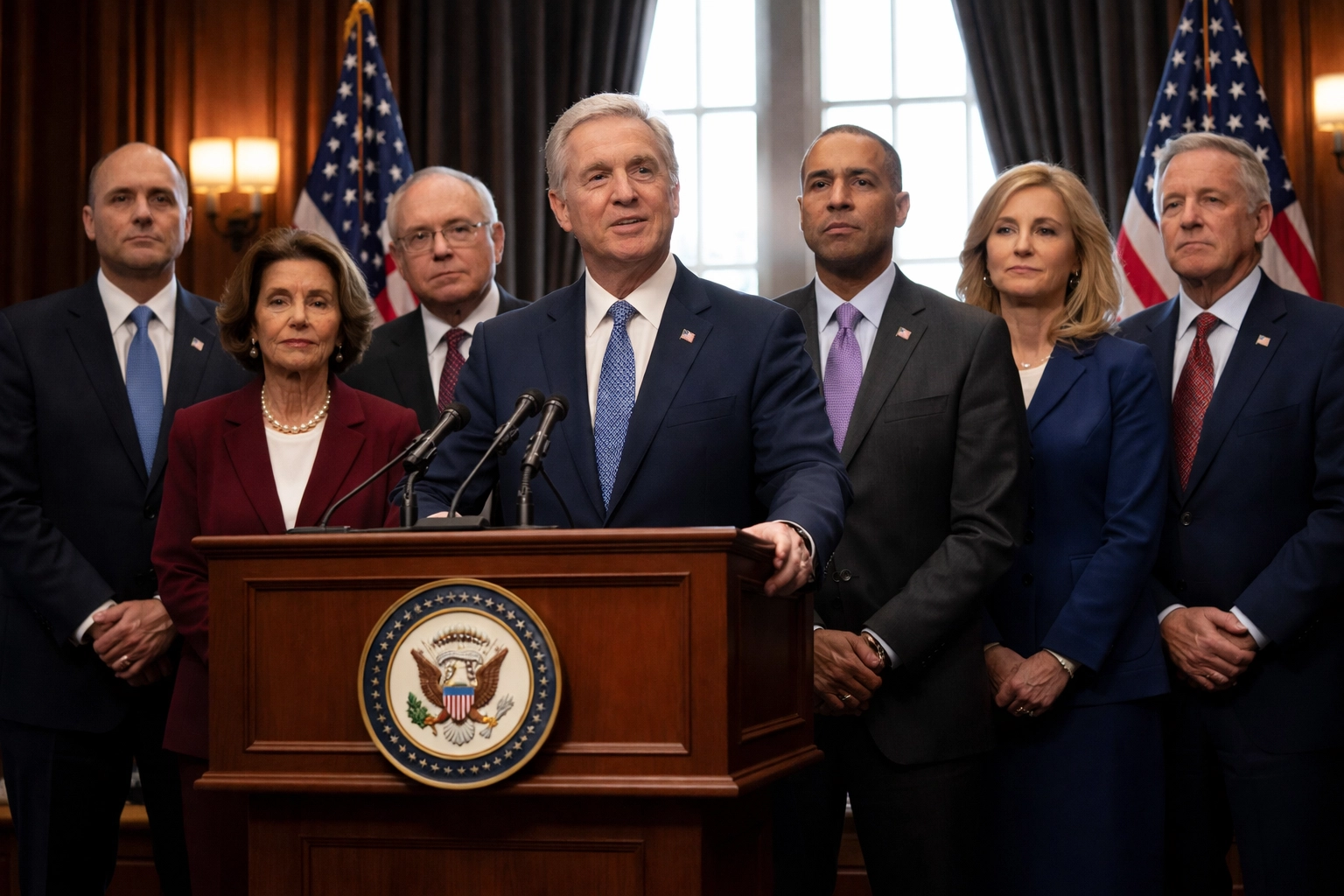
The SECURE Act’s sponsor list reads like a deliberate exercise in bridge-building. Senators Jeanne Shaheen (D-NH) and Todd Young (R-IN) lead on the Senate side, joined by Representatives Rob Wittman (R-VA-01) and John Moolenaar (R-MI-02) in the House.
That bipartisan, bicameral structure isn’t just optics: it’s strategy. The bill was originally introduced in December 2024 but stalled in committee amid the legislative chaos of an election year. This 2026 reintroduction benefits from expanded support and a political environment where China hawks on both sides of the aisle are looking for concrete action.
The legislative path appears more promising this time around. The House Committee on Natural Resources is expected to mark up the bill in the coming weeks, while Senate sponsors are pushing to include SECURE Act provisions in the upcoming National Defense Authorization Act (NDAA): a must-pass defense spending bill that would virtually guarantee the legislation’s survival.
Attaching critical minerals provisions to the NDAA isn’t a new tactic. Previous mineral security measures have hitched rides on defense bills, leveraging the NDAA’s political immunity to bypass the usual legislative gridlock. If the SECURE Act follows the same trajectory, we could see a Strategic Resilience Reserve operational by late 2026 or early 2027.
What This Means for Domestic Miners
For U.S.-based mining companies, the SECURE Act represents something they’ve been begging for: consistent, long-term federal support that doesn’t evaporate every time the political winds shift.
The financial contract mechanisms outlined in the legislation could provide price floors or offtake guarantees for domestic producers: exactly the kind of de-risking that project financiers need to greenlight new mines. When lithium prices crash 70% because of Chinese oversupply, having a government backstop could mean the difference between a project moving forward and a project getting shelved indefinitely.
The stockpiling provisions also create a potential new buyer for domestic production. Currently, U.S. miners compete in a global market where Chinese refiners often control both the price and the processing. A Strategic Resilience Reserve actively purchasing American-mined materials would provide an alternative market pathway insulated from Beijing’s manipulation.

Junior miners and exploration companies stand to benefit as well. The SRR’s mandate to support domestic supply chain development could translate into grants, loans, or equity investments for early-stage projects that struggle to attract private capital in volatile commodity markets.
The Bigger Picture: Supply Chain Sovereignty
The SECURE Act is part of a broader reckoning across Western democracies about critical mineral dependency. The European Union has its Critical Raw Materials Act. Canada has expanded its critical minerals strategy. Australia is pouring billions into processing capacity.
What’s emerging is a new paradigm in industrial policy: one where governments acknowledge that certain supply chains are too strategically important to leave entirely to market forces. The invisible hand, it turns out, doesn’t much care whether your adversary controls the materials you need to build weapons and power grids.
For the mining industry, this shift creates both opportunities and complications. More government money flowing into the sector is obviously welcome. But increased political involvement also means increased scrutiny, permitting battles, and the ever-present risk that today’s bipartisan consensus becomes tomorrow’s partisan football.
The SECURE Act attempts to thread this needle by establishing an independent corporation structure that’s somewhat insulated from direct political interference. Whether that insulation holds up in practice remains to be seen.
What Happens Next
The next few months will determine whether the SECURE Act becomes law or joins the pile of well-intentioned mineral security bills that never quite crossed the finish line.
Watch for the House Natural Resources Committee markup, likely scheduled for late February or early March. If the bill clears committee with bipartisan support intact, its inclusion in the NDAA becomes significantly more probable.
For mining executives, investors, and policymakers tracking the critical mineral supply chain, the message from Washington is clear: the era of hoping market forces would somehow solve America’s mineral dependency is over. The question now is whether $2.5 billion and a new government corporation can actually move the needle against an entrenched Chinese supply chain built over decades.
The SECURE Act is Congress’s answer. The industry is watching to see if it’s enough.
For more coverage of critical mineral policy and domestic mining developments, visit Skillings Mining Review.