Chile’s Atacama region just got a new gold producer, and the timing couldn’t be more interesting. Rio2 Limited (TSX-V: RIO) officially poured its first gold at the Fenix Gold Mine on January 23, 2026, turning years of development work into actual metal: approximately 897 ounces of it, to be precise.

That first pour marks the formal transition from construction to production for the $235 million project, and it slots Fenix in as Chile’s newest operating gold mine. For a country better known for copper than precious metals, that’s worth paying attention to.
The Numbers That Matter
Rio2 didn’t just stumble across the finish line here. The company completed Fenix on time and on budget after roughly 14 months of construction: a feat that’s become increasingly rare in an industry where cost overruns and timeline slippage have become almost expected.
The first official pour yielded those 897 ounces, but that wasn’t technically the mine’s first gold. During plant commissioning in December 2025, the operation produced an additional 358 ounces. Combined, the two pours also recovered approximately 131 ounces of silver as a byproduct.

More Read

Now the real work begins. Rio2 is ramping operations toward a throughput rate of 20,000 tonnes of ore per day and targeting gold production between 60,000 and 70,000 ounces for calendar year 2026. That’s not going to make Fenix one of the world’s mega-producers, but it positions the mine as a steady, mid-tier operation with a planned 17-year operational life ahead of it.

Location, Location, Location
Fenix sits along the Maricunga gold belt in Chile’s Atacama region: high-altitude desert terrain that’s proven to host significant gold mineralization. The geological setting matters because it directly influenced how Rio2 designed the operation.
The mine operates as a run-of-mine heap leach facility. In plain terms, that means ore goes directly from the pit to the leach pads without requiring crushing. It’s a simpler flowsheet than many gold operations, and it eliminates the need for tailings infrastructure entirely.
More Read
That design choice wasn’t just about cost savings, though those certainly help. It reduces the operation’s environmental footprint considerably: no tailings dam, no crushing circuit, less energy consumption. In an era where mining companies face increasing scrutiny over their environmental credentials, that simplified approach carries weight with investors, regulators, and communities alike.
The Atacama region already hosts major mining operations, primarily copper, so the infrastructure and regulatory frameworks exist. But gold operations at this scale remain relatively uncommon for Chile, making Fenix something of a pioneer in a jurisdiction more accustomed to red metal than yellow.
Jobs and Economic Impact
During construction, Fenix employed approximately 1,200 workers. That number drops to around 550 permanent positions now that the mine has transitioned to operations: still a meaningful employment base for the region, and those jobs will persist across the mine’s projected 17-year life.
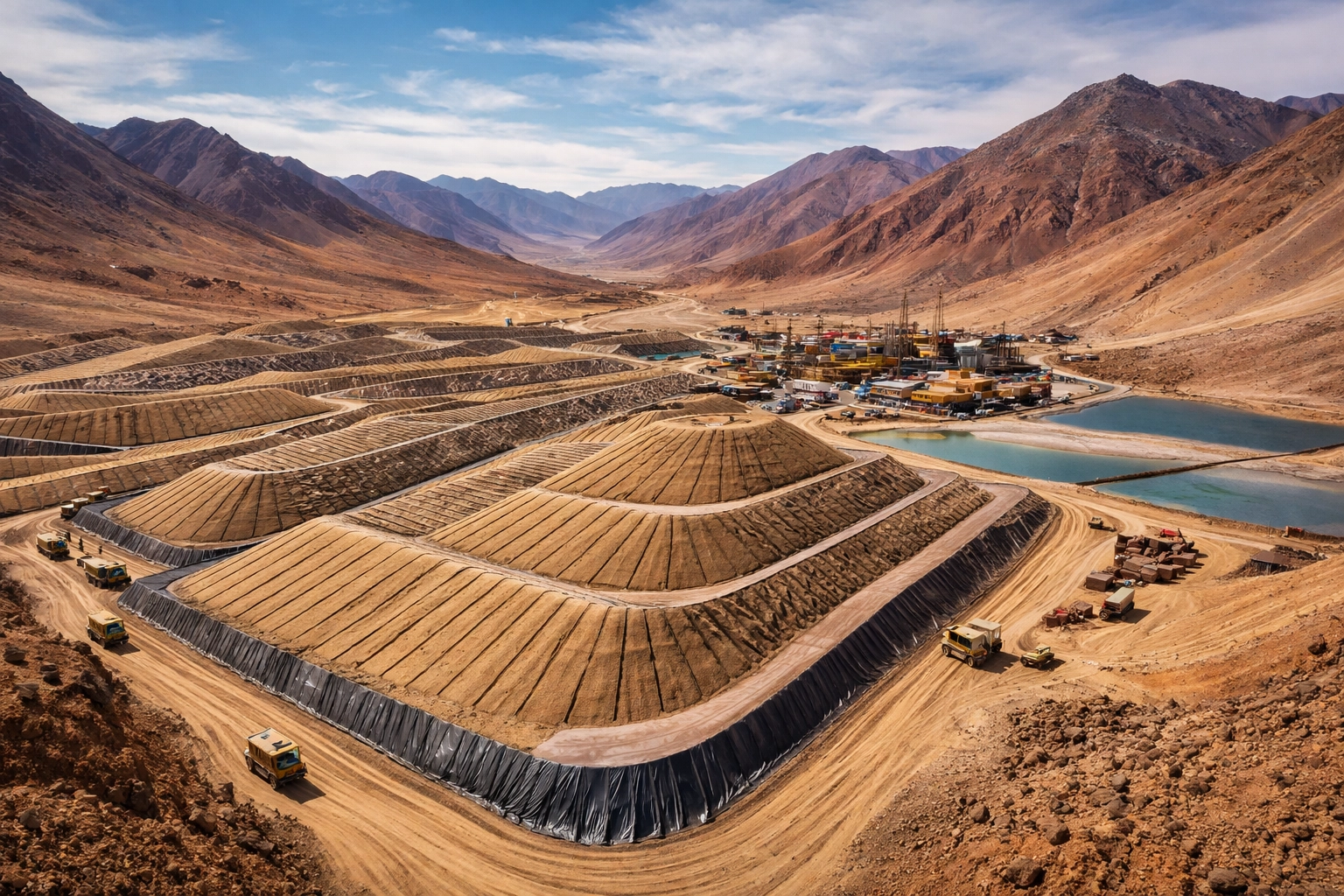
For communities in the Atacama, that kind of long-term employment stability matters. Mining jobs typically pay well above regional averages, and the multiplier effects on local businesses: suppliers, services, retail: extend the economic impact beyond the mine gate.
The Bigger Picture for Rio2
First gold at Fenix represents a company-defining milestone for Rio2, but it’s not the only iron the Canadian miner has in the fire right now.
The company recently announced the acquisition of the Condestable copper mine in Peru, a move that diversifies Rio2’s metals exposure beyond gold. That transaction signals management’s appetite for growth and suggests Fenix was always intended as a platform rather than a single-asset story.
Rio2 has held the Fenix project since its 2018 merger with Atacama Pacific Gold Corporation. The path from acquisition to production took the better part of a decade when you factor in permitting, feasibility work, financing, and construction. That timeline underscores just how long it takes to bring new mining projects online: even relatively straightforward ones in mining-friendly jurisdictions.
Looking ahead, management has indicated they’ll provide updates on a Phase 2 expansion at Fenix. Details remain sparse for now, but the fact that expansion conversations are already happening suggests confidence in the ore body and the operating model.
Why This Matters Beyond Rio2
Chile’s mining sector generates substantial GDP, but gold has historically played second fiddle to copper. The country hosts some of the world’s largest copper mines: Escondida, Chuquicamata, El Teniente: and copper dominates both production statistics and policy discussions.

Fenix won’t change that calculus overnight. But successful gold operations in Chile demonstrate that the country’s mining framework can support precious metals development, not just base metals. For exploration companies holding gold assets in Chilean ground, Rio2’s achievement provides a proof of concept.
The heap leach approach also offers a template for other developers eyeing similar projects. Traditional mill-based gold operations require more capital, more complexity, and more time. Heap leach projects like Fenix can move faster from feasibility to production, assuming the metallurgy cooperates and the ore grades support the economics.
What to Watch in 2026
The next 12 months will reveal whether Fenix can hit its production targets. Ramp-up periods are notoriously tricky: equipment breaks, ore variability surprises, logistics hiccups multiply. Rio2 delivered construction on time and on budget, but sustaining that execution track record through the ramp-up phase will determine how the market ultimately judges the project.
Gold prices will obviously influence Fenix’s economics. At current spot prices, the operation should generate solid margins, but mining economics can shift quickly. The heap leach design keeps operating costs relatively low, which provides some cushion against price volatility.
Investors will also watch for updates on that Phase 2 expansion. If Rio2 can demonstrate a clear pathway to increased production from the existing site, it changes the valuation conversation meaningfully.
And then there’s the Condestable acquisition in Peru. How Rio2 integrates a copper operation into what was previously a gold-focused company will test management’s bandwidth and strategic discipline. Diversification can strengthen a portfolio, but it can also dilute focus if not handled carefully.
The Bottom Line
Rio2’s first gold pour at Fenix represents exactly what the mining industry needs to see more of: a project delivered on time, on budget, with a sensible design and a clear path to steady production. It’s not the splashiest story: no billion-dollar capex, no world-class grades: but it’s the kind of disciplined execution that actually builds shareholder value over time.
For Chile, Fenix adds another producing mine to the national portfolio and demonstrates that gold development can succeed alongside the country’s dominant copper sector. For Rio2, it transforms the company from developer to producer, with expansion optionality and a second asset in Peru adding layers to the story.
The Atacama desert has yielded copper wealth for generations. Now, courtesy of Rio2 and the Fenix operation, it’s producing gold too.
For more coverage of mining developments across the Americas, visit Skillings Mining Review.