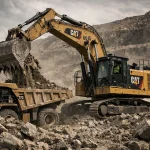
Here’s the thing nobody wants to admit: the mining equipment sitting on your job site right now is already obsolete.

Not because it’s old. Not because it’s inefficient. But because the machinery rolling out of Caterpillar and Komatsu factories in 2026 doesn’t need human operators to make real-time decisions anymore. The AI does that. And it’s doing it better.
Welcome to the mining technology trends 2026 is actually delivering: not the science fiction version, but the brutal, profitable reality happening right now at operations from Arizona to Australia.
The Death of “Dumb Iron”
Mining equipment used to be glorified metal. Powerful? Absolutely. Intelligent? Not even close.
That era is over.



Today’s haul trucks, excavators, and drilling rigs are sensor platforms that happen to move dirt. A single autonomous Cat 794 AC haul truck generates more data per shift than an entire mine site produced in a month a decade ago. Vibration sensors. Temperature monitors. Hydraulic pressure gauges. GPS positioning accurate to centimeters. Cameras watching everything.
The machinery isn’t just collecting this data. It’s analyzing it in real time and adjusting operations on the fly: no human input required.

Caterpillar’s Command for hauling system is the poster child for this shift. These aren’t remotely operated trucks with a guy in an air-conditioned trailer steering with a joystick. These are fully autonomous vehicles that plan their own routes, adjust speed based on road conditions, and communicate with other equipment to optimize the entire fleet’s efficiency.
Per truck. Per shift. No coffee breaks.
Smart Shovels That Actually Think
Let’s talk about what’s happening upstream, where the real money gets made or lost.
Excavators and shovels equipped with sensor arrays now perform ore classification in real time. Each bucket load gets analyzed: XRT sensors, XRF technology, near-infrared imaging: and the AI classifies material instantly. High-grade ore? Route it to processing. Waste rock? Straight to the dump.
This isn’t happening in a lab. Rio Tinto’s been running autonomous shovel operations in the Pilbara for years now, and the numbers don’t lie: 15% improvement in material handling efficiency, reduced processing costs, and better feed grade to the mill. All because the equipment knows what it’s digging before the bucket reaches the truck.
The strategic calculus here isn’t subtle: classify ore at the source, reduce energy waste downstream, improve recovery rates, and stop processing waste rock that never had a chance of yielding metal.
Traditional mining operations send everything through the crusher and hope metallurgy sorts it out. AI-equipped machinery makes those decisions at the pit face, where they should’ve been made all along.
Predictive Maintenance Is Eating Reactive Repairs
Here’s where the mining ESG trends 2026 is actually delivering converge with pure economics: predictive maintenance powered by machine learning.

Every piece of mobile equipment on site is now a walking data center. Sensors monitor bearing temperatures, hydraulic fluid viscosity, engine performance metrics, tire pressure variations: hundreds of data points streaming continuously to analytics platforms.
Machine learning models trained on years of failure data can now predict component failures 72 hours before they happen. Not “this part is wearing out.” But “this specific bearing will fail during the night shift on Thursday.”
The impact is measurable: recent underground mining operations documented 8% reduction in maintenance costs and 10% increase in equipment availability. That’s not marginal improvement. That’s the difference between hitting production targets and explaining to shareholders why you didn’t.
Caterpillar’s Cat MineStar system integrates maintenance predictions directly into operational planning. The AI schedules maintenance windows around production cycles, coordinates parts delivery, and even recommends which technician should do the work based on their experience with that specific repair.
The days of catastrophic failures taking million-dollar machines offline for weeks are ending. Not because equipment is more reliable: though it is: but because AI sees the failures coming and prevents them.
Digital Twins and the Virtual Mine
While physical equipment gets smarter, mining companies are building something even more valuable: perfect virtual replicas of their entire operations.
Digital twins fed by real-time sensor data from every piece of equipment create living models of mine sites. Engineers run simulations, test process changes, and optimize operations without risking actual production.
Newmont implemented metallurgical digital twins at its Lihir gold plant using Metso’s Geminex technology. The system models the entire processing circuit in real time, adjusting parameters automatically to maximize recovery while minimizing reagent use and energy consumption.

Omdena took this further with an AI-driven digital twin for lithium extraction. Their model simulated extraction efficiency under different chemical conditions and reduced reliance on physical pilot plants by nearly 40%. That’s millions in capital expenses avoided and months shaved off development timelines.
But here’s the kicker: digital twins don’t just optimize existing processes. They reveal entirely new operational strategies that human engineers would never consider because the variables are too complex and the interactions too subtle.
The AI finds solutions humans can’t see.
Energy Optimization in a Decarbonizing World
Mining operations are energy hogs. Always have been. But the decarbonization mandate isn’t optional anymore, and AI is the only path to meeting ESG commitments without crippling production.
Battery-electric haul trucks are rolling out at major operations worldwide. Rio Tinto’s got them. Fortescue’s committed to them. BHP’s testing them. But here’s the problem: charging infrastructure on mine sites wasn’t built for this.
Enter AI-powered energy management systems that forecast loads, schedule charging around production cycles, and coordinate battery swaps to keep operations running without brownouts. These systems balance renewable generation: solar and wind are notoriously intermittent: with grid power and on-site storage to ensure equipment gets power when it needs it, not just when the sun’s shining.
Ventilation-on-demand systems in underground mines now use AI to route airflow based on real-time equipment locations and air quality sensors. Energy savings up to 30%. That’s not a rounding error on the power bill. That’s material impact on both cost structure and carbon footprint.
Autonomous Drilling Rigs That Self-Optimize
Drilling: one of the most dangerous and variable operations on any mine site: is getting the AI treatment in a big way.
Modern drilling rigs adjust pressure, rotation speed, and angle in real time based on rock hardness detected by sensors. The AI optimizes penetration rates while reducing mechanical wear on bits and minimizing energy consumption.
What used to require an experienced driller making judgment calls every few seconds is now handled automatically by systems that process geological data faster and more consistently than any human operator could.

The safety implications alone justify the investment. Drilling operations have historically high injury rates because they combine heavy machinery, confined spaces, and constant human intervention in hazardous conditions. Autonomous systems remove the human from the immediate danger zone while improving precision and efficiency.
The Fully Autonomous Mine Site Is Already Here
This isn’t future-tense speculation. Autonomous mine sites exist and operate profitably right now.
Rio Tinto’s AutoHaul system in Western Australia runs the world’s largest robot: a fleet of autonomous trains hauling iron ore across 1,700 kilometers of track. Completely driverless. Operating 24/7. Moving millions of tons annually.
Their Pilbara operations integrate autonomous haul trucks, autonomous drills, and autonomous trains into a coordinated system managed by operators in Perth: 1,200 kilometers away. The equipment communicates with itself, optimizing routes, coordinating movements, and adjusting operations based on real-time conditions.
The economic case is brutal and clear: autonomous operations achieve 15-20% productivity improvements over manned operations. They run longer hours. They don’t have shift changes. They don’t make mistakes when they’re tired.
And they’re safer. Autonomous operations at Rio Tinto have recorded 60% fewer safety incidents compared to conventional operations.
What This Means for the Industry
The shift to AI-powered equipment isn’t a technology upgrade. It’s a fundamental restructuring of how mining operations work.
Skill requirements are changing. Operators are becoming equipment supervisors managing fleets remotely. Maintenance teams need data analytics training alongside their mechanical expertise. Geologists work with machine learning specialists to interpret subsurface data.
Capital allocation is shifting. Companies that invest in AI-integrated equipment and infrastructure see measurable returns in efficiency, safety, and ESG performance. Those that don’t fall further behind every quarter.
The competitive advantage here compounds. Better data leads to better models. Better models lead to better operations. Better operations generate more data. The flywheel spins faster for early adopters while laggards struggle to catch up.
The Uncomfortable Truth
Here’s what makes this transition particularly nasty for traditional mining operations: the technology isn’t expensive anymore. It’s standard.
Caterpillar, Komatsu, Hitachi, Sandvik: every major equipment manufacturer now offers AI-integrated machinery as the baseline, not a premium option. The question isn’t whether to adopt this technology. It’s whether you can afford not to when your competitors already have.
The mining industry spent decades resisting automation, citing safety concerns and workforce implications. Those objections didn’t stop the technology. They just delayed adoption long enough for the competitive gap to widen into a chasm.
Now we’re watching the chickens come home to roost. Operations that embraced AI-powered equipment are hitting production targets with fewer people, lower costs, better safety records, and credible ESG credentials. Traditional operations are explaining to investors why their metrics are worse despite higher capital investment in conventional equipment.
That’s not a sustainable position. The market doesn’t care about your reasons. It cares about your results.
The next generation of mining gear isn’t just AI-powered. It’s AI-dependent. And whether the industry likes it or not, that’s the only generation that matters anymore.