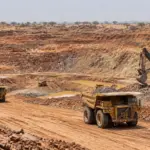
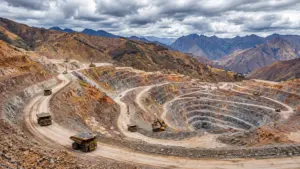
Remote view of a large-scale gold development site in Australia's Northern Territory.

Artemis Gold Inc. has agreed to acquire Vista Gold Corp. in an all-share transaction valued at approximately US$427 million, adding the advanced-stage Mt Todd gold project in Australia's Northern Territory to its portfolio.
The deal gives Artemis a second major growth platform beyond its Blackwater mine in British Columbia. It also creates a potential pathway to more than 1 million ounces of annual gold production, although Artemis has made clear that Blackwater's expansion remains its immediate priority.
The companies entered into the definitive arrangement agreement on Sept. 20, with the transaction announced the following day. Closing is expected in January 2027, subject to shareholder, court and regulatory approvals.
Deal terms put focus on scale and capital sequencing
Under the agreement, Vista shareholders will receive 0.0966 Artemis common shares for each Vista share. The exchange ratio implies consideration of approximately US$2.83 per Vista share, representing a 25% premium to Vista's last closing price and a 29% premium to its 20-day volume-weighted average price through Sept. 18.

The transaction is entirely equity-funded. Vista shareholders will not receive cash, and Artemis will not take on new debt to complete the acquisition. Existing Artemis shareholders are expected to own about 95% of the pro forma company, with Vista shareholders holding approximately 5%. Artemis' existing 4.95% stake in Vista is expected to be cancelled.

| Transaction and asset metric | Detail |
|---|---|
| Implied transaction value | Approximately US$427 million |
| Consideration | 0.0966 Artemis share per Vista share |
| Implied Vista share value | Approximately US$2.83 |
| Premium to last close | 25% |
| Premium to 20-day VWAP | 29% |
| Pro forma ownership | 95% Artemis / 5% Vista |
| Vista cash and debt at June 30, 2026 | US$50 million cash; no debt |
| Expected closing | January 2027 |
The structure allows Artemis to acquire a large development asset without immediately competing with its own expansion program for construction capital. In its announcement, Artemis said potential construction spending at Mt Todd is not expected before Blackwater's EP2 expansion is in full production.
That sequencing is central to the transaction. Artemis is acquiring future growth, rather than committing to build two major projects simultaneously.

Mt Todd brings a large resource and existing infrastructure
Mt Todd is located about 290 kilometres southeast of Darwin and 56 kilometres by road northwest of Katherine. The site has paved road access, while rail and gas pipeline infrastructure are nearby. Previous mining and milling operations closed in 2001.
The project is located on land owned by the Jawoyn Association Aboriginal Corporation, with an agreement governing land use and development. That relationship, along with the project's existing permits, will be important as Artemis reviews the development plan.
Vista's 2025 mineral resource estimate reported 9.1 million ounces of Measured and Indicated resources and 1.4 million ounces of Inferred resources. The resource is concentrated in the Batman and Quigleys deposits, with additional ounces contained in the existing heap-leach pad.
| Mt Todd resource area | Tonnes | Grade | Contained gold |
|---|---|---|---|
| Batman M&I | 316.4 Mt | 0.83 g/t | 8.46 Moz |
| Quigleys M&I | 10.7 Mt | 1.26 g/t | 0.43 Moz |
| Heap-leach pad M&I | 13.4 Mt | 0.54 g/t | 0.23 Moz |
| Total M&I | 340.4 Mt | 0.83 g/t | 9.12 Moz |
| Total Inferred | 57.1 Mt | 0.78 g/t | 1.43 Moz |
The Batman and Quigleys estimates use a 0.4 grams-per-tonne cut-off and a US$1,950-per-ounce pit shell. Mineral resources are not mineral reserves and do not demonstrate economic viability on their own.
The project also includes more than 1,300 square kilometres of contiguous exploration licences. The tenement package contains known occurrences of gold, copper, tin and tungsten across a northeast trend extending more than 25 kilometres. Artemis will therefore acquire both a defined development project and a district-scale exploration position.

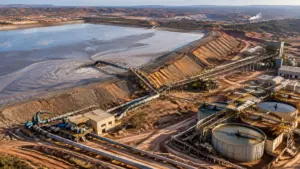
Processing infrastructure at a large-scale gold development site.
The development case is larger than the current feasibility study
Vista's 2025 feasibility study evaluated a 15,000-tonnes-per-day operation. That study outlined average annual gold production of approximately 153,000 ounces during the first 15 years, total production of about 4.37 million ounces over the mine life and an average all-in sustaining cost of approximately US$1,449 per ounce during the first 15 years.
At a US$2,500-per-ounce gold price, the study estimated an after-tax net present value of approximately US$1.06 billion, a 27.8% after-tax internal rate of return and a 2.7-year payback period. Initial capital was estimated at roughly US$425 million.
Artemis, however, has indicated that it intends to optimize Mt Todd toward the previously permitted 50,000-tonnes-per-day processing rate. That does not mean a 50,000-tonnes-per-day project has been approved as a new Artemis development plan. It means the company sees value in revisiting the existing engineering, permitting and mine plan at a larger scale.
The distinction matters. A larger operation could improve annual production and project economics, but it would also require additional engineering, capital, construction planning, environmental review and stakeholder engagement.
Artemis said it expects to provide an updated Mt Todd work plan when the transaction closes.
Blackwater remains the near-term value driver
Artemis' immediate focus is its Blackwater mine in central British Columbia. Phase 1A is designed to increase throughput, while the EP2 expansion is expected to be completed by mid-2028.
Following EP2, Artemis expects Blackwater to produce more than 500,000 ounces of gold per year with industry-leading all-in sustaining costs. Mt Todd would then provide a second large-scale production platform, creating a potential route toward more than 1 million ounces of annual production once both assets are developed and operating.

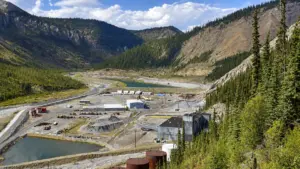
Modern gold mining infrastructure in British Columbia, where Artemis is expanding Blackwater.
The transaction therefore combines a producing mine with a permitted but undeveloped project. For Vista shareholders, that offers exposure to Blackwater's nearer-term growth while retaining participation in the longer-term Mt Todd opportunity. For Artemis, the acquisition adds development optionality without changing the stated order of capital priorities.
Vista had approximately US$50 million in cash and no debt as of June 30, 2026. The balance sheet reduces near-term financial complexity, although Artemis will still need to determine the scale and timing of future Mt Todd spending.
Approval timetable and transaction risks
The transaction requires approval by at least 66 2/3% of votes cast by Vista shareholders, as well as minority approval under Multilateral Instrument 61-101 where required. It also requires court approval and regulatory clearances, including:
- Australia's Foreign Investment Review Board approval;
- Northern Territory Ministerial Consent;
- SEC approval requirements;
- TSX and TSX Venture Exchange approvals; and
- Other customary closing conditions.
Vista's definitive proxy statement is expected to be mailed in November, with the shareholder meeting scheduled for December. The agreement includes an US$18 million termination fee payable by Vista in certain customary circumstances, including pursuit of a superior proposal.
The main execution risks are not limited to closing. Artemis must also manage Blackwater's expansion while reassessing Mt Todd's scale, construction requirements, permitting position, metallurgy and operating costs. A 50,000-tonnes-per-day design could create greater production potential, but it could also require materially higher capital than the 15,000-tonnes-per-day feasibility study.
Gold prices support the strategic backdrop
The acquisition comes as gold trades near record levels in the mid-$4,300s per ounce. Skillings' recent gold market analysis identified prices around $4,300 as an important market reference point after the Federal Reserve's latest policy move.
Official-sector buying remains a key support for the market. Market commentary accompanying the deal has placed recent central-bank purchases at roughly 91 tonnes per month, compared with an estimated 17 tonnes per month average before 2022. Goldman Sachs has been reported with a year-end 2026 forecast near $4,900 per ounce, while broader published bull scenarios have extended toward $5,400 in 2027.
Higher gold prices improve the potential value of large, permitted projects. They do not remove construction, cost inflation, permitting or execution risk. For Artemis, the relevant test will be whether it can convert strong bullion prices and Blackwater cash flow into a disciplined Mt Todd development plan.
Other transactions show that strategic demand is broadening across commodities. Titan Lithium's proposed A$333 million acquisition of Global Lithium Resources carried a reported 73% premium, while AngloGold Ashanti's early exercise of an option over Matsa Resources' Lake Carey tenements was valued at A$55 million. Together, the transactions point to continued competition for advanced assets in favorable jurisdictions.
Mt Todd scenario framework
| Scenario | Operating and market assumptions | Main implication |
|---|---|---|
| Base case | Artemis completes the transaction, finishes Blackwater EP2 and updates Mt Todd toward a staged 50,000 tpd plan | Capital remains focused on Blackwater before a measured Mt Todd construction decision |
| Bull case | Gold remains above current levels, Blackwater meets expansion targets and Mt Todd engineering confirms scale benefits | Artemis advances a large second operation with a credible path beyond 1 Moz per year |
| Bear case | Gold prices weaken, Blackwater costs rise or approvals and engineering take longer than expected | Mt Todd is delayed, resized or requires more capital than initially anticipated |
The acquisition is best understood as a long-duration portfolio transaction rather than an immediate production deal. Artemis is buying a large resource, existing infrastructure, permits and exploration ground, while giving itself several years to establish whether Mt Todd can be developed at the intended scale.
The decisive milestones will be Blackwater EP2 completion, the updated Mt Todd work plan and the company's eventual construction decision. Until then, the US$427 million transaction provides Artemis with a larger resource base and a second major growth option, but not yet a second operating mine.
LinkedIn snippet
Artemis Gold is acquiring Vista Gold in a US$427 million all-share deal, adding the 9.1 Moz Mt Todd resource in Australia's Northern Territory. The transaction preserves Blackwater as the near-term priority while creating a potential pathway beyond 1 Moz of annual gold production. Our analysis examines the deal terms, permits, resource base, capital sequencing and key risks.
X snippet
Artemis Gold's US$427M Vista deal adds Mt Todd, a 9.1 Moz M&I gold resource in Australia's Northern Territory. No cash, no new debt. Blackwater EP2 remains the priority, with Mt Todd construction deferred until after expansion. The key question: can Artemis scale the permitted project without compromising execution?