Autonomous mining has moved beyond the pilot stage. Industry data compiled by Skillings indicates that about 5,684 autonomous or autonomy-ready haul trucks are now operating globally, while Komatsu has commissioned its 1,000th ultra-class autonomous haul truck. EACON reports more than 3,100 active autonomous units, including over 1,500 battery-electric trucks.

The next investment decision is more complicated than choosing between diesel and electric equipment. Mine operators must determine how autonomy, charging infrastructure, power supply and mine design will work together.
That decision has been sharpened by a live industry dispute. BHP says static charging could remove about 1,000 operating hours per truck each year. Fortescue argues that the comparison should focus on total system economics and is targeting savings of up to US$4 per tonne through full electrification.
The issue for boards is not whether either company is correct in isolation. It is which haulage architecture can deliver reliable utilisation at a specific mine.
Autonomy has reached fleet scale
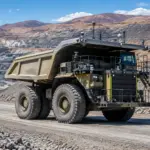
Komatsu’s 1,000-truck FrontRunner milestone confirms that autonomous haulage is now a production technology rather than a demonstration project.
The milestone truck, a 930E-5AT electric-drive haul truck with a 290-metric-tonne payload, was commissioned at Barrick’s Nevada Gold Mines. Komatsu says FrontRunner-equipped customers have collectively moved more than 11.5 billion tonnes of material.

The scale matters because autonomy creates value primarily through utilisation and cycle-time discipline. Industry benchmarks point to:
- 13%–15% lower operating costs
- Productivity or utilisation gains of up to 30%
- Haulage savings targeted at approximately US$0.50 per tonne
- Potential NPV uplift of up to 39% when the mine plan is redesigned around autonomy
Those figures are not universal outcomes. They depend on road quality, fleet density, dispatch software, maintenance performance and how extensively the mine changes its operating model.
Autonomy can produce more consistent speeds, reduce unnecessary idling and improve dispatch decisions. It can also reduce human exposure to active haul roads and dumping areas. But the system still depends on reliable communications, mapping, intervention protocols and skilled control-room personnel.
Skillings’ prior analysis of autonomous mining fleets found that the strongest economic gains occur when operators connect haulage with loading, dumping, maintenance and mine planning rather than automating individual trucks in isolation.

Control-room teams are increasingly responsible for fleet supervision, exception handling and production coordination.
The 1,000-hour charging problem
BHP’s concern focuses on static charging. According to reporting by International Mining and BHP’s own modelling, a theoretical 220-tonne battery-electric truck with a 3 MWh battery could require six to eight charging events a day.
The model assumes charging sessions of roughly 30 minutes. A comparable diesel truck might refuel once a day in approximately 15 minutes. BHP says the difference could translate into around 1,000 lost operating hours per truck per year.
That is a material figure for a high-throughput operation. It could require additional trucks, greater standby capacity or lower production targets unless charging is integrated into existing delays and shift patterns.
The number should be treated as a planning scenario rather than a measured result from a mature commercial fleet. Actual charging requirements will vary according to haul distance, payload, gradient, battery size, weather, charger capacity and the extent of regenerative braking.
However, the underlying issue is real: autonomy is designed to maximise consistent operating time, while static charging introduces scheduled downtime. If the two systems are not coordinated, electrification can undermine part of the value created by autonomy.
Fortescue’s whole-system response
Fortescue takes a different view. As reported by The Driven, the company is targeting savings of up to US$4 per tonne from a fully electrified Pilbara operation.
Fortescue’s model assumes no more than six charging sessions per day, with total charging time of about two hours over a 24-hour operating period. The company argues that charging time should be evaluated alongside fuel costs, energy security, maintenance, infrastructure and the long-term cost of operating a diesel fleet.
Its approach requires substantial capital. Fortescue has outlined investment in renewable generation, batteries, grid upgrades, charging equipment and more than 300 electric haul trucks.
The difference between BHP and Fortescue is therefore partly a disagreement over system boundaries. BHP is highlighting a potential truck-level productivity penalty from static charging. Fortescue is assessing the mine-wide economics of electrification.
Both perspectives matter to operators. A lower energy cost does not compensate for a production bottleneck if the fleet cannot meet the mine plan. Equally, preserving diesel-like utilisation may not be the best economic outcome if fuel, carbon and maintenance costs remain high.
Trolley assist offers a third path
Dynamic and trolley-assist systems are designed to reduce the conflict between energy replenishment and haulage productivity.
First Quantum has received a UK patent and trademark for its Quantum Electra-Haul system. The company says the technology supplies grid electricity through overhead trolley lines on steep uphill ramps. Trucks use pantographs to connect to the lines, activate their electric wheel motors and switch off the diesel engine while travelling under the system.
First Quantum reports diesel savings of up to 90% on fully laden uphill segments. That figure applies to the electrified portion of the haul cycle, not to total truck fuel consumption.
The company also reports almost 500,000 kilometres of trolley-assisted haulage in 2025 and says its Zambian operations have more than 15 kilometres of trolley lines installed across major sites.
Trolley assist does not eliminate the need for diesel or batteries across every operating condition. Its value depends on mine geometry. Long, steep and energy-intensive ramps are the most suitable locations. The system can reduce diesel exposure without requiring every truck to stop for repeated static charging.
Komatsu has also demonstrated an autonomous electric-drive truck operating with a dynamic trolley line, suggesting that autonomy and trolley infrastructure can be integrated rather than treated as separate systems.

The strongest autonomy cases often involve mine-wide coordination rather than isolated vehicle upgrades.
2026 autonomous haulage data table
| Indicator | Reported figure | What it signals | Qualification |
|---|---|---|---|
| Global autonomous or autonomy-ready haul trucks | 5,684 | Autonomy has moved into fleet-scale deployment | Skillings synthesis; definitions vary between OEMs and providers |
| Komatsu FrontRunner ultra-class trucks | 1,000 commissioned | Mature commercial deployment across major surface mines | Confirmed by Komatsu |
| EACON active autonomous units | 3,100+ | Large multi-site autonomy base | Company-reported active fleet |
| EACON battery-electric units | 1,500+ | Electric autonomy is expanding beyond pilots | Included within EACON’s reported fleet |
| Autonomous operating-cost reduction | 13%–15% | Potential improvement from utilisation and cycle consistency | Industry benchmark; site results vary |
| Potential utilisation gain | Up to 30% | Value depends on dispatch and mine-plan integration | Not a guaranteed fleet outcome |
| BHP static-charging productivity gap | About 1,000 hours per truck/year | Charging downtime could affect production planning | Modelled scenario |
| Fortescue electrification savings target | Up to US$4/t | Whole-system economics may outweigh charging penalties | Company target and modelling |
| First Quantum trolley-assist diesel reduction | Up to 90% | Dynamic power can reduce diesel on steep ramps | Applies to trolley-assisted uphill segments |
Haulage decision matrix
| Fleet strategy | Utilisation risk | Capex intensity | Diesel exposure | Credibility of per-tonne savings |
|---|---|---|---|---|
| Fully autonomous diesel | Low to moderate once the system is stable | Moderate | High | Strongest where autonomy benefits are already demonstrated; limited fuel benefit |
| Autonomous plus dynamic or trolley charging | Moderate; depends on line availability and route design | High on selected ramps | Lower on electrified segments | Credible on steep, repetitive hauls; less transferable to flat or changing routes |
| Autonomous plus static battery charging | Highest if charging queues are not engineered into the mine plan | Very high, including grid and charging infrastructure | Lowest in operation | Potentially strongest over the long term, but sensitive to downtime, power prices and battery performance |
This matrix does not identify a universal winner. It shows where the risks move. Diesel autonomy concentrates risk in fuel exposure and future carbon costs. Static battery charging concentrates risk in power infrastructure and utilisation. Trolley assist concentrates risk in route geometry, electrical infrastructure and fleet compatibility.
Base, bull and bear cases
Base case: phased hybridisation
In the base case, large open-pit mines automate defined haul zones first and introduce electrification selectively. Operators use diesel autonomy on flexible routes, trolley assist on steep ramps and static charging where duty cycles permit.
This scenario produces measurable utilisation gains while limiting the risk of redesigning the entire mine around immature charging infrastructure. Capital is deployed in stages, and fleet replacement is aligned with truck age and mine life.
Bull case: mine-plan redesign
In the bull case, new mines design pit geometry, roads, power distribution and control systems around autonomous electric haulage from the beginning. Charging, dispatch and maintenance are managed through one production platform.
The result could support the upper end of industry estimates: higher utilisation, lower energy costs and a material NPV uplift. This case requires reliable high-power infrastructure, interoperability between equipment and software systems, and a workforce capable of managing a digital fleet.
Bear case: charging bottlenecks
In the bear case, operators purchase electric trucks before the power system, charging layout or mine plan is ready. Charging queues, network failures and battery degradation reduce availability. The mine then carries both legacy diesel equipment and underutilised electric assets.
Under this scenario, autonomy may still deliver some cost savings, but the combined electrification case falls short of headline targets.

Fleet scale, road design and equipment interaction determine whether autonomy improves the whole production chain.
What boards should measure
The most useful indicators are operational rather than promotional:
- Autonomous operating hours as a share of total fleet hours
- Truck availability during charging and shift changes
- Energy consumed per tonne-kilometre
- Manual interventions per haul cycle
- Charging queue time and charger utilisation
- Payload consistency and cycle-time variance
- Maintenance cost per operating hour
- Network availability across active routes
- Battery degradation and replacement timing
- Production achieved against the mine plan
Autonomy’s value is ultimately measured in tonnes moved reliably, not in the number of trucks labelled autonomous.
The central choice for mine operators is sequencing. Should autonomy be deployed first and electrification follow? Should new mines be designed around full electrification? Or should dynamic and trolley-assist systems bridge the gap between diesel productivity and battery-electric operation?
For many operations, the answer will be a combination of all three. The 1,000-hour figure has made the charging challenge visible, but it has not settled the broader economic question. That will depend on whether operators can coordinate trucks, energy, roads, software and people as one production system.
LinkedIn:
Autonomous mining has reached fleet scale, but the next board-level decision is about integration. BHP’s static-charging model points to a potential 1,000-hour annual productivity gap per electric truck, while Fortescue targets up to US$4 per tonne in whole-system savings. Trolley assist offers a third route. Our analysis compares the operating risks, capital intensity and economics of diesel autonomy, dynamic charging and static battery charging.
X:
Autonomous mining is now a fleet-scale technology. The harder question is energy logistics: BHP flags ~1,000 hours of annual charging downtime per truck, Fortescue targets up to US$4/t in electrification savings, and First Quantum says trolley assist can cut diesel use 90% on steep uphill segments.