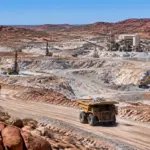
Copper cathode and concentrate move through an operating industrial handling facility.

By Skillings Mining Intelligence
Market snapshot
Copper’s physical market is tightening as exchange stocks fall, nearby prices move into backwardation and Chinese import premiums rise. At the same time, elevated gold prices are supporting large-scale consolidation, while governments and strategic investors are positioning around lithium, uranium and other critical minerals.
| Commodity | Latest reference | Market signal |
|---|---|---|
| Copper | US$6.84/lb COMEX; US$14,710/t LME | Tight physical market; elevated nearby pricing |
| Gold | About US$4,344–4,359/oz | Supports project M&A and development economics |
| Silver | About US$66.19/oz | Strong precious-metals backdrop |
| Uranium | US$89.75/lb spot; US$96.50/lb long term | Financing and contracting remain central |
| Iron ore | Below US$95/t | Softer bulk-commodity conditions |
| Nickel | Near US$16,000/t | Analysts see a potential 20%–30% year-end recovery |
| Lithium | About US$23,150/t | M&A focused on advanced, financeable projects |
Copper squeeze puts physical supply in focus
Copper rose 3.3% to about US$6.841 per pound on COMEX, while LME copper reached approximately US$14,710.50 per tonne. The more important signal is not only the price but the structure of the market.
LME on-warrant stocks have fallen to about 133,725 tonnes, with roughly 45% of warehouse tonnage already cancelled and earmarked for withdrawal. Cash copper has moved into a backwardation of about US$26 per tonne, while the Yangshan premium has risen to nearly US$124 per tonne, close to a four-year high.

Those indicators point to tight prompt availability rather than a purely speculative rally. Buyers are paying more for material that can be delivered now, particularly in Asia, where the Yangshan premium reflects the cost and urgency of importing refined copper into China.

The supply picture is also deteriorating. Outages and operating disruptions at Grasberg in Indonesia and Kamoa-Kakula in the Democratic Republic of Congo have removed approximately 600,000 tonnes from expected 2026 mine supply. That loss is significant in a market already dealing with declining grades, constrained project pipelines and weak treatment charges for concentrates.
Skillings’ previous coverage of the AI-driven copper squeeze has highlighted the demand side: data centers, grid investment, electric vehicles and defense infrastructure are competing for the same refined metal. The current warehouse data shows how quickly that demand can become a physical constraint.

Copper scenario framework
| Case | Market conditions | Likely implication |
|---|---|---|
| Bear | Disruptions ease, inventories rebuild and demand slows | Backwardation narrows and prices retreat toward long-term incentives |
| Base | Mine outages persist while grid and data-center demand remains firm | Prices stay elevated, with volatility concentrated in nearby contracts |
| Bull | Further disruptions combine with stronger Chinese imports and constrained smelter supply | New highs become possible as consumers compete for prompt units |
Artemis Gold agrees to acquire Vista Gold
Artemis Gold has agreed to acquire Vista Gold in an all-stock transaction valued at approximately US$427 million. The deal adds the Mt Todd gold project in Australia’s Northern Territory to Artemis’ portfolio and expands its pathway toward more than 1 million ounces of annual production alongside the Blackwater project in British Columbia.
Vista shareholders are expected to receive Artemis shares rather than cash. The transaction gives Artemis control of Mt Todd, which contains about 9.1 million ounces of measured and indicated gold resources, with additional inferred resources. The project is permitted for a processing plant of up to 50,000 tonnes per day.

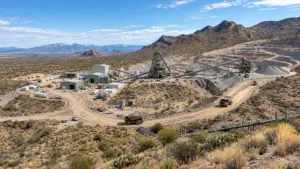
The Mt Todd transaction gives Artemis Gold a large advanced-development asset in the Northern Territory.
The strategic logic is scale. Artemis is adding a major development-stage project without taking on acquisition debt, while Vista shareholders gain exposure to a larger producer with an operating and development pipeline.
The transaction remains subject to shareholder, court and regulatory approvals. Its success will depend on whether Artemis can advance Mt Todd without diverting capital or management attention from Blackwater. The project also remains exposed to construction costs, permitting execution and the availability of infrastructure in a remote operating environment.
For background on the precious-metals market, see Skillings’ gold price outlook.
Titan Lithium targets Global Lithium in A$333 million deal
UAE-based Titan Lithium has signed a binding scheme to acquire Global Lithium Resources for approximately A$333 million in cash. The offer values Global Lithium at A$1.15 per share, representing a premium of about 73% to the company’s unaffected share price.
The transaction also includes a development loan facility of up to A$120 million for the Manna lithium project in Western Australia. The facility is intended to fund continued development while the scheme proceeds through regulatory and shareholder approvals.

Hard-rock lithium operations require integrated mining, crushing and processing infrastructure.
Manna is reported to contain an indicated and inferred resource of about 51.6 million tonnes at 1% lithium oxide, alongside an ore reserve of approximately 20.96 million tonnes at 0.89% lithium oxide.
The premium is notable because lithium valuations remain highly sensitive to prices, inventories and development capital. Titan is effectively buying a defined project and a path to development rather than taking early-stage exploration risk. The key tests will be permitting, financing discipline and the project’s ability to compete with lower-cost supply as new lithium capacity enters the market.
The transaction is expected to require Foreign Investment Review Board, Australian Competition and Consumer Commission, court and shareholder approvals. It follows a broader trend toward consolidation around advanced lithium assets, a theme also explored in Skillings’ lithium market coverage.
Dasa uranium financing clears a major hurdle
Global Atomic has secured conditional approval for up to US$414.2 million in U.S. International Development Finance Corporation-backed debt for its Dasa uranium project in Niger.
The facility is about 40% larger than the company’s 2024 proposal and could cover the remaining construction requirement. However, the approval is not the same as a signed loan or an immediately drawable facility.
The outstanding conditions include identifying a viable export route for yellowcake from landlocked Niger, extending the project mining convention and permit to match the financing tenor, securing government assurances around loan repayments and reaching a direct agreement with the Nigerien government.

Dasa’s financing pathway remains linked to logistics, permitting and government agreements.
The financing decision illustrates the growing role of state-backed capital in strategic minerals. Uranium demand is being supported by reactor life extensions, new nuclear construction and energy-security concerns, but projects in politically sensitive jurisdictions face a higher financing threshold.
For Dasa, the next milestone is not simply financial close. It is the resolution of the export and government conditions that determine whether the project can move from approved financing to construction funding.
Brazil creates a framework for critical minerals
Brazil has enacted Law No. 15,506, establishing a national policy for critical and strategic minerals and creating the CIMCE coordination council.
The framework covers exploration, extraction, processing, industrial transformation and urban mining. CIMCE will help define priority minerals and projects while screening strategic transactions, including certain mergers, acquisitions and foreign investments involving critical-mineral assets.
The law authorizes an incentive envelope of up to R$7 billion. That includes as much as R$2 billion for the FGAM guarantee fund and up to R$5 billion in fiscal credits for processing, transformation and urban-mining projects between 2030 and 2034.
Brazil’s policy is designed to move the country beyond raw-material exports and toward domestic value addition. For mining companies, the opportunity is access to credit support and fiscal incentives. The risk is a more interventionist approval process for strategic transactions, with project qualification criteria still to be defined.
The official text is available through Brazil’s Planaltogovernment legislation portal.
White Pine Copper outlines a large U.S. project
White Pine Copper’s Michigan pre-feasibility study reports a post-tax net present value of approximately US$1.38 billion and a post-tax internal rate of return of 23.1%.
The proposed underground operation is designed around a 15,000-tonne-per-day processing rate, a 26-year mine plan and an all-in sustaining cost of about US$2.32 per pound. Production is targeted for 2030.

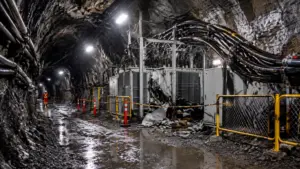
Underground mine planning and development are central to the White Pine Copper study.
The project is positioned to benefit from rising interest in domestic copper supply. Its economics, however, remain exposed to construction costs, permitting, financing and the copper price assumption used in the study.
White Pine is also a useful counterpoint to the immediate copper squeeze. High prices improve project economics, but a new mine cannot respond quickly to a shortage. The market may remain tight for years before projects that are only now moving through feasibility and permitting can deliver material.
What matters next
The day’s developments point to three connected themes:
- Physical copper availability is tightening faster than new supply can respond.
- Gold and lithium M&A is concentrating around advanced projects with defined development pathways.
- Governments are treating critical minerals as industrial and geopolitical assets, not only mining commodities.
The common factor is execution. Prices can improve project economics, but infrastructure, permitting, financing, logistics and government agreements will determine which projects actually reach production.
Shareable briefing
LinkedIn: Copper’s squeeze is becoming physical: LME stocks are falling, cancelled warrants are rising and Chinese import premiums are near a four-year high. Alongside the market pressure, Artemis Gold is buying Vista Gold for about US$427 million, Titan Lithium is acquiring Global Lithium for A$333 million, and Brazil has created a new critical-minerals policy framework.
X: Copper tightens as warehouse stocks fall and backwardation returns. Artemis adds Mt Todd in a US$427M gold deal, Titan targets Global Lithium for A$333M, and Brazil launches a critical-minerals framework with up to R$7B in incentives.