Here's the thing nobody in Washington wants to say out loud: the United States hasn't produced its own antimony since 2016. Not a single pound. For a metal that hardens lead in ammunition, fireproofs children's clothing, and stabilizes industrial plastics, that's not just embarrassing: it's a strategic liability.

That drought ends now.
United States Antimony Corporation (UAMY) and Americas Gold and Silver (USAS) just announced a joint venture to build North America's first hydrometallurgical antimony processing plant in Idaho's Silver Valley. The facility will process antimony feed material from Americas' Galena Complex, which already produced 561,000 pounds of antimony in 2025. Americas holds 51% ownership, US Antimony controls 49%, and US Antimony will serve as managing member.
The stock market noticed. Both companies' shares jumped on the February 10 announcement.

The Numbers That Matter
Let's talk about the dependency problem. China currently supplies approximately 55% of U.S. antimony demand. That's not diversification. That's a chokehold.

Antimony isn't a household name, but it's embedded in the machinery of modern life. Defense applications rely on it. Flame retardants require it. Battery technology increasingly demands it. And the United States produces exactly zero percent of what it consumes domestically.
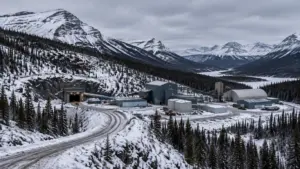
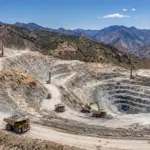
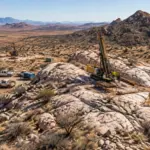
The Galena Complex sits in Idaho's historic Silver Valley, a region that once produced more silver than anywhere else on Earth. Now it's pivoting to antimony at exactly the moment geopolitical tensions make that shift strategically essential. The facility already has all primary permits except construction approvals. Build time: 18 months.
That timeline matters. The Trump administration has made securing domestic critical mineral supply chains a centerpiece of its second-term agenda. Gary Evans, CEO of United States Antimony, confirmed that paperwork for potential government funding support is already prepared. This isn't a speculative venture hoping for policy tailwinds: it's a project that's been designed to ride them.
How the Deal Actually Works
The joint venture structure is straightforward but smart. Americas will sell antimony feed material to the partnership at market terms. The processing facility will then refine that material, and US Antimony: leveraging its decades of antimony processing experience: will purchase the refined antimony at market rates.
Both partners contribute capital proportional to their ownership stakes. Americas captures 51% of processing profits. US Antimony manages operations and secures offtake.
Here's the kicker: the facility won't just process material from Galena. It's designed with excess capacity to handle antimony feed from other sources. That's critical. It means this isn't just a captive processing facility for one mine: it's infrastructure that can anchor a broader domestic antimony supply chain.

The Strategic Calculus Isn't Subtle
China doesn't just supply antimony. It controls antimony. Beijing has demonstrated repeatedly over the past five years that critical mineral exports are geopolitical leverage, not just commercial transactions. Rare earth export restrictions. Gallium and germanium controls. Tungsten quotas.
The pattern is clear: when Washington does something Beijing doesn't like, critical mineral supply becomes a pressure point.
Antimony fits that pattern perfectly. It's essential for defense applications: everything from armor-piercing ammunition to infrared detection systems relies on antimony compounds. It's irreplaceable in certain industrial processes. And until now, the United States has had zero ability to produce it domestically if Chinese supply disappears overnight.
This Idaho facility changes that calculation. Not entirely: 55% import dependency doesn't vanish with one processing plant. But it creates optionality. It proves that domestic production is viable. And it sends a signal that the U.S. is serious about reducing structural vulnerabilities in critical mineral supply chains.
The timing aligns with other antimony developments. The Stibnite Gold Project, also in Idaho, received full federal permitting in 2025 and represents one of the largest antimony reserves outside Chinese control. When Stibnite reaches production, it will need processing infrastructure. This joint venture facility provides exactly that.
What Happens in the Next 18 Months
Construction timelines in mining are notoriously elastic. Eighteen months is the target. Permitting delays, equipment procurement issues, labor shortages: any of these can stretch schedules.
But this project has advantages. The Silver Valley has mining infrastructure. Skilled labor exists locally. The permitting groundwork is largely complete. And both partners have direct financial incentives to move quickly: Americas wants processing capacity for its antimony production, and US Antimony wants to reestablish its position as a domestic antimony supplier after years of sourcing material from Mexico.

The facility will use hydrometallurgical processing, which offers environmental advantages over traditional pyrometallurgical methods. That matters for community relations and regulatory compliance in a region that's still recovering from a century of aggressive mining and smelting operations.
Funding remains the open question. Gary Evans indicated that paperwork for government support is ready, which suggests the partnership anticipates possible backing from federal programs designed to secure critical mineral supply chains. The Department of Defense, Department of Energy, and Commerce Department all have funding mechanisms for projects that reduce strategic mineral import dependency.
Whether that funding materializes, and how quickly, will likely determine whether this facility hits its 18-month construction target or requires longer to come online.
The Bigger Trend This Represents
This isn't an isolated development. It's part of a larger reconfiguration of North American critical mineral supply chains.
Lithium processing facilities are multiplying across the United States and Canada. Rare earth separation plants are under construction in Texas. Graphite processing capacity is being built in Louisiana. And now antimony processing returns to Idaho after a decade-long absence.
The common thread: recognition that offshoring critical mineral processing to China created strategic vulnerabilities that are now expensive and time-consuming to reverse.

Antimony exemplifies the problem. The United States has antimony deposits. It has mining expertise. It has processing technology. What it hasn't had for a decade is the economic and policy environment to make domestic antimony production competitive with Chinese imports.
That environment is shifting. Tariffs, export controls, and government procurement preferences are all tilting toward domestic production. The joint venture between UAMY and USAS is a direct response to those changing incentives.
But here's where it gets complicated: building one processing facility doesn't solve import dependency. It reduces it. Slightly. Americas' Galena Complex produced 561,000 pounds of antimony in 2025. U.S. consumption is several times that volume. Even at full capacity, processing all of Galena's output plus additional feed from other sources, this facility won't eliminate Chinese imports.
It will, however, establish proof of concept. It will demonstrate that domestic antimony processing is economically viable under current policy frameworks. And it will create a foundation for further expansion if geopolitical conditions make that necessary.
The Risk Factors Nobody's Talking About
Antimony prices are volatile. Global supply is concentrated not just in China, but in a handful of aging mines in Russia, Tajikistan, and Bolivia. Demand is rising as battery technology increasingly incorporates antimony in next-generation designs.
That creates both opportunity and risk for this joint venture. If antimony prices spike, the facility prints money. If Chinese producers decide to flood global markets to undercut emerging Western competition: a tactic Beijing has used effectively with solar panels, rare earths, and other strategic materials: profit margins compress fast.
The partnership structure attempts to mitigate this. Americas' 51% ownership means it captures processing margins while continuing to produce antimony feed regardless of processing economics. US Antimony's operational control means decisions get made by the partner with the most antimony-specific expertise.
But market risk remains. This facility only makes economic sense if antimony prices stay elevated enough to justify domestic processing costs that are inevitably higher than Chinese alternatives.

Policy support helps. Government offtake agreements, procurement preferences for domestically-sourced antimony, and direct subsidies can all buffer market volatility. Whether those supports materialize at scale remains uncertain.
What This Means for Investors and Operators
For Americas Gold and Silver, this is strategic diversification. The company operates the Cosala Operations in Mexico and the Galena Complex in Idaho. Adding processing capacity for antimony creates vertical integration and potentially higher margins on existing production.
For United States Antimony, it's an operational comeback. The company has antimony processing expertise but has struggled with consistent domestic feed supply. This partnership solves that problem while positioning UAMY as the managing operator of North America's only hydromet antimony facility.
For the broader market, it's a data point. Critical mineral reshoring is moving from policy rhetoric to physical infrastructure. That creates opportunities for companies with relevant assets, processing expertise, or strategic positioning in domestic supply chains.
It also creates risks. Not every critical mineral project will succeed. Construction timelines will slip. Some ventures will fail to secure necessary permits or funding. Market dynamics will make certain projects uneconomic.
The UAMY-USAS joint venture has better odds than most. Permitted site. Existing feed supply. Experienced operators. Clear strategic alignment with federal policy priorities.
But 18 months is a long time. Markets change. Administrations change. Chinese export policy changes.
The facility won't break ground until construction permits clear. It won't process antimony until equipment is installed and commissioned. And it won't reduce U.S. import dependency until it's operating at commercial scale.
Until then, the United States remains 55% dependent on Chinese antimony. This joint venture is a step toward changing that equation. Whether it's a big enough step, fast enough, depends on execution over the next year and a half.
The clock is already ticking.