The mining industry spent the last decade chasing critical minerals. Lithium. Cobalt. Rare earths. The problem nobody wants to admit: the countries sitting on those deposits are now rewriting the rules faster than operators can sign permits.

2026 marks the inflection point where resource nationalism stops being an emerging risk and becomes the operating environment. More than 40 countries have revised mining policies since 2020. That's not gradual policy evolution. That's a coordinated reordering of who captures value from mineral extraction.
The strategic calculus is brutal: you need these metals for energy transition, defense tech, and electrification. The countries that control them know it. And they're acting accordingly.
The High-Risk 15: Where Capital Goes to Die
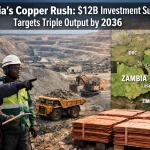
Start with the obvious culprits. Mexico nationalized its lithium sector in 2022, canceling concessions held by China's Ganfeng Lithium Group. Chile is negotiating indigenous participation frameworks that effectively give veto power over lithium projects. The Democratic Republic of Congo imposed a 10% super-profit tax on cobalt. Zambia keeps raising mining levies every 18 months.

More Read
Those four alone represent catastrophic exposure for any operator banking on stable fiscal terms.

But the list gets worse. Peru's community protests have crippled multiple copper operations. Guinea is tightening terms on bauxite and iron ore. Indonesia already banned nickel ore exports and is now eyeing downstream copper processing requirements. Tanzania, Zimbabwe, and Namibia are all drafting laws that mandate state equity stakes between 15% and 35%.
Add Bolivia (lithium nationalization threats), Argentina (provincial mining taxes despite federal frameworks), Kazakhstan (export restrictions on uranium and rare earths), Mongolia (windfall profit taxes on coal and copper), and South Africa (policy uncertainty around the Mineral and Petroleum Resources Development Act amendments).
More Read
That's 15 jurisdictions where your project economics can get torched by legislative fiat. And the common thread: they all control at least one critical or strategic mineral that supply chains desperately need.
The New Playbook: Four Mechanisms That Cripple Projects
Resource nationalism in 2026 operates through four distinct channels, each designed to extract more value without technically expropriating assets.
Free carried interest mandates. Governments take 10% to 30% equity stakes without contributing capital. You fund exploration, permitting, and construction. They collect dividends. The DRC pioneered this with Glencore's cobalt assets. Now it's standard practice across Central Africa and gaining traction in Latin America.
Export restrictions and value-added requirements. Indonesia's playbook: ban raw nickel exports, force smelter construction in-country, dictate offtake terms. The capital required to comply makes projects uneconomic unless you're an integrated major with captive demand. Mid-tier operators get squeezed out entirely.
Windfall profit taxes with retroactive application. Zambia raised copper royalties from 5.5% to 10% when prices hit $10,000 per tonne. Then applied it retroactively to contracts signed under the old regime. The legal challenge is still pending. Meanwhile, operators pay up or face license revocation.
Indigenous consultation requirements without defined timelines. Australia now mandates First Nations engagement for critical mineral projects. Sounds reasonable until you realize consultation doesn't mean approval, and there's no statutory deadline for resolution. Projects sit in limbo for years while communities negotiate equity stakes, employment quotas, and revenue sharing that wasn't in the original feasibility study.

Why 2026 Is Different: Three Converging Pressures
The intensity of resource nationalism in 2026 stems from three factors hitting simultaneously.
First, commodity prices. Copper at $4.50 per pound. Lithium carbonate rebounding from the 2023 crash. Gold above $2,800 per ounce. When resource prices spike, governments see windfall revenue they're not capturing. The political pressure to "correct" that imbalance becomes irresistible, especially in election years.
Second, geopolitical competition. The U.S., EU, and China are all scrambling to secure critical mineral supply chains. That competition gives resource-rich countries leverage they didn't have in 2015. Chile can play U.S. lithium buyers against Chinese offtakers and extract better terms from both. Mongolia can negotiate uranium deals with multiple nuclear powers and pick the highest bidder.
Third, energy transition rhetoric. Every government committed to net-zero targets needs domestic mining to hit those goals. But local communities don't want the environmental impact. So politicians split the difference: allow mining, but load it with so many conditions and taxes that only desperate operators proceed. The result: projects advance at a crawl, supply stays tight, and prices stay elevated. Which triggers another round of windfall taxes.
Those three clocks do not sync. But they all point to the same conclusion: sovereign risk in mining just repriced higher.
The Risk Framework: Quantifying Sovereign Exposure
Operators need a structured way to assess resource nationalism risk beyond anecdotal headlines. Here's the framework institutional investors are using in 2026:
| Risk Factor | Weight | Red Flags |
|---|---|---|
| Policy Volatility | 30% | Mining code revised >2 times in 5 years; retroactive tax changes |
| Indigenous Land Claims | 25% | Project on or adjacent to ancestral territory; no consultation framework |
| Fiscal Instability | 20% | Government debt >70% of GDP; IMF bailout within 3 years |
| Geopolitical Alignment | 15% | Conflicting relationships with U.S./China; sanctions exposure |
| Rule of Law | 10% | Corruption Perceptions Index score <40; weak contract enforcement |
Any jurisdiction scoring above 60% on this framework warrants material sovereign risk disclosure in technical reports. Above 75%, it should trigger stress testing on project economics assuming a 10-point royalty increase and 20% free carried state equity.
The jurisdictions hitting 75%+ in 2026: DRC, Zimbabwe, Tanzania, Guinea, Bolivia, and increasingly Peru.

The 3 Safer Jurisdictions (And Their Trade-Offs)
No mining jurisdiction is risk-free in 2026. But three stand out as relatively stable for long-term capital deployment.
Canada. Federal government backing for critical minerals through the Critical Minerals Strategy. Established permitting frameworks. Functional legal systems. The trade-off: permitting timelines stretch 7 to 10 years, indigenous consultation adds uncertainty, and provincial regulations vary wildly. Quebec is operator-friendly. British Columbia less so.
Australia. World-class geology. Transparent regulatory environment. Strong rule of law. The catch: labor costs are punishing, infrastructure in remote areas is limited, and the federal government is layering on indigenous engagement requirements that look suspiciously like the Canadian model. Expect permitting timelines to stretch.
Botswana. Underrated safe haven. Political stability. Pro-mining government. Transparent licensing. Limited corruption. The catch: it's a small country with finite deposits, and most of the best geology is already spoken for by De Beers and copper majors.
Notice what's not on this list: Chile, Peru, South Africa, Indonesia, Mexico. Those were tier-one jurisdictions 15 years ago. They're now material sovereign risk exposures.
What This Means for Operators
If you're running a mining company in 2026, the playbook just changed.
Stop treating sovereign risk as a footnote in feasibility studies. Model it as a primary variable. Run scenarios where royalties increase 5 points, the government takes 20% free equity, and export restrictions force local processing. If your project still pencils at a 12% IRR under those conditions, proceed. If not, walk.
Prioritize jurisdictions where contract sanctity holds. Canada, Australia, and Botswana cost more upfront. But your capital isn't subject to legislative revision every election cycle. That stability has value. Price it in.
Build local partnerships before you need them. The indigenous consultation requirements spreading globally aren't going away. Operators who engage early and structure genuine equity participation will clear permits faster. Those who treat it as a compliance checkbox will face endless delays and protests.
Diversify geographically. No single jurisdiction should represent more than 30% of your asset base. Resource nationalism is contagious. When one country successfully extracts more value through policy changes, neighbors copy the model. Chile raises lithium royalties, Peru follows six months later. Build a portfolio that can absorb hits.

And accept the uncomfortable truth: the era of stable, low-royalty mining jurisdictions is over. The countries sitting on critical minerals know their leverage. They're using it. Your choice as an operator is simple: adapt to the new terms or exit the sector entirely.
The Uncomfortable Endgame
Resource nationalism in 2026 isn't irrational. It's strategic.
Governments watched foreign mining companies extract billions in value while leaving behind tailings ponds and minimal local employment. They watched commodity supercycles enrich shareholders in Toronto, London, and Sydney while their own budgets stayed threadbare. And they watched the energy transition create insatiable demand for metals they control.
From their perspective, the current repricing of mining economics isn't resource nationalism. It's correction.
The problem for operators: correction or not, it makes projects uneconomic. And uneconomic projects don't get built. Which means the supply deficit everyone's worried about gets worse. Which pushes prices higher. Which triggers another round of windfall taxes and export restrictions.
That feedback loop defines mining in 2026. And the only operators who survive it are the ones who stopped pretending sovereign risk is someone else's problem.