While the mining sector chases megadeals and consolidation plays, BHP Group is doing something unusual: sitting out the M&A frenzy entirely. CEO Mike Henry made the company's position clear in recent earnings commentary: BHP won't be competing for Anglo American, won't be bidding against Glencore for Teck's copper assets, and isn't interested in the acquisition arms race consuming mid-tier producers.

The reason? BHP doesn't need to buy growth. It already owns it.
The Melbourne-based major controls the most robust organic copper pipeline in the industry: Vicuña in Chile, Escondida expansions, South Australia development: and Henry's calculus is brutally straightforward: "That's a dangerous place for a company to be, where they can only unlock growth through M&A."
This isn't defensive posturing. It's strategic luxury. And it reveals an uncomfortable truth about the current mining M&A landscape: most companies are scrambling for acquisitions because their own project pipelines can't deliver the copper volumes the market demands. BHP's position is different. It has the assets, the balance sheet, and the timeline to grow production organically while competitors drain capital on bidding wars and integration risk.
The Numbers Behind the Discipline
BHP's copper dominance isn't speculative: it's already visible in the financials. For the first time in company history, copper now represents 51% of underlying EBITDA. That's not a temporary spike. It's the result of a four-year production ramp that increased output by roughly 30%, positioning BHP ahead of the electrification demand curve before most competitors realized the scale of what was coming.
More Read

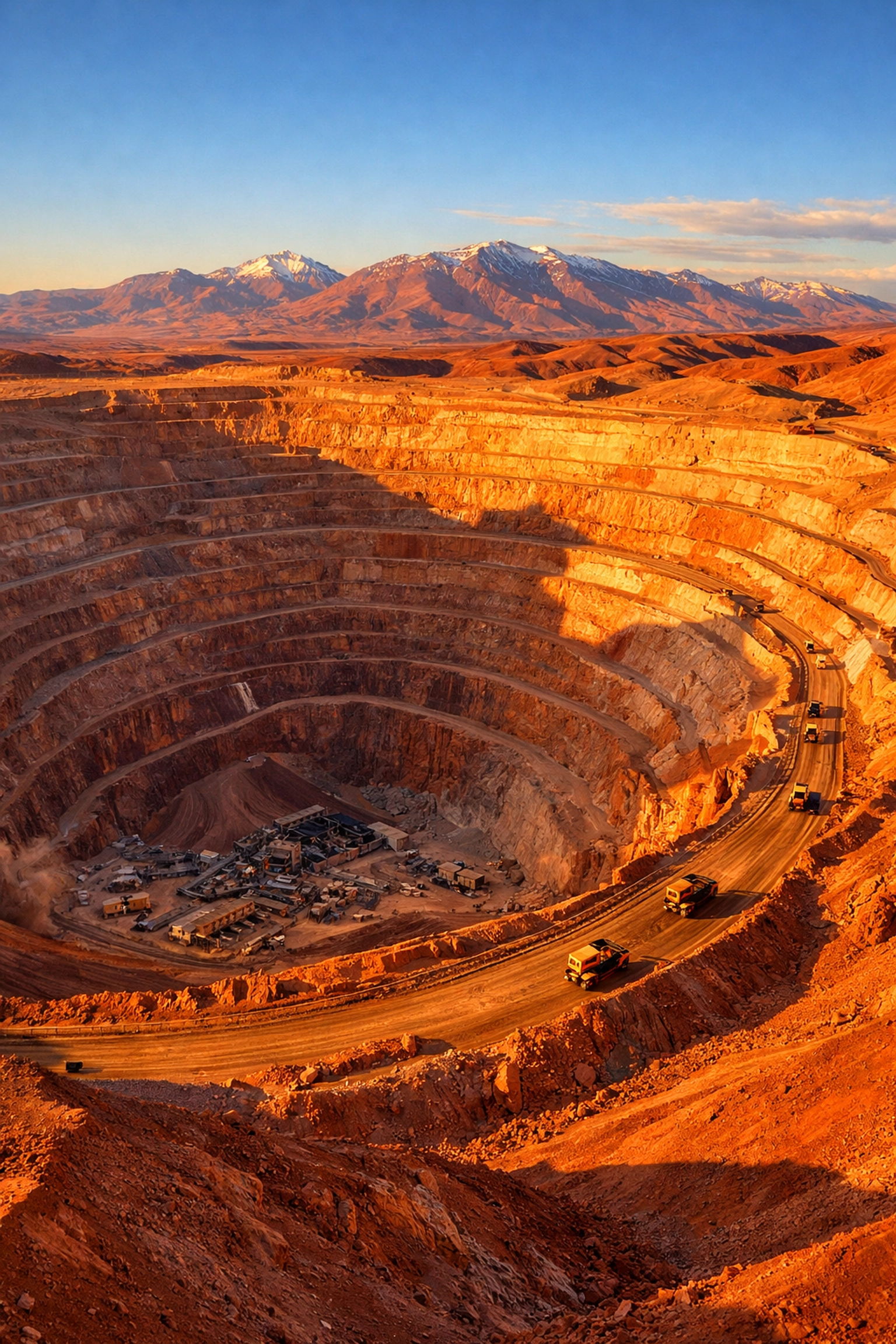

The company is targeting approximately 2.5 million tonnes of copper-equivalent production annually by the mid-2030s. To put that in context, that's more annual output than the combined copper production of Chile's Codelco and Freeport-McMoRan's Grasberg mine. And BHP plans to reach that figure without acquiring a single new asset.
The projects driving this growth are already permitted, financed, and advancing:
More Read

- Escondida expansions in Chile (the world's largest copper mine, where BHP controls 57.5%)
- Vicuña district development in the Atacama, targeting first production in the early 2030s
- Oak Dam and other South Australia prospects, part of BHP's long-term copper diversification strategy
- Productivity gains across existing operations, including autonomous haulage and AI-driven ore sorting
These aren't aspirational timelines. BHP is advancing engineering studies, securing water rights, negotiating community agreements, and building the infrastructure to deliver this copper into a market that's shifting from surplus to structural deficit.
Why Organic Growth is a Competitive Moat
Henry's resistance to M&A isn't philosophical: it's financial. Large-scale mining acquisitions in 2026 come with nasty complications: inflated valuations, integration execution risk, permitting delays, community opposition, and the reality that most "tier-one" copper assets were discovered decades ago. The pool of projects that meet BHP's criteria: long-life, low-cost, scalable, and located in jurisdictions with acceptable sovereign risk: is vanishingly small.
The strategic calculus here isn't subtle: if you already control best-in-class assets, why pay a takeover premium for someone else's development headaches?
BHP's Escondida operation alone produced over 1 million tonnes of copper in 2025, more than any other single mine globally. The company's ability to expand that footprint through brownfield optimization: rather than greenfield acquisition: means it can deploy capital at lower risk and higher returns than competitors bidding for shrinking M&A targets.
Meanwhile, the copper market is tightening exactly as BHP planned. Global refined copper usage is forecast to grow approximately 2% in 2026, driven by grid modernization, EV infrastructure, and data center expansion. Supply, by contrast, is constrained by underinvestment, permitting gridlock, and the geological reality that new tier-one discoveries are increasingly rare.

BHP anticipated this imbalance and positioned itself accordingly. Over the past four years, while other majors deferred capital expenditure and exploration budgets, BHP increased copper production by 30%. That head start matters. In a deficit market, the companies that control large, low-cost production are price-setters. The companies scrambling to acquire assets at inflated multiples are price-takers.
The M&A Alternative: Why Others Are Buying
Not every mining company has BHP's luxury. For mid-tier producers and even some majors, M&A isn't a choice: it's a necessity. Their organic pipelines are thin, their reserve replacement rates are negative, and copper demand is accelerating faster than internal exploration can deliver.
This dynamic is driving the 2026 M&A wave we're watching unfold: Anglo American spinning off assets, Glencore circling Teck, Chinese state-owned enterprises bidding aggressively for African and South American copper deposits. These companies are buying growth because they can't generate it internally at the scale or speed the market demands.
The risk? Overpaying for assets that look attractive on paper but deliver operational disappointments in practice. Mining M&A has a poor track record: integration costs routinely exceed projections, synergies fail to materialize, and community opposition or permitting delays push first production timelines years beyond the original deal thesis.
BHP is sidestepping all of that. Its organic pipeline delivers copper without takeover premiums, without integration risk, and without the regulatory scrutiny that accompanies cross-border megadeals. The company can focus capital on drilling, engineering, and permitting: the unglamorous work that actually brings new copper supply online.
What This Means for the Sector
BHP's discipline exposes an uncomfortable reality for the rest of the mining industry: organic growth is a function of long-term planning, not short-term capital deployment. The companies that invested in exploration, community engagement, and permitting a decade ago: when copper prices were lower and investor sentiment was skeptical: now control the assets that matter. The companies that deferred those investments are now forced to pay up for someone else's foresight.
This dynamic is creating a two-tier copper sector. At the top, a handful of diversified majors: BHP, Rio Tinto, Freeport: control large, long-life assets with expansion optionality. Below them, a crowded field of mid-tier producers and juniors compete for scraps: marginal deposits, high-cost operations, and jurisdictions with elevated sovereign risk.
The gap between these two tiers is widening. BHP's copper EBITDA margins are expanding as prices rise, while mid-tier producers face cost inflation, labor shortages, and permitting delays that compress returns. The result? Consolidation pressure that benefits acquirers with strong balance sheets and punishes sellers with weak project pipelines.
BHP's strategy also signals confidence in long-term copper fundamentals. The company isn't sitting out M&A because it's bearish on copper: it's sitting out because it believes the organic growth it controls will deliver better shareholder returns than competing in an overheated auction market. That's a bet on structural demand drivers (electrification, renewable energy, data centers) overwhelming near-term supply additions.
The Risks of Playing It Safe
BHP's disciplined approach isn't without trade-offs. By avoiding M&A, the company accepts slower production growth in the near term and relies on execution across its existing pipeline. If Vicuña permitting stalls, if Escondida productivity gains disappoint, or if South Australia drilling results underwhelm, BHP's copper growth story loses momentum.
There's also optionality risk. In a sector where tier-one assets rarely change hands, sitting out M&A means potentially missing the one or two transformational deals that actually make sense. If a rare, high-quality asset becomes available at a reasonable valuation, BHP's disciplined stance could become a strategic liability.
But Henry's comments suggest the company is comfortable with that trade. BHP has the financial capacity to execute acquisitions: its balance sheet and credit ratings easily support large-scale M&A: but the pool of targets that meet its investment criteria is limited. Rather than chase mediocre assets at inflated prices, the company is prioritizing returns on the portfolio it already controls.
That's the luxury of discipline: you can afford to wait for the right opportunity because your existing assets are already delivering the growth the market values.
The 2026 Copper Equation
BHP's organic strategy depends on copper market fundamentals evolving as projected: rising demand, constrained supply, and sustained price support above $4.00/lb. If those conditions hold, BHP's existing pipeline will generate significant shareholder value without the integration risk and capital intensity of M&A.
Early indicators suggest that thesis is playing out. Copper inventories on the London Metal Exchange and Shanghai Futures Exchange are declining. Speculative positioning is turning bullish. And demand from electrification and grid infrastructure continues accelerating, particularly in North America and Europe where government subsidies are driving deployment.
The supply side remains constrained. Major new copper projects are delayed by permitting (Resolution in Arizona, Pebble in Alaska) or facing community opposition (Tia Maria in Peru, Conga in Peru). Existing operations are aging, with ore grades declining and stripping ratios rising. The industry's average reserve life is shortening, and exploration budgets: despite higher copper prices: remain below the levels needed to replace depleted reserves.
BHP's pipeline sidesteps these constraints. Its projects are in advanced stages, with environmental approvals secured or in progress, community agreements negotiated, and financing committed. The company isn't waiting for the market to tighten: it's already positioned for the deficit that's coming.
What Happens Next
BHP's strategy creates a template for copper majors with strong organic pipelines: prioritize execution over acquisition, deploy capital into brownfield expansions with lower risk profiles, and let competitors bid up marginal assets in a frothy M&A market. The companies that follow this approach will likely outperform those chasing growth through dealmaking.
For the sector as a whole, BHP's discipline reinforces a structural truth: the copper industry's growth problem isn't a lack of capital or acquisition appetite: it's a scarcity of tier-one assets that justify the capital. The majors with strong pipelines (BHP, Rio Tinto, Freeport) can afford to be patient. The rest will compete for increasingly expensive and marginal opportunities, driving valuations higher without necessarily improving project quality.
The copper deficit is coming. BHP is ready. And it didn't need to buy a single asset to get there.