Australia's mining sector is rewriting its playbook.

The greenfield gold rush that defined the last commodity supercycle is over. In its place: a calculated shift toward brownfield expansion, underground optimization, and squeezing more output from existing operations. Western Australia is leading the charge, but the trend is national: and it's being driven by forces that aren't going away.
Capital discipline. Permitting nightmares. Geopolitical risk. Critical minerals demand that can't wait a decade for a new mine to come online.
This isn't a temporary pause. It's a structural pivot that's reshaping how Australia competes in the global mining news cycle and positions itself for the energy transition.
The Greenfield Problem Nobody Wants to Talk About
Greenfield projects used to be the industry's favorite growth story. Find a deposit. Prove it up. Build a mine. Print money.
More Read

That timeline is broken.


Permitting delays have stretched from years to nearly a decade in some jurisdictions. Environmental reviews, Indigenous consultation requirements, and state-level regulatory layers have turned project approval into an endurance test. Add geopolitical volatility: resource nationalism in Africa, trade restrictions in Asia, national security scrutiny in North America: and the risk profile of a greenfield project has fundamentally changed.
More Read
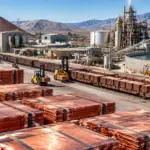
Meanwhile, brownfield expansions move faster. Existing infrastructure. Established relationships with regulators and communities. Proven geology. Lower capital intensity per tonne of output.
The strategic calculus isn't subtle: Why gamble $2 billion and 8-12 years on a greenfield project when you can expand an existing operation for a fraction of the cost and timeline?
Critical Minerals Are Accelerating the Shift
Australia's pivot to brownfield isn't just about risk management. It's about critical minerals demand that's hitting right now: not in 2035.
Copper. Lithium. Nickel. Rare earths. The energy transition doesn't have a pause button, and neither do the supply chains trying to feed it. The US-Australia Critical Minerals Framework has locked in strategic demand from American manufacturers desperate to derisk their sourcing away from China.
BHP and Rio Tinto's Resolution Copper project in Arizona: technically a US asset but controlled by Australian majors: exemplifies the model. It's positioned to supply nearly 25 percent of US copper demand. That's not a mine. That's a strategic national asset.
Back in Australia, the focus is copper-lithium dual exposure. Western Australia's existing lithium operations are being optimized for higher throughput as lithium price forecast 2026 scenarios stabilize around $800-$1,000 per tonne. That's not boom-time pricing, but it's profitable for Tier 1 brownfield operators with established processing facilities.
Copper is the bigger story. Global deficits are projected to tighten through 2026 and beyond, with electrification, data center buildouts, and defense manufacturing all pulling on the same limited supply base. Australia's copper producers are responding not by hunting for new deposits in remote regions, but by going deeper at existing operations.

Underground Expansion: The Technical Bet
The mining industry has identified underground expansion as one of its highest-priority opportunities for 2026. This isn't abstract strategy: it's geological reality.
Many of Australia's richest surface deposits are tapped out. What remains is deeper, harder to reach, and requires more sophisticated extraction methods. That means transitioning open-pit operations to underground mining, or extending existing underground infrastructure to chase higher-grade zones.
Western Australia's gold belt is ground zero for this trend. Operations that have been producing for decades are investing in underground expansion rather than chasing marginal satellite deposits. The capital efficiency is compelling: extending a decline or sinking a new shaft costs far less than building a brand-new mine from scratch.
Simulation and integrated planning technologies are making these expansions viable. Real-time ore tracking, automated haulage systems, and AI-driven scheduling optimize extraction rates and reduce downtime. The result: higher output from the same footprint, with lower per-unit operating costs.
This is capital discipline meeting technical sophistication. And it's working.
Western Australia Leads, But the Model is National
Western Australia dominates this shift for a reason. It has the infrastructure, the regulatory familiarity, and the geological endowment to make brownfield expansion the path of least resistance.
The Pilbara iron ore region, the Goldfields, the Greenbushes lithium operation: these aren't new discoveries. They're decades-old operations being optimized for a new commodity cycle. BHP, Rio Tinto, Fortescue, and a tier of mid-cap producers are all following the same playbook: invest in what you know, expand where you're already permitted, and derisk through operational leverage rather than exploration risk.
But this isn't just a WA story. Queensland's coal-to-critical-minerals pivot is underway, with existing mining districts being reassessed for copper, cobalt, and rare earth potential. South Australia's Olympic Dam: already one of the world's largest copper-uranium deposits: is exploring expansion scenarios that could add decades to its operational life.
The common thread: Australia is mining what it already has, rather than betting on what it might find.
The 2026 Outlook: Permitting, Politics, and Pragmatism
The 2026 mining outlook for Australia is shaped by three intersecting forces.
First, permitting timelines remain a constraint. New projects will take longer to approve than historical norms, which advantages brownfield expansions that bypass the worst regulatory bottlenecks.
Second, geopolitical alignment matters more than ever. The US-Australia critical minerals partnership isn't just a trade agreement: it's a strategic hedge against China's dominance of battery supply chains. Australian producers with existing operations can scale faster to meet that demand than new entrants starting from zero.
Third, capital discipline is non-negotiable. The era of throwing billions at speculative discoveries is over. Investors want operational leverage, cash flow visibility, and lower execution risk. Brownfield delivers all three.

For copper forecast 2026 watchers, this means Australian supply growth will come from incremental expansions rather than major new mines. That keeps upward pressure on global prices, particularly if South American supply faces continued disruption from permitting delays, social conflict, or climate impacts.
For lithium, the brownfield strategy helps Australia defend its market share even as new supply comes online in Africa and North America. Established operations have cost advantages and processing expertise that new entrants can't replicate overnight.
What This Means for the Sector
The brownfield shift isn't temporary. It's structural.
Mining companies are optimizing for speed, cost control, and political alignment. Greenfield projects will still get built: but they'll be the exception, not the rule. And they'll face higher hurdles than ever: stricter environmental standards, longer permitting timelines, and investor skepticism about execution risk.
Australia is positioning itself as the reliable supplier. Not the fastest-growing, not the most exploratory, but the one that can deliver critical minerals at scale without the geopolitical and operational volatility plaguing other regions.
That's a powerful value proposition in a world where navigating resource nationalism and supply chain security matter more than raw tonnage.
The 2026 playbook is clear: Go deeper at existing sites. Optimize underground operations. Focus on critical minerals with strategic demand. And avoid the permitting black hole that greenfield projects have become.
Brownfield expansion is the new greenfield. And Australia is betting its mining future on it.