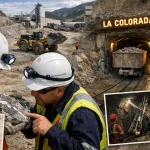
Here’s the thing nobody wants to admit: Kazakhstan isn’t just tightening the screws on Western uranium explorers, it’s changing the locks and bolting the door.

For years, the narrative was simple. Kazakhstan was the world’s gas station for yellowcake, a place where junior explorers could stake a claim, prove up a resource, and ride the wave of the nuclear renaissance. But as of March 2026, that narrative has officially collided with a brick wall of resource nationalism.
The news that Laramide Resources, a veteran Canadian uranium explorer, has officially pulled the plug on its greenfield projects in Kazakhstan is more than just a corporate retreat. It’s a signal flare. When a company with the expertise of Laramide walks away from the world’s most prolific uranium jurisdiction, it’s not because they can’t find the ore. It’s because they can’t find a path to profit that doesn’t involve handing the keys to the kingdom to the state.
The 75-90% Stranglehold: Why Laramide Walked
Let’s look at the brutal numbers. In late 2025, President Kassym-Jomart Tokayev signed off on amendments to the Subsoil Use Code. On paper, it was framed as “strategic optimization.” In reality, it was a legislative guillotine for foreign equity.
For any new uranium venture in Kazakhstan, the state-owned giant Kazatomprom must now hold a minimum 75% direct or indirect ownership. That’s up from the previous 50% threshold. But it gets worse. If you want to renew or extend an existing contract, the state’s take jumps to a staggering 90%.
More Read

Laramide CEO Marc Henderson didn’t mince words in January. He characterized the new regulatory environment as making commercial development “unviable.” And he’s right. When a foreign partner is capped at a 25% stake in a new venture while carrying the lion’s share of the exploration risk and capital expenditure, the math simply fails.


The Death of the “Greenfield” Dream
Laramide had already done the legwork. They had secured substantial land packages and completed initial targeting. They were ready to drill. Then the rules changed overnight.
More Read

This isn’t just a Laramide problem; it’s a Western supply problem. By capping foreign ownership at 25%, Kazakhstan is effectively telling the world that it no longer needs, or wants, Western juniors to lead the way in discovery. They want the technology, they want the capital, but they intend to keep the equity.
Kazatomprom’s New Monopoly Power
The legislative shift does more than just hike ownership stakes. It grants Kazatomprom priority exploration rights in any area containing identified uranium mineralization. This effectively prevents third parties from obtaining licenses in the most promising regions.
If you find something, Kazatomprom owns it. If they think you might find something, they have the right to take it first.
| Feature | Old Regulation | New 2026 Regulation |
|---|---|---|
| Minimum State Stake (New) | 50% | 75% |
| Contract Extension Stake | Negotiable | 90% or Tech Transfer |
| Foreign Ownership Cap | Flexible | 25% |
| Exploration Rights | First-come, first-served | Priority to Kazatomprom |
This isn’t just about money; it’s about technology. One of the clauses for contract extensions requires foreign partners to transfer uranium conversion and enrichment technologies to the state. This is a clear move to move Kazakhstan up the value chain from a mere miner to a full-service nuclear fuel provider.
Supply Security: The Western Perspective
We’ve been monitoring these shifts at Skillings.net for a long time. Our legacy, dating back to 1912, has seen cycles of resource nationalism before, but the current uranium squeeze is different.
Kazakhstan accounts for roughly 21% of the world’s primary uranium output. It holds 14% of the global resources. When the world’s leading producer decides to shut the door on Western equity, the ripple effects are felt in every utility boardroom from Paris to Tokyo.
The “Kazakhstan Exit” by Laramide highlights a growing rift in the global energy transition. While the West is desperate for carbon-free baseload power, the sources of that power are increasingly falling under the control of states that are realigning their geopolitical interests.

Where Does the Capital Go Now?
Money is like water; it follows the path of least resistance. With Kazakhstan effectively off-limits for junior explorers seeking a fair shake, we are going to see a massive reallocation of capital toward safer jurisdictions.
- The Athabasca Basin (Canada): Expect even more heat in Saskatchewan. If you can’t own a project in Kazakhstan, you buy into the highest-grade deposits on earth in a jurisdiction that respects the rule of law.
- The United States: With the push for domestic supply chains, the U.S. is becoming a “safe haven,” despite lower grades.
- Australia: Always a contender, though regulatory hurdles remain.
Laramide’s decision to pivot its portfolio is a logical reaction to a hostile environment. But for the global uranium market, it means one less source of “Western-friendly” pounds.
The Skillings Perspective: A History of Shifts
There’s a certain irony here that we often see in the mining industry. Kazakhstan rose to prominence because it was the low-cost, high-volume alternative to Western production. Now, that very dominance has given the state the leverage to dictate terms that are frankly insulting to private capital.
The Skillings legacy has always been about following the ore, but more importantly, following the access to that ore. In 2026, access is becoming a tool of statecraft. You can read more about how these regulatory shifts impact broader mining strategies in our analysis of mining ESG reporting in 2026, where we discuss how compliance and state control are merging into a single, complex headache for operators.
The Geopolitical Inflection Point
Why now? Kazakhstan is looking at its own future. They are planning their first domestic nuclear power plants. They are watching the global scramble for energy security and realizing they don’t need to share the profits anymore.
But there’s a risk for Kazakhstan, too. Mining is a capital-intensive, high-risk business. By squeezing out the juniors, they are killing the “R&D” department of the mining industry. State-owned companies are historically great at milking existing assets but notoriously bad at finding new ones.
If Kazakhstan stops finding new deposits because the explorers have all fled to Canada and Australia, their 21% market share will eventually begin to erode. Not today, and probably not in 2027. But in a decade? The chickens will come home to roost.

What Investors Should Watch
If you’re holding uranium juniors with assets in Central Asia, it’s time for a cold, hard look at the “fine print.”
- Watch the JVs: Any joint venture where Kazatomprom is a partner is now subject to “re-negotiation” at the state’s whim.
- Watch the Technology Clauses: If a company is being forced to hand over IP just to keep a mining license, that’s a red flag for shareholders.
- Watch the Pivot: Companies like Laramide that have the guts to walk away early are often better positioned than those that stay and try to fight a losing battle against a sovereign government.
As we noted in our recent copper price forecast for 2026, resource nationalism isn’t just a uranium story. It’s the story of the decade. From silver in Mexico to lithium in South America, the “handshake” deals of the early 2000s are being torn up.
Final Thoughts: The New Reality
The Kazakhstan Exit isn’t an isolated incident. It’s the end of an era.
The message from Astana is clear: “Send us your money, send us your tech, but don’t expect to own the dirt.” For a company like Laramide, the answer was a polite, but firm, no. For the rest of the industry, the clock is ticking. You either find a way to live with a 25% cap and 90% state-take on renewals, or you pack your bags and head back to the Athabasca.
In the world of uranium, the “easy” pounds are officially gone. What remains is a geopolitical chess match where the board keeps changing.
Stay tuned to Skillings.net as we continue to track these shifts. Whether it’s Rio Tinto’s moves in Quebec or the latest rift in Nevada, we’re here to cut through the corporate fluff and give you the brutal, honest numbers.

The exit is just the beginning. The real question is: who’s next to leave?