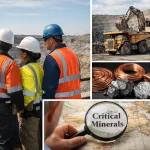
The net-zero transition is currently a mathematical fantasy.

For the last five years, policy documents and corporate sustainability reports have treated the energy transition as a software update: something that can be rolled out with enough capital and political will. It isn’t. It’s a hardware problem. Specifically, it’s a copper problem.
As of early 2026, the industry is staring into a 30% copper supply deficit by 2030. That’s not a rounding error. That’s a total breakdown of the global electrification pipeline.
The collision between aggressive decarbonization targets and the stubborn realities of geology is no longer a “future risk.” It is the current reality. While governments mandate EV adoption and grid modernization, the physical earth is offering up lower grades, deeper deposits, and increasingly “difficult” minerals.
The math doesn’t care about your policy deadlines.
More Read

The 30% Deficit: A Brutal Reality Check
We have spent decades high-grading the planet. The easy copper is gone.

To meet the projected demand for electric vehicles, wind turbines, solar arrays, and the massive build-out of high-voltage transmission lines, the world needs to produce roughly 35 to 40 million tonnes of copper annually by 2030. Current production sits around 22 million tonnes.
The gap is approximately 10 million tonnes. To put that in perspective, that’s the equivalent of bringing one Escondida: the world’s largest copper mine: online every single year for the next eight years.
More Read

It’s not happening.
The strategic calculus here isn’t subtle: we are running out of “easy” projects just as the “essential” demand is peaking. This isn’t just a pricing spike; it’s a structural chasm. Investors are finally waking up to the fact that you can’t simply “disrupt” geology with a Silicon Valley mindset.

Why Geology is Throttling Policy
Geology is a slow, indifferent partner.
The average time it takes to move a copper project from discovery to first production has ballooned to over 16 years. If a major discovery were made today, it wouldn’t contribute a single pound of cathode to the 2030 targets. Not one.
Then there is the grade decline. In the 1900s, copper mines averaged 2% copper content. Today, we are lucky to find 0.5%. This means we have to move four times the amount of rock to get the same amount of metal. That requires more energy, more water, and more capital: all while the industry is under pressure to reduce its own carbon footprint.
It’s a nasty, self-reinforcing loop.
We are seeing a shift toward what the industry is calling “Difficult Minerals.” These are deposits that were previously ignored because they were too deep, too remote, or located in jurisdictions that make boardrooms break out in a cold sweat. But now? These are the new baseline.
The Rise of the Vicuña District and High-Altitude Frontiers
If you want to see where the future of copper is being decided, look at the high-altitude frontiers of the Andes.
Projects in the Vicuña District, spanning the border of Chile and Argentina, represent the kind of massive, high-risk, high-reward plays that the world now depends on. These aren’t simple operations. They are logistically grueling, technically complex, and require billions in upfront capital before the first ton of ore is even processed.

Companies like Lundin Mining are doubling down on these regions because they have to. There is no plan B. When you see a $215M stake increase in a single district, it’s not just a vote of confidence; it’s a desperate grab for the remaining Tier-1 assets on the planet.
The “Difficult Mineral” Baseline
The term “Difficult Minerals” encompasses more than just low grades. It’s the total cost of extraction in a world that demands ESG perfection.
- Water Scarcity: Many of the world’s largest deposits are in hyper-arid regions. If you don’t have a desalination plant and a 150-mile pipeline, you don’t have a mine.
- Social License: The days of operating in a vacuum are over. Communities are demanding: and getting: a larger slice of the pie and more control over environmental impacts.
- Depth and Power: We are going deeper. Deep mining requires massive amounts of power for ventilation and cooling. Ironically, the copper needed for the green grid is becoming more carbon-intensive to extract.
This is why we’re seeing a watershed moment for technologies like the Metso Loesche VRM pivot. If the industry can’t find better ore, it has to find better ways to process the “garbage” ore it has left. Efficiency is no longer about profit margins; it’s about survival.
The M&A Feeding Frenzy: Buy, Don’t Build
The 30% deficit is triggering a massive consolidation wave.
Why spend 16 years and billions of dollars on exploration and permitting when you can just buy your neighbor? The majors are cannibalizing the mid-tiers and juniors to replenish their pipelines. We saw this with Rio Tinto’s $6.7 billion move for Arcadium Lithium (though lithium has its own dramas) and the ongoing scramble for copper-heavy portfolios.
The strategic floor for copper is rising because the cost of “new” copper is so high.

For investors, this creates a peculiar situation. The “Copper Chasm” makes the metal itself incredibly valuable, but it makes the mining companies incredibly vulnerable to cost overruns, political shifts, and technical failures.
The AI Energy Nexus: A New Competitor for Copper
And here’s what makes this particularly nasty: the green transition isn’t the only thing competing for copper.
The AI revolution is a copper-intensive beast. Data centers require massive amounts of electrical infrastructure. Every new NVIDIA chip sold is a downstream demand signal for more copper wiring and more power generation. The AI-Energy Nexus is essentially competing for the same limited pool of minerals that were supposed to build wind farms.
Big Tech has deeper pockets than the average utility company. If there isn’t enough copper to go around: and there isn’t: who gets it first? The data center building a trillion-dollar AI model, or the municipal grid trying to install EV chargers?
The answer is usually whoever pays the most. That’s a recipe for sustained, structural inflation.
Geopolitics and the “Defense” Factor
We are also seeing critical minerals move from the “commodity” category to the “national security” category.
The United States and its allies are finally realizing they can’t leave the supply chain to chance. Whether it’s USA Rare Earth consolidating control at Round Top or the Department of Defense funding domestic mineral processing, the goal is the same: de-risk the supply.
But you can’t legislate copper into existence. You can fund a junior miner, sure. You can fast-track a permit, maybe. But you can’t change the fact that the copper is 3,000 meters underground in a remote desert.
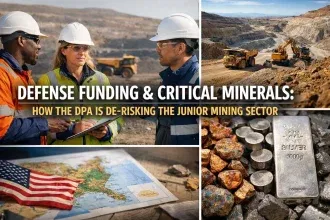
The intersection of government policy and industry activity is getting crowded, but the physical output is lagging behind the press releases.
What Happens When the Clock Strikes 2030?
As we approach the end of the decade, the disconnect will become impossible to ignore.
We will likely see a series of “quiet” target revisions. Governments will move the goalposts. The 2030 targets for 50% EV penetration or 100% clean grids will become 2035 or 2040 targets.
This isn’t a failure of will. It’s a failure of math.
The mining industry is doing what it can. We see advanced data and sensing technology making operations more efficient. We see companies like Macmahon securing underground gigs to keep the flow of materials moving. But these are incremental gains against a monumental deficit.
The Bottom Line for Investors
The “Copper Chasm” is the most predictable crisis in modern history.
We know the demand. We know the supply lead times. We know the grade decline. Yet, we continue to project climate goals that assume a frictionless physical world.
For those in the mining industry, the next four years will be defined by “Difficult Minerals.” The winners won’t be the ones with the flashiest ESG reports, but the ones who can actually move the rock, manage the water, and navigate the geopolitical minefield of the 2020s.
The 2030 climate goals are colliding with geology. Geology is winning.

Stay ahead of the markets. For deep-dive analysis on commodity trends and the future of the mining industry, visit Skillings Mining Review.