By Charles Pitts

Western rare earth supply chain security just got a tangible heartbeat in the hills of Virginia.
For years, the narrative around critical minerals has been a loop of "we need to mine more." But here’s the uncomfortable truth the industry often glosses over: digging the dirt is the easy part. The real bottleneck: the actual "Great Wall" of Chinese dominance: is separation. If you can’t separate the mixed concentrates into high-purity individual oxides, you don’t have a supply chain. You just have a pile of expensive rocks.
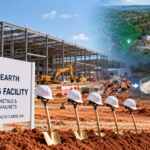
Aclara Resources isn't interested in just moving rocks. On Thursday, the company officially inaugurated its heavy rare earth separation pilot plant in Blacksburg, Virginia. Operating out of the Virginia Tech Corporate Research Center, this facility represents a major pivot point for domestic mineral independence. It is the first integrated heavy rare earth separation plant of its kind in the United States, and it isn't just a science experiment. It’s a blueprint.
Rare Earth Separation: The Midstream Gap
The strategic calculus here isn’t subtle: China currently controls roughly 90% of global rare earth separation capacity. When the U.S. or its allies mine rare earths, they almost always ship the concentrate back to Chinese facilities for processing. We sell them the raw ingredients; they sell us the finished, high-value chemicals.
More Read

Aclara is attempting to break that cycle by utilizing a proprietary solvent extraction technology based on hydrochloric acid chemistry. The goal is simple but technically brutal: produce individual rare earth elements at 99.5% purity or higher. Specifically, they are targeting Didymium (NdPr), Dysprosium (Dy), and Terbium (Tb).

Per facility. That’s not a typo.
The pilot plant is designed to process feedstock from Aclara’s Carina project in Goiás, Brazil. Unlike the hard-rock deposits found in many parts of the world, Carina is an ionic clay deposit. For the uninitiated, ionic clays are the "holy grail" of rare earths. They are easier to mine, require no explosives, and: most importantly: are significantly simpler to process because the minerals aren't trapped in a complex crystalline structure.
More Read

The Tech Stack: Hydrochloric Acid and Solvent Extraction
The Virginia facility isn't your grandfather’s refinery. It’s a modular, highly controlled environment using solvent extraction (SX). While SX is a standard industrial process, Aclara’s specific application for heavy rare earths outside of China is a rarity.
By using a hydrochloric acid-based circuit, the plant is designed to isolate the most valuable elements needed for permanent magnets: the stuff that makes EVs move and wind turbines turn.
Aclara Pilot Plant Specifications:
| Feature | Detail |
|---|---|
| Location | Blacksburg, Virginia (Virginia Tech CRC) |
| Feedstock Source | Carina Project, Brazil (Ionic Clays) |
| Process Chemistry | Hydrochloric Acid / Solvent Extraction |
| Target Purity | >99.5% |
| Key Output 1 | Neodymium-Praseodymium (NdPr) |
| Key Output 2 | Dysprosium (Dy) |
| Key Output 3 | Terbium (Tb) |
This isn't just about chemistry, though. It's about geography. By locating the pilot in Virginia, Aclara is tapping into the materials science brain trust at Virginia Tech. The partnership includes a Memorandum of Understanding that gives faculty and students hands-on access to the facility. It’s a clever move: they aren't just building a plant; they’re training the first generation of American rare earth separation engineers in decades.
Follow the Money: The $50M Private Placement
You can’t disrupt a global monopoly on a shoestring budget. While the pilot plant itself saw an initial investment of approximately $10 million, the broader commercialization path is being fueled by a significant $50 million private placement.
This capital injection is the market’s way of saying the "China hedge" is finally worth the premium. Investors are no longer just looking for "tonnage" in the ground; they are looking for integrated "mine-to-magnet" solutions. Aclara’s ability to secure this funding during a period of commodity price volatility suggests a long-term belief in the Western rare earth supply chain.
Ironically, this comes at a time when other domestic players are also consolidating power. For instance, USA Rare Earth recently consolidated control of the Round Top project in a $73M buyout. The race to be the first fully operational domestic midstream provider is officially on.
The Geopolitical Surge
The timing of this inauguration isn't accidental. We are seeing a massive geopolitical surge as the U.S. pours billions into Latin American critical minerals to counter the Chinese chokehold. Aclara’s Brazil-to-Virginia pipeline is the poster child for this new "friend-shoring" strategy.
By sourcing from Brazil: a country with a long mining history and a favorable regulatory environment for ionic clays: and processing in the U.S., Aclara avoids the environmental and political minefields associated with some other jurisdictions. The Carina project itself is slated for full production in 2028, with the Virginia pilot serving as the technical proof-of-concept that will lead to a full-scale separation plant in the Southeastern U.S. by 2029.

What Happens Next: Timeline and Risks
The plant is currently focused on hitting its production targets for the first half of 2026. The initial "fall 2025" startup phase has transitioned into active processing, and the industry is watching the purity levels closely.
The 2026-2029 Roadmap:
- Q2 2026: Validation of 99.5% purity for heavy rare earths (Tb, Dy) using the Virginia pilot circuit.
- Late 2026: Final Feasibility Study (FS) for the full-scale U.S. separation facility.
- 2027: Permitting and site selection for the $100M+ commercial refinery.
- 2028: Start of mining operations at the Carina Project in Brazil.
- 2029: Full integration of the Western rare earth supply chain.
But you can’t disrupt geology or global trade without risks. The primary risk isn't the technology: solvent extraction is proven: it's the price. China has a history of "price discovery" that conveniently crashes the market just as Western competitors come online. If NdPr prices stay depressed, even the most efficient plant in Virginia will feel the heat.
And then there’s the talent gap. There’s not enough to go around. Aclara is fighting for the same handful of chemical engineers that every other critical mineral startup is chasing. The Virginia Tech partnership is a hedge against this, but it’s a long-term play for a short-term crisis.
The Macro View
This development in Virginia isn't happening in a vacuum. It’s part of a broader structural pivot in how we view commodities. Just as we’ve seen a structural pivot in copper prices due to the AI infrastructure race, rare earths are being re-rated as national security assets rather than simple manufacturing inputs.
Aclara is betting that by 2029, the origin of your Dysprosium will matter as much as its price. If you’re a defense contractor or a Tier 1 EV manufacturer, you can’t afford a supply chain that can be "throttled" by a single diplomatic cable from Beijing.
Final Assessment
The Aclara pilot plant is a necessary, albeit late, addition to the American industrial landscape. It moves the conversation from "what if" to "how much." By integrating Brazilian feedstock with American processing, the company is attempting to build a corridor that bypasses the traditional bottlenecks of the last thirty years.
Is it enough to break the Chinese monopoly tomorrow? No. But it is the first time we’ve seen a credible, tech-forward, and well-funded attempt to domesticate the most difficult part of the rare earth puzzle.
Welcome to the new reality: The mine of the future is a lab in Virginia.
Social Media Snippet (LinkedIn/X):
Aclara Resources officially debuts the first integrated heavy rare earth separation plant in the U.S. ?? Located in Blacksburg, VA, the facility targets 99.5% purity for NdPr, Tb, and Dy using proprietary SX technology. With feedstock from the Carina Project in Brazil and a $50M capital raise backing the scale-up, the Western rare earth supply chain finally has a midstream heartbeat. #RareEarths #CriticalMinerals #MiningNews #SupplyChainSecurity #AclaraResources
For more in-depth analysis on the critical minerals corridor, check out our latest intelligence report: Skillings Mining Intelligence – The Critical Minerals Corridor and Copper’s New Frontier.