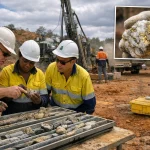
Humanitarian aid is no longer a gesture of goodwill. In 2026, it’s a leveraged asset. The long-standing wall between global health diplomacy and raw-resource extraction hasn't just been breached; it’s been demolished. We are witnessing the birth of "transactional aid," where the price of life-saving medicine is paid in copper, cobalt, and lithium.

The recent reports surfacing from the New York Times regarding U.S. negotiations with Zambia have sent a shockwave through the mining industry and the diplomatic corps alike. The premise is simple and brutal: The United States is reportedly linking the continuation of HIV/AIDS funding: specifically through the PEPFAR program: to mining sector reforms and guaranteed access to critical mineral reserves.
This isn't a diplomatic nuance. It’s a geopolitical squeeze play.
The $1.5 Billion Poker Chip
For over two decades, the President’s Emergency Plan for AIDS Relief (PEPFAR) has been the gold standard of American soft power. In Zambia, it is the difference between life and death for approximately 1.3 million people. But as the scramble for the Central African Copperbelt intensifies, Washington has realized that "soft power" doesn't build EV batteries.
The strategic calculus here isn't subtle: The U.S. is facing a massive deficit in critical mineral security, and China already owns the lion's share of the ground in the Democratic Republic of Congo (DRC) and Zambia. To catch up, the U.S. is using the most potent leverage it has. We’re talking about a proposed $1.5 billion health aid package: now reportedly being dangled with strings attached that reach deep into the Zambian soil.
More Read



The Biological Link: Why Mining and HIV Are Inseparable
To understand why this leverage works, you have to understand the grim reality of the mining industry in Sub-Saharan Africa. Mining doesn't just extract ore; it drives epidemics. The biological and social mechanisms of the industry are perfectly designed to spread disease.
First, there’s the dust. Occupational exposure to silica dust in mines causes silicosis, which hammers the immune system and makes workers exponentially more susceptible to tuberculosis (TB). In the crowded hostel environments where many miners live: sometimes 16 men to a single room: respiratory diseases spread like wildfire. Research indicates that every additional adult in a bedroom increases TB risk by roughly 27%.
More Read
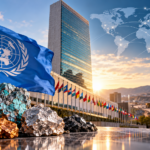
Then there’s the migration. The "circular transmission" system created by labor migration moves HIV and TB from the high-density mining regions back to rural home communities. Industry data suggests a staggering statistic: nearly one-third of miners become infected with HIV within 18 months of starting work. Mining is estimated to be responsible for 760,000 TB cases annually across the region.
The irony is thick and unpleasant. The very industry the U.S. wants to secure is the one driving the health crisis it funds.
The Scramble for the Copperbelt
Why Zambia? Because the Critical Minerals Corridor is the new front line of the Cold War 2.0. Zambia sits on some of the highest-grade copper and cobalt deposits on the planet. As the world pivots toward electrification, these aren't just commodities; they are national security requirements.
The U.S. has been pouring money into the Lobito Corridor: a rail project designed to bypass Chinese-controlled ports: but infrastructure takes years. Aid can be adjusted with a pen stroke. By conditioning health funding on mining reforms, the U.S. is attempting to force Zambia to move away from Chinese partnerships and toward Western-friendly regulatory frameworks.
It’s an aggressive move. It’s also a desperate one.

Transactional Aid: Risks and Rewards
The proponents of this "transactional" approach argue it’s just realism. Why should the U.S. provide billions in aid to a country that then hands its most valuable resources to America’s primary geopolitical rival? They see it as a holistic "economic partnership."
But here’s where it gets really uncomfortable.
When you link health aid to resource access, you gamble with human lives to secure a supply chain. If the negotiations fail: as they currently seem to be, with the Zambian government resisting the deal on sovereignty grounds: the consequences aren't just a missed mining opportunity. The consequence is a potential collapse of health infrastructure that over a million people rely on.
Zambia has characterized the U.S. demands as an infringement on its national data-sharing and sovereignty. They’re not just being difficult; they’re wary of a new era of resource colonialism. As we’ve seen in other regions, like West Africa, the pushback against Western "conditions" often opens the door wider for competitors who ask fewer questions about domestic policy.
Geopolitical Competition: The China Chokehold
China doesn’t link its mining deals to HIV aid. It links them to roads, stadiums, and bridges. This "no-strings-attached" (or at least, different-strings-attached) approach has given Beijing a decade-long head start in the Copperbelt. The U.S. is now trying to use its unique leverage: healthcare: to counter the China chokehold.
But health diplomacy is a fragile thing. Representative Gregory Meeks hit the nail on the head when he warned that this strategy "risks undermining decades of global health diplomacy." Once you weaponize aid, you can never go back to being a "disinterested" humanitarian partner. You are just another bidder at the table.

The Impact on Global Health Diplomacy
This shift marks the end of the post-Cold War era of "liberal internationalism." In the new reality of 2026, every dollar of foreign assistance is expected to yield a return on investment that can be measured in tons of ore.
What happens next? If the U.S. succeeds in Zambia, expect this model to be exported. We could see lithium access tied to vaccine distribution in South America, or rare earth processing rights linked to infrastructure grants in Southeast Asia. The "Green Transition" is being fueled by some very grey ethics.
For the mining companies operating in these regions, this adds a massive layer of political risk. If your project is seen as the reason a local community lost its HIV funding, your social license to operate doesn't just expire: it evaporates. We are moving into an era where "ESG" isn't just a corporate buzzword; it’s a geopolitical minefield.
The Bottom Line: Those Two Clocks Do Not Sync
The timeline of a mining project is measured in decades. The timeline of an HIV patient without medication is measured in days. When you try to sync these two clocks, something is going to break.
The U.S. strategy in Zambia is a high-stakes gamble that assumes the Zambian government will fold because the human cost of refusal is too high. But sovereign nations have a funny way of prioritizing long-term control over short-term crises. If Zambia holds its ground, the U.S. is left with a grim choice: back down and lose face, or cut the funding and trigger a humanitarian catastrophe.
There is no middle ground here. This isn't a "win-win" scenario. It’s a zero-sum game played with the lives of the vulnerable to secure the batteries of the affluent.

2026 Outlook: The New Reality
2026 marks the inflection point. We are no longer debating whether critical minerals are strategic assets: we are now seeing the lengths to which superpowers will go to secure them. The "HIV-Mineral Link" is just the beginning.
As the supply crunch for copper and cobalt continues to tighten, the pressure on resource-rich, aid-dependent nations will only grow. The industry needs to watch this space closely. The next "supply chain disruption" might not come from a strike or a cave-in, but from a failed diplomatic negotiation over a health clinic.
Welcome to the new scramble for Africa. It’s transactional, it’s visceral, and it’s deeply uncomfortable. But in a world where "green" energy requires red metal, this is the price of admission.
The strategic calculus has changed. The question is whether the mining industry is ready for the fallout when the "aid" stops being helpful and starts being a weapon. There’s not enough copper to go around, and apparently, there’s no longer enough goodwill either.
Social Media Snippet:
The era of "pure" humanitarian aid is over. New reports suggest the US is linking Zambia's HIV funding to critical mineral access. Is transactional aid the new norm for securing the Copperbelt? We dive deep into the geopolitics of the $1.5B squeeze play. #CriticalMinerals #MiningNews #Geopolitics #Zambia #Copperbelt