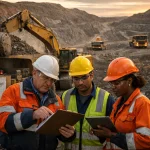
Resource nationalism is no longer a “risk” factor in West African mining. It is the operating system.

For decades, the narrative was simple: Western and Asian capital would flow into jurisdictions like Ghana and Guinea, extract raw ore, and leave behind a modest royalty check and a few local jobs. That era ended on January 1, 2026. As the global race for critical minerals accelerates, West African nations have realized they hold the high ground. They aren’t just asking for a bigger piece of the pie anymore: they are rewriting the recipe.
The tension is palpable. On one hand, you have governments in Accra and Conakry implementing some of the most stringent local content laws the industry has seen in a generation. On the other, the demand for green transition metals: manganese, bauxite, and gold: is projected to quadruple by 2040.
What we’re seeing in 2026 isn’t a repeat of the 1970s-style expropriations. It’s something more calculated. It’s a hybrid approach that forces a “Strategic Partnership” while keeping the nationalist “stick” within reach.
The January 1 Pivot: Local Content as Law
The start of 2026 marked a hard deadline for many mining majors operating in the region. New regulatory frameworks now mandate a significant jump in local ownership and, more importantly, downstream value retention. Governments are moving beyond the “dig and ship” model. They want beneficiation. They want refineries. They want the industrial base that comes with the minerals.
More Read

In Ghana, the push for local participation has moved into the boardroom. It’s not just about hiring local drivers; it’s about local equity. We’re seeing a landscape where 2026 regulations require increased local ownership in all new mining concessions. Per facility. That’s not a typo.


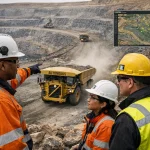
Caption: Autonomous haulage systems integrated with local monitoring centers are becoming the new standard for compliance with technology-transfer mandates in West Africa.
The strategic calculus here isn’t subtle: if you want the ore, you build the infrastructure to process it on African soil. This shift is forcing companies to navigate a minefield of ESG demands while trying to maintain the margins that their investors expect. Some are struggling. Others are treating this as an opportunity to “de-risk” by becoming “too integrated to fail” within the local economy.
More Read

Equipment as the Front Line of Compliance
The shift toward local content isn’t just about people; it’s about the iron. In 2026, the durability and sophistication of mining equipment have become a proxy for a company’s commitment to the region. Why? Because the “Mine of the Future” initiative requires a massive transfer of technical knowledge.

High-wear applications in Guinea’s bauxite mines or Ghana’s deep-level gold operations require heavy-duty GET (Ground Engaging Tools) that can withstand 24/7 cycles. But in the current regulatory environment, importing this equipment is only half the battle. Governments are now looking at the supply chain. Are those cast lips being serviced by local firms? Is the maintenance being handled by indigenous engineers trained in the latest autonomous tech?
This is where the “Strategic Partnership” gets real. Companies that are succeeding in 2026 are those that have established local assembly or refurbishment hubs. They aren’t just buying equipment; they are building a local industrial ecosystem around it. It’s a move that satisfies local content laws while actually improving operational uptime by reducing reliance on long, fragile global logistics chains.
ESG: The New Survival Manual
If local content is the “what,” then ESG (Environmental, Social, and Governance) is the “how.” In the 2026 mining landscape, ESG has matured from a PR department’s headache into a hard-coded requirement for project financing.
The WaCA Mining 2026 summit in Accra highlighted a grim reality for those who ignore the “Social” and “Environmental” pillars: no compliance, no capital. Investors are no longer blinded by high-grade intercepts. They are looking at Strategic Environmental Assessments and community-led mining moratoriums.
Look at the Sunday Power List: The 10 Titans Defining the 2026 Resource Realignment to see how the most successful CEOs are pivoting. They aren’t fighting the regulations; they are using them to lock out less-sophisticated competition.

Meanwhile, the gold sector is feeling the heat. With the gold price topping $5,200 due to geopolitical jitters, the stakes for West African gold producers couldn’t be higher. But higher prices bring higher scrutiny. Governments are correctly pointing out that if the commodity is worth more, the “rent” for extracting it should rise accordingly.
The Guinea Paradox: Simandou and Beyond
Guinea remains the ultimate test case for this new era. The sheer scale of the Simandou iron ore project has forced a level of cooperation between the government, Chinese state-backed firms, and Western majors that was previously unthinkable.
The “New Rules” here are written in steel and rail. The 600km railway being built isn’t just for ore; it’s designed as a multi-use spine for national development. This is the epitome of the 2026 strategic partnership: the mine pays for the infrastructure that the nation keeps.

Caption: Advanced drilling rigs operating in the West African interior. In 2026, every meter of core sample is a data point for both the company and the state’s resource inventory.
But there’s a catch. The government’s 15% free-carried interest in mining projects is often just the starting point. Negotiating these “carried” interests alongside the demands for local procurement is a needle that is almost impossible to thread for junior miners. We are seeing a massive consolidation in the Mining Finance News sector as smaller players, unable to meet the infrastructure and local content burdens, are swallowed by the titans.
Digitalization: The Nationalist’s Best Friend
Ironically, the “shiny AI revolution” that everyone was talking about three years ago has become a tool for government oversight. In 2026, West African regulators are using data-driven systems and automated reporting to monitor production in real-time.
Gone are the days of self-reported production numbers that take months to verify. Digital twins of mine sites allow the Department of Mineral Resources to see exactly how much ore is being moved, what the grade is, and where it’s going. This level of transparency is being marketed as a way to “improve governance,” but it also serves as a digital leash.
For operators, the choice is clear: lean into the AI-powered next generation of mining gear or get buried in the paperwork of manual compliance.
What Happens Next?
The “Resource Realignment” of 2026 isn’t going to revert. The global supply-demand gap for critical minerals is too wide, and the geopolitical leverage of West African nations is too high.
There are two ways this plays out:
- The Partnership Model: Companies embrace the role of “development partner.” They invest in local refineries, train a high-tech local workforce, and accept lower immediate margins in exchange for 30-year stability.
- The Friction Model: Companies fight the local content laws in court, leading to project delays, permit freezes, and eventually, the loss of social license.
The numbers are brutal. If you aren’t spending at least 30-40% of your operational budget within the host country by 2027, you won’t be operating there by 2030. That’s not a threat; it’s the trajectory of the current policy.
West Africa is proving that you can’t disrupt geology, but you can certainly disrupt the economics of who gets to mine it. 2026 is the year the industry finally realized that the cheapest ore in the ground is often the most expensive to get out, once you factor in the price of a genuine partnership.