By Charles Pitts

For decades, the global mining narrative has been dominated by a single metric: the discovery of the “world-class deposit.” Investors and operators alike have historically focused on grade, tonnage, and the geographic location of raw ores. However, as we move through 2026, the industry is confronting a sobering reality. Having the minerals in the ground is no longer the primary hurdle.
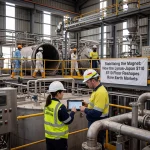
The real bottleneck in the critical mineral supply chain has shifted from extraction to processing infrastructure. While raw mineral resources are geographically diverse, the capacity to refine, separate, and convert these materials into battery-grade or industrial-grade products remains dangerously concentrated. This structural imbalance is reshaping mining economics, geopolitical strategies, and the very definition of project “investability.”
The Refining Gap: Why Extraction Isn’t Enough
The transition to a low-carbon economy and the explosive growth of high-performance computing have created a massive demand shock. While traditional mining projects can take a decade to reach production, the infrastructure required to process those minerals is often even more complex and capital-intensive.
Critical minerals like lithium, cobalt, and rare earth elements (REEs) rarely occur in pure forms. They require sophisticated chemical separation and metallurgical processes to reach the 99.9% purity levels required for modern technology. Currently, the vast majority of this midstream capacity is located in China. This geographic concentration has turned refining into a geopolitical lever, leaving Western nations and manufacturers vulnerable to supply disruptions.
More Read

As seen with Norway’s Fen Project, which has become Europe’s largest rare earth deposit, the discovery is only the first step. The true challenge lies in building the domestic processing facilities needed to ensure these minerals can actually reach European manufacturers without first being shipped across the globe for refining.


The AI Boom and the $371 Billion Demand Shock
A major driver of this bottleneck is the unprecedented capital expenditure from tech hyperscalers. In the last year, capital expenditure among the world’s largest AI and data center operators jumped 44% to roughly $371 billion. This spending isn’t just going into software; it is being funneled into physical infrastructure: transformers, cooling systems, and specialized chips: all of which require massive amounts of copper, aluminum, and rare earths.
More Read

This “AI demand shock” is colliding with a supply chain that expands at a glacial pace. In the copper sector, we are seeing majors move aggressively to secure future production. For instance, Lundin Mining recently doubled down on the Vicuña District, recognizing that securing a stake in high-growth districts is essential to meeting the long-term needs of the energy and tech sectors.
Table 1: Global Processing Concentration vs. Resource Location (2026 Estimates)
| Mineral | Top 3 Resource Holders | Processing Concentration (Top Nation) | Strategic Risk Level |
|---|---|---|---|
| Lithium | Australia, Chile, Argentina | 65% (China) | High |
| Rare Earths | China, Vietnam, Brazil | 89% (China) | Critical |
| Cobalt | DR Congo, Australia, Indonesia | 72% (China) | High |
| Copper | Chile, Peru, Australia | 42% (China) | Medium-High |
Permitting: The Invisible Barrier
In the United States, the bottleneck is compounded by regulatory friction. While countries like Australia and Canada have streamlined permitting to roughly two to three years, domestic US mine permitting frequently exceeds a decade.
This delay is particularly acute for processing facilities, which face the same (or sometimes stricter) environmental scrutiny as the mines themselves. However, there are signs of change. The U.S. government recently approved a $850 million investment in Louisiana for rare earth refining, signaling a shift toward treating processing infrastructure as a matter of national security.
The geopolitical landscape is also shifting through strategic alliances. The Washington-Santiago pact is a prime example of how major powers are attempting to bypass traditional bottlenecks by securing both extraction and processing agreements with stable partners.

Redefining Value: From “Grade” to “Purity”
For investors, the metrics of success are changing. In the previous cycle, a high-grade discovery was enough to send a junior miner’s stock soaring. In 2026, the market is asking a different set of questions:
- Can you refine it? Projects with a defined, low-emissions processing route are commanding strategic premiums.
- What is the carbon footprint? As ESG regulations tighten, the energy intensity of refining becomes a major valuation factor.
- Where is it processed? “Friend-shoring” is no longer a buzzword; it is a financial requirement for many Western institutional investors.
We are seeing this play out in specific projects like the Almonty Industries Sangdong Mine. By focusing on a mineral (tungsten) with high geopolitical sensitivity and a clear path to production and processing, companies can de-risk their operations in a way that “mine-and-ship” models cannot.
The Role of Defense and National Security
The intersection of mining and defense is becoming more pronounced. Governments are no longer leaving critical mineral supply to the “invisible hand” of the market. Defense funding is increasingly being used to de-risk junior mining and processing projects that are deemed essential for national defense.
This trend is particularly visible in the United States, where the Department of Defense has issued grants and loans to ensure that domestic refining capacity for materials like gallium, germanium, and rare earths is established. This is a fundamental shift in mining economics; the government is now a strategic partner, not just a regulator.

2026 Outlook: The Road Ahead
The next 24 months will be defined by a race to build “processing hubs.” We expect to see more mining companies integrate vertically, moving away from selling concentrates and toward selling value-added refined products.
However, several risks remain:
- Extreme Weather: Increasing droughts and heatwaves are impacting the high water and power requirements of processing plants, particularly in regions like South America and Australia.
- Capital Intensity: Building a refinery is significantly more expensive than opening a quarry. High interest rates continue to challenge the CAPEX requirements for mid-tier players.
- Technology Shifts: The rapid evolution of battery chemistry (e.g., the shift toward solid-state or sodium-ion) could render some specific processing infrastructures obsolete before they are even completed.
Despite these challenges, the narrative is clear. The companies and nations that control the “bottleneck”: the processing infrastructure: will hold the cards in the global energy transition. It is no longer enough to own the dirt; you must own the technology that cleans it.
Strategic Takeaways for Operators and Investors
- Prioritize Vertical Integration: Companies that control the processing stage are better shielded from price volatility in raw concentrates.
- Monitor the “Permit Premium”: Projects in jurisdictions with streamlined permitting for both mining and refining (like Australia and Canada) should be valued higher than those in “slow-permit” zones.
- Focus on Copper and Rare Earths: The AI boom is non-negotiable, and its appetite for these specific materials will likely outpace the industry’s ability to build refineries.
For more updates on global mining shifts and M&A activity, explore our full news archives or check out the latest on the Vicuña District expansion.