By Charles Pitts

As of April 2, 2026, the global copper market is grappling with a structural reality that has been telegraphed for years: demand is finally outstripping supply at a pace that mining infrastructure cannot match. For investors and operators, the narrative has shifted from speculative “green transition” hype to a hard-data reality of supply deficits. Analysts now project that copper prices will average $12,075 per metric tonne in 2026, with bullish cases stretching toward $15,000 as a global refined copper deficit of approximately 330,000 metric tonnes materializes.
The copper price forecast for 2026 reflects a market defined by extreme tightness. While the price range remains wide: between $11,200 and $15,000: the consensus across major financial institutions like J.P. Morgan and Deutsche Bank suggests that the “easy” copper has been mined. What remains are deeper deposits, lower ore grades, and significant geopolitical hurdles that make bringing new supply online both expensive and slow.
The 2026 Price Consensus: A Tale of Two Halves
The first half of 2026 has been marked by a record-high consensus. A median forecast from recent Reuters analyst polls placed copper at $11,975 per metric tonne, the highest median ever recorded in the survey’s history. J.P. Morgan’s commodity desk is even more optimistic, targeting $12,500/mt by the end of Q2 2026.
However, the year is expected to be one of two halves. Goldman Sachs analysts have noted that while the fundamental fair price of copper sits around $11,500/mt, the market is currently overshooting due to speculative positioning and supply-side anxiety. Goldman anticipates a slight cooling to $11,200/mt by Q4 2026 as the impact of US trade policies and tariff uncertainties becomes clearer.
More Read

Deutsche Bank maintains a more robust outlook, forecasting an average of $12,125/mt for the year. This bullishness is rooted in the belief that even if demand growth in China softens, the sheer lack of available refined copper will prevent any significant price collapse.

The Supply-Side Crisis: Why the 330,000-Tonne Deficit is Real
The 330,000 metric tonne deficit projected for 2026 isn’t just a number; it represents a systemic failure to reinvest in primary production over the last decade. The copper industry currently faces a massive investment gap to meet the global demand goals of the next quarter-century. In the short term, this manifests as three primary pressures:
- Declining Ore Grades: In major producing regions like Chile and Peru, the quality of ore is dropping. Miners are forced to move more earth for the same amount of finished product, driving up the marginal cost of production.
- Permitting and Regulatory Lag: The time between a discovery and the first pour of concentrate has stretched to nearly 15 years in some jurisdictions. This delay prevents a quick response to high prices.
- Underinvestment in Exploration: Despite high prices, greenfield exploration remains underfunded relative to what is needed to replace depleting Tier-1 assets.

More Read

Geopolitical Turbulence: Tariffs and the “Trump Effect”
One of the most significant variables for the 2026 copper forecast is the shift in US trade policy. Analysts have been tracking how companies are preparing for potential tariffs, which are expected to range between 15% and 30% on refined copper imports by late 2026 or early 2027.
Initially, this threat has triggered a wave of stockpiling in the United States. US-based manufacturers and tech firms are front-loading their copper purchases to avoid future duties, creating a temporary artificial demand spike that has contributed to the $12,000+ price levels. However, Goldman Sachs warns that once these stockpiles are built and the policy path is finalized, the market could see a sharp correction as buyers pull back from the spot market.
Simultaneously, China’s refined copper consumption has shown signs of material weakness since the third quarter of 2025. While China remains the largest consumer of the “red metal,” high prices have begun to dampen growth in its traditional construction and manufacturing sectors, though its commitment to renewable energy infrastructure remains a floor for demand.
Strategic Regional Developments: The Andean Pivot
To solve the supply crisis, the industry is looking toward massive, complex projects in South America. The Vicuña District, spanning the border of Argentina and Chile, has become a focal point for the next generation of copper supply.
Lundin Mining recently increased its stake in this district, recognizing that the scale of projects like Josemaria and Filo del Sol is necessary to move the needle on global deficits. These high-altitude projects require billions in capital and sophisticated logistics, but they represent the few remaining areas where significant capacity can be added.

Further north, exploration efforts are intensifying in frontier regions. C3 Metals’ Khaleesi Discovery has drawn attention for its potential as a major copper-gold deposit. At these Andean drill sites, geologists are working in challenging environments to secure the critical minerals needed for the global battery revolution.
Portfolio Strategy: How to Play the Copper Deficit
For investors, the 2026 copper landscape offers both high reward and high volatility. The structural deficit makes a compelling case for “buy and hold” positions in major producers with healthy balance sheets and existing production. Companies like Rio Tinto have already pivoted, expanding their critical mineral footprint to capture the broader energy transition trade.
However, junior miners and explorers present a different risk-reward profile. While they are the most leveraged to rising copper prices, they are also the most vulnerable to the high interest rates and permitting delays that plague the industry.

A balanced portfolio in 2026 likely includes:
- Direct Commodity Exposure: Through ETFs or futures, to capture the $12,000/mt average price target.
- Tier-1 Majors: Companies with low-cost operations in Chile and Peru that benefit from high margins even if prices correct slightly toward the $11,000 mark.
- Technology & Service Providers: Firms providing the sensing technology and data analytics necessary to squeeze efficiency out of low-grade mines.
The Role of Technology in Mitigating Deficits
As prices remain elevated, the industry is doubling down on efficiency. Mining operations are increasingly turning toward eco-friendly and autonomous technologies to lower operating costs. From MacLean’s new surface mining vehicle division to Thiess’s focus on fleet decarbonization, the goal is to make extraction more sustainable and less capital-intensive.
These technological leaps are not just about ESG compliance; they are about survival. In a market where ore grades are falling, the ability to process more material with less energy and fewer personnel is the difference between a profitable mine and a stranded asset.
Japan’s Strategic Move into Critical Minerals
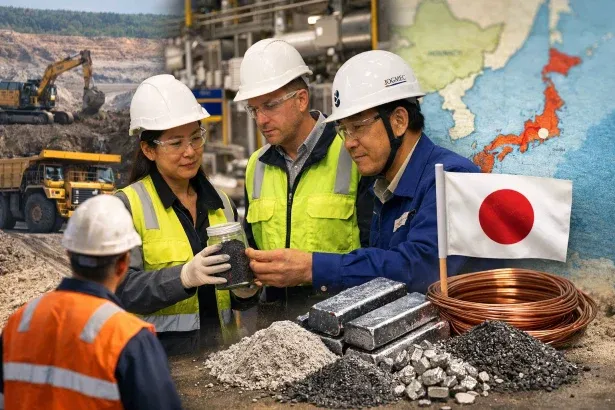
The copper deficit has also triggered a geopolitical race for supply security beyond the US-China rivalry. Japan, for instance, has ramped up its strategic interest in mining partnerships to secure its industrial supply chain. Japanese firms are increasingly taking minority stakes in Australian and Canadian projects to ensure a steady flow of copper concentrate, bypassing the volatile spot market.
Conclusion: A Structural Bull Market
The copper price forecast for 2026 confirms that we have entered a structural bull market. The $12,075 per metric tonne average is a reflection of a world that needs more copper than it can currently produce. While tariff-related volatility and Chinese demand fluctuations will create “noise” in the price charts, the underlying deficit of 330,000 tonnes acts as a powerful gravity well, pulling prices higher.
For the mining industry, 2026 is a year of execution. For investors, it is a year of navigating the transition from a surplus world to a deficit reality. Those who understand the supply-side constraints: rather than just the demand-side hype: will be best positioned to profit from the ongoing copper crunch.
Stay Informed with Skillings Mining Review
For more deep-dive analysis on commodity markets and the future of mining, explore our Media Kit 2026 or subscribe to our daily industry updates.