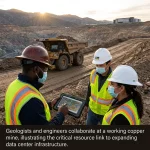
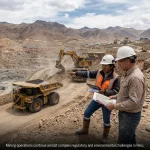
The search for the next tier of world-class gold deposits has shifted from the over-saturated basins of the traditional mining world toward jurisdictions that were, until recently, considered too risky or remote. As of April 2026, the convergence of record-high gold prices and a decade-long deficit in reserve replacement has turned "frontier market gold" into a primary focus for institutional capital and major mining houses alike.

For the modern operator and investor, frontier markets represent regions with significant geological potential but less established mining infrastructure or regulatory history. However, in 2026, the definition is evolving. Improvements in power connectivity, a surge in central bank accumulation, and the compression of permitting timelines are transforming high-risk outposts into high-reward hubs.
The Macro Driver: Central Bank Accumulation and Price Scenarios
The structural backdrop for gold investment in 2026 is defined by unprecedented institutional support. While the mid-2020s saw some volatility, emerging market central banks have remained steady net buyers. Poland’s National Bank, for instance, has aggressively moved to increase gold’s share of its total reserves to approximately 38%.
This trend is not isolated. Many developing nations are utilizing gold as a hedge against currency devaluations and geopolitical instability, providing a floor for the market that junior explorers in frontier regions are now capitalizing on.
Current price forecasts for 2026 reflect this demand. Analyst consensus from HSBC and Morgan Stanley suggests a trading range between $3,950 and $5,050 per ounce. With the potential for gold to peak at the $5,000 mark later this year, the economics of developing remote assets in emerging mining regions have become increasingly attractive, even when accounting for the higher cost of capital in these jurisdictions.
More Read

| Central Bank/Region | 2026 Gold Reserve Target (% of Total) | Rationale |
|---|---|---|
| Poland | 38% | Financial resilience & USD diversification |
| China | Undisclosed (Rising) | Diversification from equities/property |
| India | 10-15% | Cultural demand and inflation hedging |
| Emerging Markets Avg | 12-18% | Strategic sovereign wealth protection |
Identifying High-Reward Jurisdictions in 2026
Success in frontier market gold investment in 2026 is no longer just about finding high-grade ore; it is about finding the path of least resistance to production. Three regions have emerged as frontrunners due to specific improvements in infrastructure and policy.

1. Guyana: The Permitting Benchmark
Guyana has leveraged its oil-driven economic boom to modernize its institutional capacity. For gold miners, this has resulted in some of the most predictable permitting timelines in the world, often spanning just 24 to 30 months. The influx of capital into the country has improved domestic logistics, making it a premier destination for explorers looking to move from discovery to development rapidly.
2. Mongolia: Infrastructure and Connectivity
Historically, Mongolia faced a bottleneck regarding border power connectivity. By 2026, new infrastructure projects have linked high-potential mining districts directly to regional grids. This has lowered the operational risk for large-scale assets that were previously stranded by energy costs. Mongolia's strategic position between major consuming markets in Asia further bolsters its case as a long-term gold hub.
More Read
3. Newfoundland: Compressing the Timeline
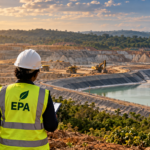
While not a "frontier" in the geopolitical sense, Newfoundland serves as a model for how established jurisdictions can adopt frontier-style growth by streamlining regulatory hurdles. The province has successfully compressed development timelines, attracting a new wave of junior sector activity that is expected to reach commercial production within the next 24 to 48 months.

Exploration teams assessing core samples in high-altitude frontier environments often find higher grades to offset logistical costs.
Supply-Side Realities: The Structural Deficit
The urgency surrounding frontier markets is fueled by a stark reality: the industry is running out of "easy" gold. For over a decade, reserve replacement rates have lagged behind depletion. Major producers are struggling to maintain their production profiles using only assets in Tier-1 jurisdictions like Nevada or Western Australia.
This has led to a flurry of M&A activity and strategic investments. Projects like the Vicuña consolidation, which Skillings Mining Intelligence recently detailed, highlight how large-scale districts are being re-evaluated for their multi-commodity potential, often blending gold with copper to enhance project IRRs.
The junior gold sector is particularly active in 2026, with multiple companies hitting critical milestones such as feasibility study completions and final investment decisions (FIDs). These catalysts are essential for investors looking to capture the "value gap" between discovery and production.
Risk Mitigation and Execution in 2026
Investing in emerging mining regions requires a nuanced approach to risk. While the rewards are high, execution risk remains the primary hurdle.
Infrastructure Integration
Modular processing units are becoming the standard for frontier operations. As seen in recent developments in U.S. funding for critical minerals, the move toward smaller, more efficient, and scalable facilities allows companies to begin production earlier with lower initial capex.

Modular facility designs allow frontier projects to scale operations in line with resource growth.
Geopolitical Arbitrage
Mining in frontier markets offers a form of currency arbitrage. During periods of global crisis, these operations can provide significant advantages, but only if the jurisdiction selection was prudent. Investors are increasingly looking at "governance trends" rather than just current stability. A country that is actively improving its mining code is often a safer bet than a stable country with a regressive policy shift.
The 2026 Outlook for Investors
The "Frontier Market Gold" story of 2026 is one of professionalization. The days of "wildcatting" with no regard for ESG or community relations are over. Success now depends on the ability to navigate complex social licenses while capitalizing on high-grade geology.
As the gold price stabilizes in the $4,000+ range, the delta between production costs in frontier regions and the spot price is widening. For companies that can manage the initial logistical hurdles, the margins are among the best seen in the mining industry this century.
| Factor | 2026 Trend | Impact on Gold Mining |
|---|---|---|
| Permitting | Faster in Guyana/Newfoundland | Compressed time-to-cash-flow |
| Energy | Improved grid access in Mongolia | Lower operating costs (AISC) |
| Demand | Central Bank diversification | Long-term price floor support |
| Technology | Modular processing units | Lower capex for remote sites |
Market Snapshot: Friday, April 10th, 2026
- Gold Spot: $4,120/oz (+0.4%)
- Central Bank Buying: Poland adds 5 tonnes to monthly reserves.
- Frontier Lead: New discovery in Guyana’s Greenstone belt reports 12.5 g/t over 20m.

Strategic planning and international intelligence are vital for navigating the complexities of 2026's gold markets.
The 2026 landscape for gold is clear: the most significant returns will likely come from those who can successfully bridge the gap between frontier potential and institutional-grade execution. As traditional mines age, these new jurisdictions are no longer just an alternative: they are the future of global gold supply.
Social Media Snippet (LinkedIn/X):
Gold prices are eyeing the $5,000/oz threshold in 2026, but the real story is where the next generation of supply is coming from. From Guyana's 24-month permitting to Mongolia's infrastructure boom, frontier markets are redefining the risk-reward profile for mining investors. High-grade geology meets modern execution in the 2026 gold rush. #GoldMining #FrontierMarkets #Investing2026 #MiningIntelligence
About Salini Krishnan
Salini Krishnan is a senior analyst for Skillings Mining Intelligence, specializing in commodity market trends and geopolitical risk in the mining sector.

Promotional: Don't miss the 2026 Lithium Power Map Presale. This comprehensive guide tracks the intersection of gold and critical minerals across global jurisdictions. Secure your access here.