2026 Lithium Power Map : Early Access Open ($59) | Get the latest sector data and secure your copy here: https://skillings.short.gy/LithiumPreSale


By Eva Sterling
Mining diplomacy is moving out of the background and into the center of industrial policy. The launch of the Forum on Resource Geostrategic Engagement, or FORGE, alongside 11 new bilateral agreements with resource-rich countries including Argentina, Peru, and the Philippines, marks a broader shift in how Washington is trying to secure upstream materials for AI infrastructure, robotics manufacturing, grid equipment, and defense systems.
The change matters because the race for minerals is no longer just about geology or price. It is increasingly about access, processing capacity, financing, and political alignment. In practical terms, the United States and its partners are using trade relationships, development finance, technical cooperation, and supply-chain agreements to reduce dependence on concentrated mineral supply routes, especially where China dominates refining or downstream conversion.
More Read

What FORGE Is and Why It Matters
FORGE is best understood as an organizing platform for resource diplomacy. Rather than treating mining, processing, trade, and strategic finance as separate policy lanes, it pulls them into one framework. The objective is to align governments, miners, processors, manufacturers, and capital providers around mineral chains that matter most for strategic industries.

That makes the 11 bilateral agreements especially important. Deals with countries including Argentina, Peru, and the Philippines point to a practical map of where Washington sees both opportunity and urgency: lithium brines and hard-rock supply in South America, copper pipelines in the Andes, nickel and laterite exposure in Southeast Asia, and a broader effort to secure diversified access to feedstock for batteries, semiconductors, military hardware, and automation systems.

More Read

What changes under a FORGE-style model is not only who supplies ore, but who finances studies, who helps de-risk permitting, who backs processing plants, and who gets preferred access to future output. This is why the phrase “statecraft through markets” fits. Governments are not nationalizing supply chains outright. Instead, they are shaping incentives, underwriting strategic capacity, and steering commercial relationships toward trusted jurisdictions.
The Bilateral Deal Strategy
The bilateral agreements matter because they provide a faster route than waiting for broad multilateral consensus. Country-by-country deals can be tailored around specific minerals, infrastructure gaps, or investment bottlenecks. In Argentina, the focus is likely to center on lithium and copper. In Peru, copper remains central, with molybdenum, silver, and permitting stability also in play. In the Philippines, the strategic conversation extends beyond nickel supply into midstream processing and the broader balance between domestic value-add and export partnerships.
Other agreements in the 11-country package follow the same logic. The United States is trying to build a distributed network of mineral relationships instead of relying on a single supplier, a single region, or a single refining corridor. That is a response to repeated shocks across the last five years: pandemic-era logistics failures, export restrictions, maritime disruption, rising resource nationalism, and the strategic use of industrial overcapacity.
For operators and developers, these agreements can translate into more than diplomatic headlines. They may shape eligibility for export credit support, development bank participation, technical partnerships, data-sharing arrangements, and offtake discussions with downstream buyers. For host countries, the calculation is more complex. Bilateral resource deals can bring capital and geopolitical leverage, but they also raise familiar questions around local beneficiation, environmental standards, fiscal terms, and political sovereignty.
Bald Hill represents one of the few shovel-ready antimony projects in North America with actual mineralization exposed and historical work to build on. That makes it strategically relevant regardless of spot prices.
Why AI, Robotics, and Defense Are Now in the Same Conversation
The old model separated tech supply chains from mining policy. That distinction is breaking down. AI data centers need copper-intensive power systems, transformers, switchgear, backup generation, and cooling infrastructure. Robotics requires specialty metals, permanent magnets, semiconductors, and increasingly resilient industrial electronics. Defense demand overlaps with both, especially in batteries, communications equipment, sensors, aerospace alloys, and guided systems.
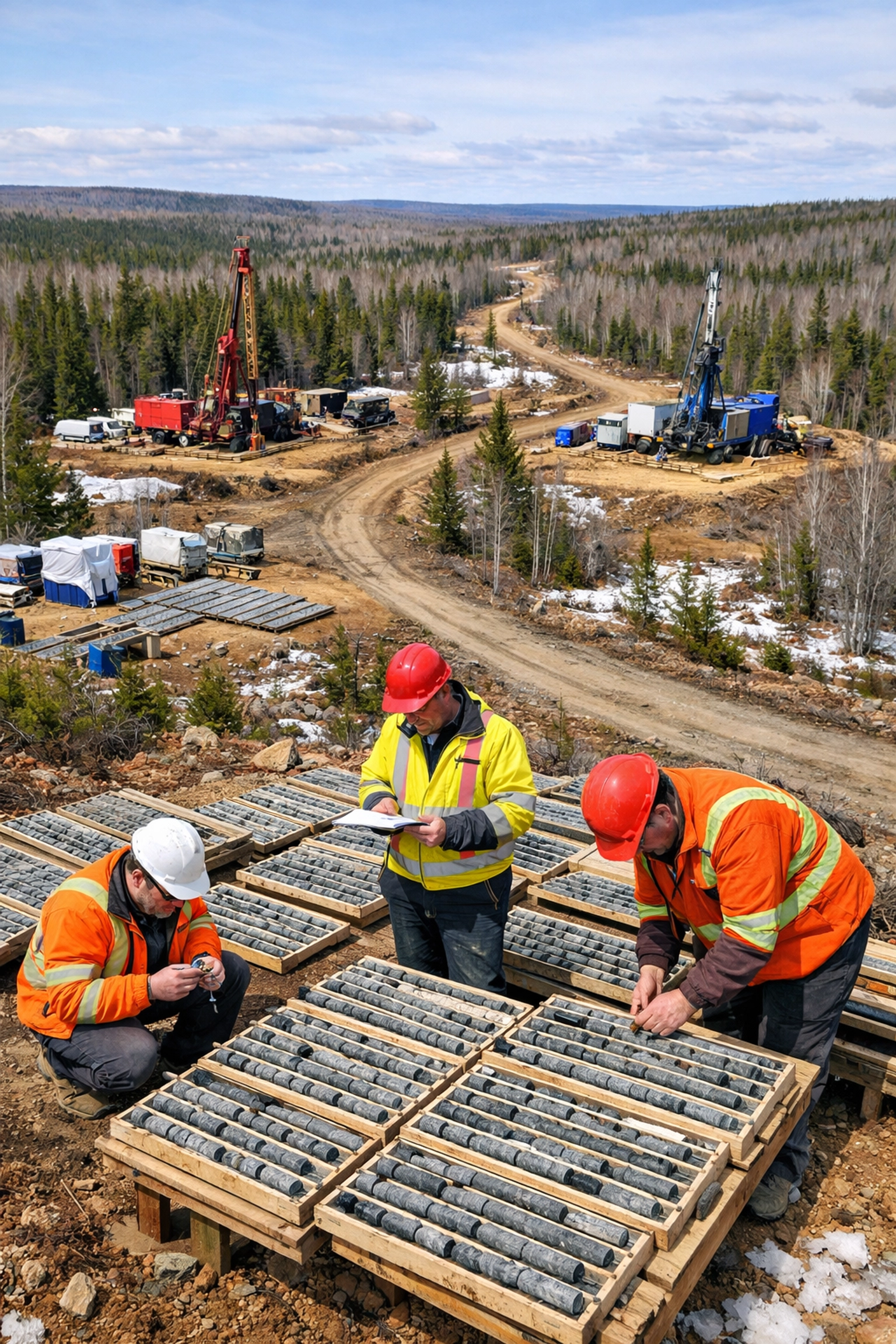
This overlap is one reason mineral diplomacy is becoming more coordinated. Copper, lithium, nickel, graphite, rare earths, antimony, tungsten, and gallium each sit in different parts of the value chain, but the policy response is converging. Governments are no longer thinking only about tonnage out of the ground. They are thinking about whether those tonnes can move through trusted logistics corridors, into permitted refineries, then into manufacturing ecosystems that are politically reliable in a crisis.
FORGE appears to recognize that reality. If the United States wants to scale domestic AI infrastructure, support allied rearmament, and reduce exposure to strategic chokepoints, upstream mineral access has to be linked to midstream and downstream planning. That is a more demanding agenda than simply announcing critical minerals lists. It requires project pipelines, processing capacity, skilled labor, financing tools, and foreign policy coordination that can survive election cycles.
A Supply-Chain Reset, Not a Clean Break
None of this means the global mining map is being redrawn overnight. China remains deeply embedded across refining, chemicals, processing equipment, and end-market manufacturing. Many Western and allied strategies still depend on Chinese capacity at one or more stages of the chain. That is why the current shift looks more like a gradual rerouting than a hard decoupling.
The key development is that governments are now willing to intervene earlier in the chain. Instead of reacting once shortages hit, they are trying to shape mine development, refining buildouts, and strategic partnerships before supply stress becomes acute. In that sense, FORGE and the bilateral agreements are less about replacing markets than about directing them.
That distinction matters for investors and operators. Projects in aligned jurisdictions may gain a stronger policy tailwind, but they will still need competitive costs, workable permitting, community support, and realistic processing routes. Bilateral diplomacy can open doors. It does not remove execution risk.
What to Watch Next
The immediate question is whether FORGE produces durable project-level outcomes or remains a diplomatic umbrella with uneven follow-through. Decision-makers should watch for three signals: first, whether the 11 bilateral agreements lead to specific financing or offtake mechanisms; second, whether processing and refining capacity moves closer to mine supply in partner countries or allied markets; and third, whether permitting and trade rules are adjusted to support faster execution without weakening environmental or social safeguards.

If those pieces start to align, the result could be a more fragmented but more resilient mineral system, one shaped less by pure cost optimization and more by strategic reliability. That would have direct implications for copper, lithium, nickel, rare earths, and a longer list of defense-linked materials.
For now, the bigger takeaway is that mining has moved decisively into the arena of industrial statecraft. FORGE and the new bilateral deals suggest Washington is no longer treating mineral security as a niche resource issue. It is treating it as infrastructure policy, technology policy, and security policy all at once.
The Bigger Picture
What is emerging is a more openly geopolitical mining system, where access to minerals is being negotiated through frameworks that blend diplomacy, commercial incentives, and industrial planning. The FORGE launch and the 11 bilateral agreements do not resolve the structural tensions in global mineral supply. They do, however, show how quickly governments are adapting to a world where AI capacity, robotic manufacturing, grid resilience, and defense readiness all depend on the same upstream resource base.
That means the next phase of competition may be less about who has the most resources on paper and more about who can translate partnerships into actual supply. In mining, that is where geopolitics stops being abstract and starts showing up in project approvals, refinery announcements, shipping routes, and contract terms.