By Penny Langford

Copper AI demand is no longer a fringe theory discussed in the corners of resource conferences; by April 2026, it has become the fundamental driver of the global commodities market. As hyperscale data centers evolve from mere server warehouses into city-sized computational power plants, the physical infrastructure required to sustain them is undergoing a radical shift. The “Silicon Valley” of the past has been replaced by a sprawling Silicon-Nuclear-Copper Nexus, where the ability to process data is limited not by software, but by the physical availability of red metal.
The scale of this shift is difficult to overstate. A single hyperscale data center can now consume as much electricity as a medium-sized city, and for every megawatt of power added to the grid, miles of high-conductivity copper cabling are required. Tech titans like Google, Amazon, and Microsoft have realized that their multi-billion dollar AI ambitions are at the mercy of the mining industry. This realization has sparked a new era of investment, where hyperscalers are no longer just customers: they are becoming the silent financiers of the world’s most significant copper projects.
In this high-stakes environment, three mining companies have emerged as the “energy backbone” of the AI revolution: Freeport-McMoRan, BHP, and Ivanhoe Mines.
The Silicon-Nuclear-Copper Nexus: Why AI Eats Copper
At the heart of every AI breakthrough is a massive cluster of GPUs. These chips require an extraordinary amount of power to perform the complex calculations necessary for Large Language Models (LLMs). This power demand has revitalized interest in nuclear energy, specifically Small Modular Reactors (SMRs), to provide steady, carbon-free baseload power directly to data center campuses. However, getting that power from the reactor to the rack requires copper.
More Read

Data centers utilize copper in power distribution strips, busbars, transformers, and the massive cooling systems required to prevent hardware meltdowns. As AI workloads increase, the density of these centers grows, requiring more copper per square foot than traditional cloud storage facilities. Current projections suggest that copper demand from the data center sector will reach an annual average of 400,000 tonnes through 2028, and the miners who can reliably supply this metal are seeing their valuations decouple from traditional industrial cycles.

Investors are increasingly using specific mining investments valuation metrics to identify which producers can meet this “high-spec” demand, as the purity and reliability of the supply chain become paramount for Big Tech’s infrastructure teams.
1. Freeport-McMoRan (FCX): The Domestic Sentinel
Freeport-McMoRan sits at the top of the “Copper Stock Watch 2026” list for several reasons, but primarily because of its strategic footprint in the United States. As geopolitical tensions rise, US-based hyperscalers are prioritizing “onshore” or “near-shore” supply chains. Freeport’s massive operations in Arizona and New Mexico provide a domestic safety net that few others can match.
More Read
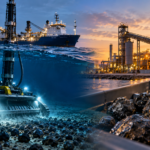
However, Freeport’s real edge in 2026 isn’t just their existing pits; it’s their technology. FCX has pioneered advanced leaching technologies that allow them to recover copper from legacy waste stockpiles. By applying a specialized chemical process to what was once considered “overburden,” Freeport is adding hundreds of thousands of pounds of copper to its annual production without the massive capital expenditure or environmental permitting required for a new mine.
For an Amazon or a Google, this “found copper” is an ideal ESG story. It’s low-carbon, low-impact, and high-volume. As hyperscalers look to fund mining operations directly to secure supply, Freeport’s ability to “manufacture” copper from existing assets makes them a primary candidate for strategic partnerships.
2. BHP: The Global Standard
If Freeport is the domestic sentinel, BHP is the global titan that defines the market. Operating Escondida in Chile: the world’s largest copper mine: BHP is the only entity with the scale to move the needle for the entire hyperscale industry.
BHP has spent the last three years pivoting its portfolio almost exclusively toward “future-facing metals.” This pivot was not accidental; it was a response to the projected copper price forecast 2026, which predicts a supply-demand gap that cannot be closed by junior miners alone. BHP’s advantage lies in its operational stability and its embrace of the autonomous mining shift. By integrating AI into their own operations, BHP is reducing costs and increasing safety, though they have faced the same autonomous mining adoption delays that have plagued the broader industry.
For the Silicon-Nuclear Nexus, BHP represents the most reliable source of high-volume cathode. When a hyperscaler builds a new cluster of data centers across three continents, they need a supplier that can deliver at scale in every time zone. BHP’s logistical dominance ensures they remain the preferred partner for the mega-projects powering the global AI grid.
3. Ivanhoe Mines: The High-Grade Disruptor
While FCX and BHP offer stability and scale, Ivanhoe Mines offers something the others cannot: grade. The Kamoa-Kakula project in the Democratic Republic of Congo (DRC) is widely considered the highest-grade major copper mine in the world.
For the tech industry, grade matters. Higher-grade ore means less energy is required to extract and process each pound of copper, resulting in a lower carbon footprint per tonne. As hyperscalers face intense scrutiny over the environmental impact of their AI energy consumption, the “Green Copper” produced by Ivanhoe becomes a premium product.
Robert Friedland, the visionary behind Ivanhoe, has long predicted the convergence of computing and mining. In 2026, his vision has materialized as Ivanhoe explores direct-to-consumer contracts with tech companies. By bypassing traditional metal traders and selling directly to the infrastructure builders, Ivanhoe is capturing more of the value chain. This strategy is part of a broader trend where tech companies are willing to pay a “certainty premium” to ensure their data centers don’t sit idle for lack of wiring.
Hyperscalers as the New Mining Bankers
We are witnessing a structural change in how mining is financed. Historically, miners relied on equity markets or traditional bank debt. Today, we are seeing the rise of “offtake financing,” where a hyperscaler like Microsoft or Google provides the upfront capital to expand a mine in exchange for a guaranteed supply of copper at a fixed price or a discount to the LME.
This trend is not limited to copper. We’ve seen similar movements in the energy sector with uranium market outlooks improving as tech companies seek to secure nuclear power. The goal for these tech companies is total vertical integration of their energy and material needs. They want to own the power (SMRs), the distribution (Copper), and the processing (GPUs).
This shift has created a windfall for the “big three” miners mentioned above, but it also creates a barrier to entry for smaller players. The hyperscalers want “bankable” partners with proven reserves and a track record of ESG compliance. Companies that can’t meet these rigorous standards are being left behind in the hunt for tech-backed capital.
Copper Stock Watch 2026: The Path Forward
As we look toward the remainder of 2026, the “Copper AI Demand” story is only going to intensify. The initial build-out of AI infrastructure was just the first wave. The second wave will involve the modernization of the entire electrical grid to support the increased load, a project that will require more copper than the data centers themselves.
Investors should keep a close eye on these three miners not just as commodity producers, but as essential infrastructure providers for the digital age. The traditional metrics of mining: tonnage, grade, and cost: are being joined by a new metric: “Tech-Linkage.”
The miners who can successfully bridge the gap between the pit and the server room are the ones who will define the next decade of the industry. Whether it’s Freeport’s domestic tech-leaching, BHP’s global scale, or Ivanhoe’s high-grade ESG-friendly production, the backbone of AI is undeniably made of copper.