A modern small modular reactor (SMR) design integrated with industrial data center infrastructure.

By Salini Krishnan
The intersection of artificial intelligence and baseload energy has reached a historic inflection point. In early 2026, the global mining and energy sectors are no longer viewing "Big Tech" merely as customers for chips and software, but as the primary architects of a new nuclear renaissance. At the heart of this shift is Microsoft’s aggressive bet on Small Modular Reactors (SMRs) and the revival of legacy nuclear assets: a move that serves as a powerful leading indicator for uranium investors and mining operators worldwide.
As AI workloads continue to expand at an exponential rate, the energy "gap" between what renewables can provide and what hyperscale data centers require has widened. Microsoft’s recent 20-year power purchase agreement (PPA) with Constellation Energy to restart the Three Mile Island facility: now known as the Christopher M. Crane Clean Energy Center (CCEC): marks the first time a retired U.S. nuclear plant is being brought back online for a single corporate client.
For the uranium market, this is not just a headline; it is a structural shift in demand that suggests the "supply gap" often discussed in mining circles is now a matter of national and corporate security.

The AI-Energy Nexus: Why Silicon Needs Uranium
The core of the "Silicon-Nuclear Nexus" lies in the physical reality of AI infrastructure. Unlike traditional cloud computing, training Large Language Models (LLMs) and running real-time generative AI requires 24/7, carbon-free baseload power that is not subject to the intermittency of wind or solar.

Microsoft, along with peers like Google, Amazon, and Meta, has realized that to meet aggressive net-zero goals while scaling AI capacity, they cannot rely on the current grid. They need "behind-the-meter" power. This has led to a surge in interest for SMRs: factory-built reactors that are smaller, more flexible, and easier to site near data center hubs than traditional large-scale plants.
According to recent market intelligence from Skillings Mining Intelligence, the AI power race has triggered an unprecedented procurement cycle. In the first quarter of 2026 alone, tech giants have collectively committed to over 15 gigawatts of nuclear capacity, either through plant life extensions or SMR development.


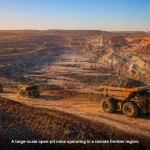
Uranium mining operations are scaling up to meet the long-term demand signals from the technology sector.
SMRs: The Data Center’s Best Friend
While the Three Mile Island restart handles immediate capacity, the long-term strategy for tech firms is centered on SMRs. These reactors represent a fundamental change in how the industry thinks about nuclear energy:
- Modularity: SMRs can be built in a factory and shipped to the site, significantly reducing the capital risks that have plagued large-scale nuclear projects for decades.
- Scalability: A data center campus can start with one SMR and add units as its compute capacity grows.
- Stability: They provide the stable, non-fluctuating voltage required by high-density GPU clusters.
Microsoft’s partnership with NVIDIA to use AI to streamline nuclear permitting is already paying dividends. By applying generative AI to the complex regulatory and design workflows of the Nuclear Regulatory Commission (NRC), developers like Aalo Atomics have reported a 92% reduction in permitting time. This acceleration is a critical "green flag" for investors, as it shortens the time-to-market for new uranium demand.
Market Snapshot: The 2026 Uranium Outlook
The following table highlights the current market dynamics as of April 2026, illustrating the tightening correlation between tech energy demand and uranium pricing.
| Metric | Current Value (Apr 2026) | 2027 Forecast | Driver |
|---|---|---|---|
| Uranium Spot Price (U3O8) | $104.50 /lb | $118.00 /lb | Structural supply deficit & Big Tech PPAs |
| Projected AI Energy Demand | 450 TWh | 780 TWh | Scaling of GPT-5+ and industrial AI |
| Active SMR Projects (Global) | 14 | 28 | Expedited permitting & private funding |
| HALEU Production Capacity | 12.5 tons/yr | 45 tons/yr | US & EU domestic enrichment scaling |
The "Uranium Signal" for Investors
For investors in the mining sector, the entry of Big Tech into the nuclear space provides several layers of derisking. Traditionally, uranium demand was tied solely to utility procurement, which is often slow and highly price-sensitive. Microsoft and Amazon, however, are "price-insensitive" buyers in comparison. Their primary concern is uptime and decarbonization; the cost of fuel is a secondary concern relative to the multi-billion dollar losses that could result from energy shortages.
This shift creates a durable "price floor" for uranium. As discussed in our Uranium Price Forecast 2026, the entry of these hyperscalers into the market effectively locks in long-term production from junior miners and established producers alike.

A diverse team of engineers inspecting a new modular reactor installation site.
Key Risks: The HALEU Bottleneck and Regulatory Hurdles
Despite the bullish sentiment, the Silicon-Nuclear Nexus faces a significant logistical hurdle: fuel. Most SMR designs require High-Assay Low-Enriched Uranium (HALEU), which is uranium enriched to between 5% and 20%. Historically, Russia was the primary supplier of HALEU.
The Western world is currently in a frantic race to build domestic enrichment capacity. Centrus Energy and other domestic players are scaling operations, but the timeline for HALEU self-sufficiency is tight. Any delays in the HALEU supply chain could push the operational dates for Microsoft’s SMRs further into the 2030s, creating temporary volatility in the stocks of SMR developers.
Furthermore, while AI-assisted permitting is a game-changer, the political landscape remains complex. Local opposition and the "Not In My Backyard" (NIMBY) sentiment can still derail projects, even if the technology is sound and the funding is secured.
Implications for Junior Miners
The Microsoft "halo effect" is particularly visible among junior uranium developers. Companies with projects in Tier-1 jurisdictions (such as the Athabasca Basin in Canada or the Western US) are seeing increased M&A activity. Large producers are looking to secure their pipelines to meet the potential surge in demand from these new tech-driven nuclear clusters.
Investors should look closely at companies that have already secured permitting or are in the advanced stages of exploration. As we noted in our review of top uranium producers for 2026, the "flight to quality" is well underway, with capital moving toward assets that can realistically enter production within the next 3–5 years.
Conclusion: A Decadal Shift
The Silicon-Nuclear Nexus is not a temporary trend. It is the beginning of a decadal shift in how energy is generated and consumed. Microsoft’s bet on SMRs and the restart of Three Mile Island has validated the nuclear thesis for a new generation of investors.
By marrying the world’s most advanced software with the world’s most energy-dense fuel, Big Tech is ensuring that the future of AI will be built on a foundation of uranium. For those in the mining industry, the message is clear: the energy transition has found its baseload, and the race to supply it has only just begun.
Shareable Social Media Snippet (LinkedIn/X)
Title: The Silicon-Nuclear Nexus: Microsoft’s Nuclear Bet ?
Snippet: Why is Microsoft restarting Three Mile Island? Because AI's hunger for 24/7 carbon-free power is reshaping the uranium market. SMRs are becoming the "Data Center's Best Friend," creating a structural demand floor for miners. From expedited AI-permitting to the HALEU supply race, the intersection of Big Tech and Uranium is the biggest story in mining for 2026. #Uranium #SMR #AI #MiningInvestment #CleanEnergy #SkillingsMining
References & Further Reading: