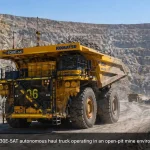
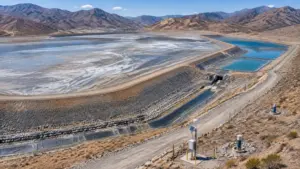
Caption: Regulatory hurdles and cross-border consultation requirements are reshaping the landscape for B.C. junior miners in 2026.

By Charls Pitts
In the rugged Kootenay mountains of British Columbia, a legal battle over a magnesium deposit is creating a precedent that could redefine how mining projects are permitted across Canada. The dispute centers on West High Yield (WHY) Resources’ Record Ridge project and its primary challenger: the Sinixt Confederacy, an Indigenous nation based in Washington State that was officially declared “extinct” by the Canadian government 70 years ago.
As of April 2026, the project remains at a standstill following a temporary injunction granted by the Supreme Court of British Columbia. With a pivotal judicial review hearing scheduled for May 5, the “Sinixt Precedent” is no longer a theoretical legal debate: it is a material risk factor for every mining operator and investor in border-adjacent regions.
Why the Desautel ruling matters
The current dispute rests on the Supreme Court of Canada’s 2021 ruling in R. v. Desautel. The case involved Richard Desautel, a member of the U.S.-based Lakes Tribe of the Colville Confederated Tribes, which includes the Sinixt. British Columbia charged him in 2010 for hunting without a license.
More Read

The court ruled that the term “Aboriginal peoples of Canada” in Section 35 of the Constitution Act, 1982, can include Indigenous groups that now live outside Canada if they have ancestral lands inside the country. As a result, the ruling restored the Sinixt’s legal standing in British Columbia and overturned the impact of the federal government’s 1956 administrative declaration that the group was “extinct.”

For mining companies, the ruling changed the consultation map. The duty to consult is no longer only a local issue. If a nation can show traditional territory on both sides of the border, regulators may need to include it in the environmental assessment process even if its members live in the United States.

Caption: The Record Ridge project targets a high-grade magnesium deposit with significant strategic value for the energy transition.
More Read

How Record Ridge became a test case
The Record Ridge magnesium project sits near Rossland, British Columbia. West High Yield Resources designed it to produce about 63,500 tonnes of magnesium-bearing ore a year. Because that figure stayed below the 250,000-tonne annual threshold, the project did not automatically require a full provincial environmental assessment under the B.C. Environmental Assessment Act.
In August 2025, the B.C. Chief Environmental Assessment Officer confirmed that view. That decision let the project move forward under a standard Mines Act permit. However, the Sinixt Confederacy and local advocacy groups sought a judicial review. They argued the province did not properly assess cumulative environmental effects or the possible impact on Sinixt constitutional rights.
The injunction issued in March 2026 shows why the case matters beyond one project. Small mines and industrial mineral projects have often relied on tonnage thresholds to map out permitting risk. However, Indigenous rights claims can change that path. If a court or regulator finds that asserted or established rights are at stake, a more extensive review may follow even when a project falls below the normal volume trigger.
Market Snapshot: Record Ridge Project Data
| Metric | Detail |
|---|---|
| Owner | West High Yield (WHY) Resources |
| Location | Rossland, British Columbia |
| Primary Commodity | Magnesium (Mg) |
| Grade | 24.61% Magnesium (M&I) |
| Contained Magnesium | 10.6 Million Metric Tonnes |
| Current Status | Temporary Injunction (as of April 2026) |
| Key Hearing Date | May 5, 2026 |
Why this matters for critical minerals policy
The Sinixt challenge comes at a sensitive moment for Canadian mining. Magnesium is a critical mineral used in aluminum alloys, die-casting, and some advanced battery applications. Because Western governments want to reduce dependence on Chinese supply, domestic projects such as Record Ridge carry strategic weight.
However, the case adds another layer to the ESG valuation metrics that investors and lenders already track. Observers are watching Record Ridge not only for its mineral potential, but also as a test of British Columbia’s approach to the United Nations Declaration on the Rights of Indigenous Peoples, which the province put into law in 2019.
That tension now sits at the center of the case. Governments want faster critical minerals development. However, the legal framework for cross-border consultation is still developing. Because of that gap, even relatively small projects can face longer timelines, added legal costs, and more uncertainty.

Caption: Cross-border legal challenges have paused ground-disturbing activities at several key exploration sites in the Kootenays.
What junior miners and investors may need to change
The Record Ridge injunction offers a clear warning for junior miners working near the border. Companies may need to adjust their approach in three areas.
- Early cross-border engagement: Waiting for a formal environmental assessment trigger may no longer be enough. Companies should identify transboundary Indigenous nations during exploration because consultation risks can emerge before the main permitting phase.
- Cumulative impact analysis: Regulators are looking more closely at the broader footprint of a project. Even if a mine is small, officials may still examine how it affects a nation’s traditional territory across a wider region.
- Capacity funding: The Sinixt are seeking provincial funding to participate in reviews. As a result, investors should account for higher early-stage costs tied to consultation, legal work, and community engagement.
As we noted in our recent analysis of modern mining technologies, innovation is not only about equipment and efficiency. It also shapes how companies secure and maintain a social license to operate.
What to watch at the May 5 hearing
The May 5 hearing will examine whether the British Columbia government acted reasonably when it exempted Record Ridge from a full environmental assessment. If the court sides with the Sinixt, West High Yield Resources could face a multi-year assessment process. That would likely delay a project that had targeted production in late 2026.
If the province and the company prevail, the decision could offer more clarity on the limits of cross-border consultation for projects below statutory thresholds. However, the broader issue will remain. Non-resident Indigenous nations can no longer be treated as outside the regulatory picture when they assert historical ties to land in Canada.
For the Canadian mining sector, the border is no longer a clean dividing line in consultation policy. Instead, it has become a central part of permitting strategy.
Key Cross-Border Indigenous Rights Milestones
- 1956: Canadian government declares the Sinixt people “extinct” for administrative purposes.
- 2010: Richard Desautel (Sinixt) challenges B.C. hunting laws, launching a decade-long legal battle.
- 2021: Supreme Court of Canada rules in R. v. Desautel that non-resident groups can be “Aboriginal peoples of Canada.”
- 2024 (August): B.C. CEAO determines Record Ridge does not require a full Environmental Assessment.
- 2026 (March): B.C. Supreme Court grants temporary injunction against Record Ridge construction.
- 2026 (May 5): Scheduled Judicial Review hearing to decide the project’s regulatory future.
For more insights on how these legal shifts affect the broader market, explore our coverage on the journey from exploration to reclamation and the evolving uranium market outlook.