By Penny Langford
The leadership of the world’s largest mining company is shifting at a moment of profound operational and financial strength. BHP announced that Brandon Craig, a 25-year veteran of the company, will succeed Mike Henry as Chief Executive Officer effective July 1, 2026. This transition, while following a methodical succession process, marks a pivot point for a company that has spent the last half-decade aggressively reorienting its portfolio toward the commodities of the energy transition.
The timing of the handoff is notable. As Henry prepares to step down after a six-and-a-half-year tenure that saw approximately $80 billion returned to shareholders, he leaves BHP on a high note. The company recently reported a 2% year-on-year beat in iron ore production, maintaining its dominance in the Pilbara, while realized copper prices reached a record $5.47/lb. For Brandon Craig, the challenge will not be a turnaround, but rather the execution of a massive, copper-heavy growth pipeline in an increasingly competitive global market.
The "Operator" at the Helm
Brandon Craig is not a newcomer to the complexities of Tier-1 assets. Most recently serving as President Americas, Craig oversaw the transformation of BHP into the world's largest copper producer. Before his tenure in the Americas, he led the Western Australia Iron Ore (WAIO) business, the engine room of BHP’s cash flow.
His background suggests a focus on operational excellence and "squeezing the lemon": extracting maximum efficiency from existing infrastructure. In the mining industry, where capital expenditure on new projects can run into the billions, the ability to optimize current production is often the difference between a good year and a record-breaking one.


Industry analysts view Craig as a "disciplined operator." His leadership during the surge in iron ore production demonstrates a capacity to manage complex logistics and labor challenges in remote regions. As he steps into the top role, this focus on operational stability will be critical as BHP navigates the mining workforce 2026 outlook, which continues to be characterized by tight labor markets and rising technical requirements.
Copper: The $5.47 Catalyst
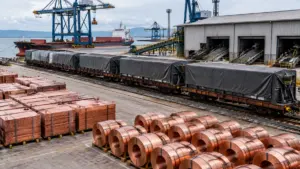
The centerpiece of the "Craig Era" will undoubtedly be copper. With realized prices hitting $5.47/lb, the red metal is no longer just a secondary pillar to iron ore; it is the primary driver of BHP’s future valuation. The current copper deficit 2026 has created a structural tailwind that the company is eager to exploit.
Under Mike Henry, BHP exited petroleum and coal assets to lean into "future-facing" commodities. Craig’s task is to deliver the volume to meet this strategy. This includes the massive expansion of the Escondida mine in Chile and the continued ramp-up of the Jansen potash project in Canada.
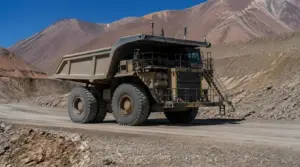
The $5.47/lb price floor provides Craig with a significant capital cushion. However, it also raises the stakes for execution. In a high-price environment, operational delays are exponentially more expensive in terms of lost opportunity. Craig’s deep familiarity with the South American portfolio: gained during his time as President Americas: will be essential as BHP deals with shifting regulatory landscapes and water scarcity issues in the Atacama Desert.

Iron Ore: Maintaining the Baseline
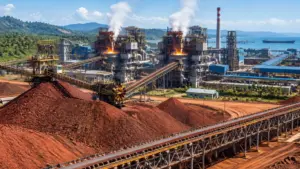
While copper grabs the headlines, iron ore remains the foundation of BHP's dividend power. The 2% production beat in the Pilbara is a testament to the reliability of the Western Australian operations. For Craig, who previously led WAIO, this is home turf.
The iron ore market in 2026 remains resilient, though it faces long-term structural changes as China's steel demand plateaus and high-grade supply from Africa begins to enter the market. The development of Simandou in Guinea represents a potential shift in global supply dynamics. BHP, while not a partner in Simandou, must contend with the Simandou infrastructure risk and its impact on the long-term price of the 62% Fe benchmark.
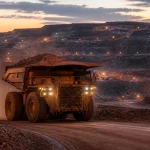
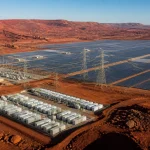
Craig’s strategy in WAIO is expected to focus on automation and decarbonization. BHP has been a leader in deploying autonomous haulage and is now under pressure to meet aggressive Scope 1 and 2 emission reduction targets. Maintaining the 2% YoY growth rate while simultaneously overhauling the energy mix of the Pilbara will be a major test of Craig’s operational discipline.

The M&A Question: Post-Anglo Strategy
The most scrutinized aspect of the Craig succession will be BHP’s appetite for mergers and acquisitions. The unsuccessful attempt to acquire Anglo American in late 2025 left a lingering question: does BHP need a "mega-deal" to secure its copper future, or can it grow organically?
Mike Henry’s approach to M&A was characterized by a "low-regrets" philosophy: he was willing to walk away if the price or complexity (such as the South African asset spin-offs required in the Anglo bid) became too high. This discipline was lauded by investors but left some wondering where the next leg of growth would come from.
Brandon Craig takes the reins at a time when the "M&A clock" is ticking. With copper prices at record highs, every mid-tier copper producer is now a target, and valuations are stretched. Analysts expect Craig to pursue a more targeted M&A strategy for the remainder of 2026. Rather than another attempt at a diversified giant like Anglo, the market anticipates moves for specific, high-quality copper assets or "junior-to-major" partnerships.
The focus may shift toward regional consolidation or the acquisition of advanced-stage projects that can be integrated into existing hubs in Chile or Australia. Craig’s experience in the Americas gives him a unique "boots-on-the-ground" perspective on potential targets in the Andes, where BHP already has a massive footprint.
Transition and Continuity
The transition period, which will see Mike Henry stay on until the end of November 2026 in a supportive capacity, is designed to ensure stability. This "long goodbye" is a hallmark of BHP’s corporate governance, intended to reassure the financial markets that there will be no sudden shifts in capital allocation policy.

Investors are largely looking for continuity. The 17% average annual total shareholder return under Henry has set a high bar. Craig will need to balance the market’s demand for dividends with the massive capital requirements of the Jansen potash project and the copper expansions.
The "New Era" at BHP is less about a change in direction and more about a change in pace. If the Henry years were about the strategic pivot: clearing the decks of fossil fuels and picking the target commodities: the Craig years will be about the delivery. In a world hungry for copper and iron ore, the execution of the world's biggest miner has never been more critical to the global supply chain.
As Craig takes the helm on July 1, the industry will be watching to see if the "disciplined operator" can maintain BHP’s momentum in an era of $5.47 copper and evolving geopolitical risks. The transition suggests that while the names at the top change, BHP's commitment to its "future-facing" strategy remains unshakeable.
Social Media Snippet (LinkedIn/X):
BHP enters a new chapter as Brandon Craig is named to succeed Mike Henry as CEO on July 1, 2026. With copper at record highs of $5.47/lb and iron ore production beating expectations, Craig inherits a powerhouse. Will his "operator first" background lead to more targeted M&A or a focus on internal expansion? Read our deep dive on what this leadership shift means for the global mining landscape. #BHP #Copper #MiningNews #IronOre #CEOtransition