By Penny Langford
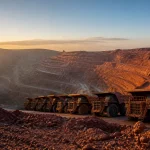
The red dust of Western Australia’s Pilbara region is usually synonymous with the relentless movement of iron ore: millions of tonnes destined for the blast furnaces of Asia. However, in late April 2026, the narrative shifted from extraction to electrification. Fortescue (FMG) has committed US$680 million to accelerate its 200 MW Pilbara Green Energy Project, a move that underscores the company’s "Real Zero" ambitions while raising pointed questions about capital allocation in a softening global market.
The investment is not just about cleaning up a balance sheet; it is a strategic maneuver to transform Fortescue from a pure-play iron ore miner into a green energy infrastructure provider. Yet, as the company doubles down on renewables, its core business faces the friction of operational reality. Recent production data reveals a 4% quarter-on-quarter (QoQ) dip in shipments, a reminder that even the most ambitious green pivot requires a steady stream of "brown" revenue to stay solvent.
The $680M Green Grid: Infrastructure Beyond the Mine
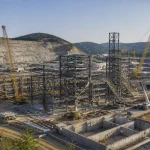
The Pilbara Green Energy Project represents a distinct branch of Fortescue’s broader US$6.2 billion decarbonization strategy. While the latter focuses on eliminating fossil fuels from its own operations, this new US$680 million injection is designed to build a fully integrated, off-grid renewable energy system with battery storage and firming capability.

By 2028, the company expects its green grid infrastructure to support 1.2 gigawatts (GW) of solar capacity and 600 megawatts (MW) of wind generation. The immediate goal of this 200 MW expansion is to capture a new class of industrial customers: data centers.


Executive Chairman Andrew Forrest has identified data centers as a primary growth market for surplus green electrons. In a period where AI-driven power demand is straining national grids globally, Fortescue is betting that the Pilbara can offer a unique proposition: land, sun, wind, and a pre-existing industrial grid capable of delivering green energy at a scale and speed that traditional utilities cannot match.

Operations Under Pressure: Navigating the 4% Shipment Dip
While the long-term vision is emerald green, the short-term quarterly performance shows a more complicated picture. Fortescue’s Q3 FY26 production report (for the quarter ending March 31, 2026) showed total iron ore shipments of 48.4 million metric tons. This was a 4% decline compared to the previous quarter.
The dip was largely attributed to environmental volatility. Tropical Cyclones Mitchell and Narelle battered the Western Australian coast during the quarter, disrupting operations at the Iron Bridge magnetite site and slowing outload at the Herb Elliott Port. Consequently, Fortescue was forced to revise its FY26 guidance for Iron Bridge downward, from 10–12 million tons to 9–10 million tons.
Despite these headwinds, the company maintains a resilient baseline. The nine-month period to March 2026 saw record total shipments of 148.7 million tonnes, a 4% increase year-over-year.
| Metric | Q3 FY26 Performance | Change (QoQ) | FY26 Guidance |
|---|---|---|---|
| Iron Ore Shipments | 48.4 Mt | -4% | 195 – 205 Mt |
| Hematite C1 Cost | $18.29/wmt | -4% (Improvement) | $17.50 – $18.50 |
| Iron Bridge Shipments | 2.0 Mt | Impacted by weather | 9.0 – 10.0 Mt |
| Green Energy Spend | $680M (Commitment) | N/A | $6.2B (Total Program) |
Data Source: Fortescue Quarterly Production Report, Q3 FY26.
Competitive Advantage or Capital Distraction?
For investors and mining industry professionals, the central debate revolves around whether this "green push" creates a genuine competitive moat or acts as a capital distraction.
The bull case for Fortescue’s decarbonization is built on the emerging "green steel" supply chain. As carbon border adjustment mechanisms (CBAM) take hold in Europe and ESG mandates tighten globally, iron ore produced with zero-emission energy may eventually command a premium. By self-funding its grid, Fortescue is insulating itself from future carbon taxes and the rising cost of fossil fuels.

However, the bear case focuses on the timing. Iron ore prices have shown signs of softening as China’s steel demand continues its structural decline. Critics argue that diverting US$680 million into a renewable grid for third-party data centers is a risky departure from the core competency of mining. In a high-interest-rate environment, the opportunity cost of this capital is significant, particularly when the company’s flagship Iron Bridge project is still ramping up through weather disruptions.
The Technological Edge: Building the "Green Powerhouse"
Fortescue isn't just buying solar panels off the shelf; it is developing the proprietary technology needed to run a heavy industrial grid on 100% renewables. This includes the development of large-scale Battery Energy Storage Systems (BESS) and the rollout of its "Universal Fast Charger" for autonomous electric haul trucks.
The integration of 620 kilometers of new transmission lines across the Pilbara is a monumental engineering feat. If successful, it would prove that heavy industry can disconnect from fossil fuels without sacrificing the reliability required for 24/7 operations. This "Green Grid" is essentially a pilot for the future of global mining.

"We are delivering green electrons at a scale and speed to market not able to be replicated by fossil fuel," Andrew Forrest noted in a recent briefing. The aim is to create a template that can be exported to other regions, potentially turning Fortescue Energy into a standalone powerhouse that rivals the iron ore division in valuation by the 2030s.
Looking Ahead: 2026 and the Roadmap to 2030
As we move further into 2026, the success of the Pilbara Green Energy Project will be judged by its ability to secure those high-demand industrial contracts. If the company can sign major data center operators to long-term power purchase agreements (PPAs), the US$680 million investment will look like a masterstroke of diversification.
For now, the company must balance its high-tech aspirations with the gritty reality of the Pilbara. Keeping unit costs low: currently sitting at a healthy $18.29 per wet metric ton: is essential to provide the cash flow needed for the transition.
Fortescue’s gamble is a litmus test for the entire sector. If a major iron ore producer can successfully pivot to become a green energy provider while navigating cyclical commodity downturns, it will redefine what it means to be a modern mining company.
For the latest updates on market shifts and project developments, stay tuned to our Daily News coverage and explore our deep-dive analysis on the copper deficit and lithium price forecasts for 2026.
Social Media Snippet (LinkedIn/X)
Headline: Fortescue doubles down on the "Green Grid" with a US$680M investment. Is this the future of mining or a capital risk?
Despite a 4% QoQ dip in shipments due to cyclone activity, Fortescue (FMG) is accelerating its 200 MW Pilbara Green Energy Project. The target? Data centers and industrial players looking for 24/7 green power.
Key Takeaways:
- US$680M committed to green energy infrastructure.
- Q3 FY26 shipments hit 48.4 Mt (5% YoY increase).
- Targeting 1.2 GW solar and 600 MW wind by 2028.
- Focus on "Real Zero" by 2030 remains the primary strategic driver.
Read the full analysis of the Pilbara Green Push on Skillings Mining Review. #MiningNews #GreenEnergy #Fortescue #IronOre #Decarbonization #Pilbara #ESG