By Salini Krishnan
In May 2026, the global conversation around Artificial Intelligence has shifted from software capabilities to hardware realities. The "AI-Energy Nexus": the critical dependency of high-performance computing on stable, high-capacity energy grids and the massive volume of minerals required to build them: is now the primary bottleneck for Silicon Valley.
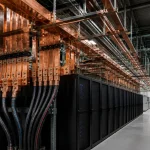
Data centers currently require between 27 and 47 tons of copper for every megawatt of capacity. As hyperscalers like Microsoft, Google, and Amazon race to build out 240+ gigawatts of new power capacity to fuel their GPU clusters, the mining industry has been thrust into the spotlight. The success of the tech sector in 2026 is no longer just about code; it is about the extraction and delivery of the physical materials that make that code possible.
This week, we highlight five CEOs who are not only leading their respective companies but are actively redefining the relationship between mineral extraction and the digital frontier.
1. Mark Bristow (Barrick): The Autonomy Architect


While Mark Bristow has spent decades as a legendary figure in gold mining, his primary contribution to the 2026 landscape has been the aggressive repositioning of Barrick as a "Gold-Copper" hybrid. Recognizing that AI infrastructure would create a generational demand for copper, Bristow accelerated the development of the Reko Diq project in Pakistan, now one of the world's most technologically advanced copper operations.
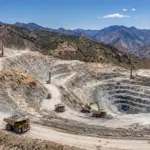
However, it is Bristow’s focus on autonomous tech that earns him a spot on this list. To meet the surge in demand, Barrick has integrated AI-driven autonomous haulage and drilling systems across its portfolio, most notably at Nevada Gold Mines (NGM). By partnering with Komatsu to deploy 5G-enabled autonomous fleets, Barrick has effectively shortened the feedback loop between geological data and operational execution.
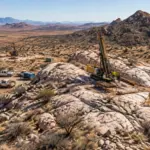
Bristow’s philosophy in 2026 is clear: mining must move at the speed of the tech it serves. By purchasing innovation solutions rather than developing every tool in-house, he has allowed Barrick to pivot faster than its peers, ensuring that the company’s copper production is as digitally optimized as the data centers that eventually consume it.
2. Jakob Stausholm (Rio Tinto): The Copper King of the Gobi

Jakob Stausholm has spent the last two years executing what many analysts considered an impossible task: the full "relationship reset" with the Mongolian government. As of May 2026, Rio Tinto’s Oyu Tolgoi mine in the Gobi Desert has become the "nerve center" for the global copper supply.
Stausholm’s strategic move to waive $2.4 billion in debt to get the underground expansion back on track is paying dividends. Oyu Tolgoi is now on the verge of becoming the world’s fourth-largest copper mine, providing the scale required to meet the 150,000–330,000 metric ton deficit projected for 2026.
Under Stausholm, Rio Tinto has moved from a decade of stagnation to a consistent 3% annual growth target. His focus is not just on volume but on the stability of supply. In an era where geopolitical competition for minerals is fierce, Stausholm’s ability to secure long-term power agreements and infrastructure stability in Mongolia has made Rio Tinto a preferred partner for tech giants looking to de-risk their supply chains.
3. Amir Adnani (UEC): Powering the Silicon Brain

If copper is the nervous system of the AI economy, uranium is its heartbeat. Amir Adnani, CEO of Uranium Energy Corp (UEC), has capitalized on the realization that wind and solar alone cannot meet the 24/7 baseload requirements of massive GPU clusters.
Adnani has overseen a historic expansion of U.S. domestic uranium production. With the successful startup of the Burke Hollow ISR mine in Texas, UEC has become a cornerstone of the American energy strategy. According to the latest Uranium Forecast 2026-2030, the demand for nuclear fuel is expected to quadruple as the U.S. attempts to expand its nuclear capacity to 400 GW.
Adnani has positioned UEC as more than just a miner; he has launched the United States Uranium Refining & Conversion Corp, aiming to build a vertically integrated domestic fuel cycle. His proactive engagement with hyperscalers like Microsoft: which has already signed power purchase agreements with nuclear providers: demonstrates that the AI-Energy nexus is now a primary driver of the uranium market.
4. Kurt House (KoBold Metals): The AI Mineral Pioneer

Kurt House represents the intersection of Silicon Valley and the mining pit. As CEO of KoBold Metals, House uses AI to find the very minerals that AI requires. His company’s breakthrough discovery in Zambia’s Copperbelt: the largest copper find in over a decade: was achieved by applying machine learning to geological patterns that traditional methods had missed for nearly a century.
In 2026, KoBold is no longer just a "venture-backed startup" but a major player with over 60 exploration projects globally. House’s approach has reduced the time and cost of discovery by an estimated 20-30%, a vital improvement when the world requires at least six new large-scale copper mines every year through 2050.
"I don't need to be reminded again that I'm a capitalist," House famously stated, and his $2.3 billion commitment to the Zambian project proves it. By serving as the "American beachhead" for critical mineral exploration in Africa, House is helping to solve the supply crisis before it reaches the data center door.
5. Jonathan Price (Teck Resources): Bridging the Infrastructure Gap

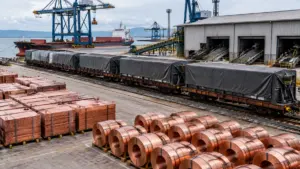
While other CEOs focus on discovery and extraction, Jonathan Price of Teck Resources is tackling the "delivery problem." Price has been vocal about the looming infrastructure gap: the reality that even if we find the ore, we lack the processing and transportation capacity to get it to market at the required speed.
Under Price, Teck has leaned into its "electricity-intensive era" strategy, acknowledging that copper demand is now decoupled from general economic growth and is instead tied directly to the buildout of the digital grid. Teck’s focus on permitting reform and the modernization of metals processing facilities has made Price a key voice for policy change in North America.
With copper prices reaching historic highs, Teck has maintained a record of operational excellence, as seen in recent reports of record Q1 EBITDA across the copper sector. Price’s leadership is defined by his ability to navigate the complex regulatory and logistical hurdles that currently prevent the mining industry from scaling as quickly as the AI sector demands.
The 2026 Outlook
The convergence of AI and mining has fundamentally changed the valuation of industrial companies. We are no longer in an era where tech and "old industry" operate in silos. The five leaders on this power list understand that the digital revolution is built on a foundation of rock and metal. As we look toward the remainder of 2026, the ability of these CEOs to scale production while integrating autonomous technology and securing energy-intensive processing will determine the pace of global innovation.
The AI-Energy nexus isn't just a trend: it is the new reality of the 21st-century economy.
Featured Lead: M&A and Strategic Growth
LinkedIn/X Snippet:
"The AI boom is a mining boom. From autonomous fleets in Nevada to copper giants in the Gobi Desert, the leaders of the mining world are now the architects of the digital future. Read our 2026 Weekly Power List featuring the CEOs of Barrick, Rio Tinto, UEC, KoBold, and Teck Resources. #Mining #AI #EnergyNexus #Copper #Uranium #SkillingsMining"