By Salini Krishnan
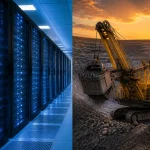
The physical distance between a 400-ton haul truck in Bagdad, Arizona, and a liquid-cooled server rack in a Phoenix data center is less than 100 miles. Yet, historically, these two worlds have existed in separate dimensions of the global economy. One was the old world of "dirt and diesel," the other the new world of "bits and bytes."
In 2026, that divide has vanished.
The Southwestern United States is currently witnessing the birth of the Copper Corridor: a strategic industrial nexus where the world’s most advanced critical minerals operations are being hard-wired directly into the largest AI infrastructure build-out in human history. With Phoenix emerging as the global data center capital and Salt Lake City solidifying its "Silicon Slopes" credentials, the proximity of copper titans like Freeport-McMoRan and Rio Tinto is no longer just a geographical quirk; it is a competitive moat.

Phoenix: The Silicon Desert’s Insatiable Power Hunger
The scale of the "Silicon Desert" expansion is staggering. As of mid-2026, Phoenix has surpassed Northern Virginia in total data center capacity under construction. Driven by the $40 billion TSMC semiconductor campus and massive hyperscale deployments from Google, Meta, and Microsoft, the region’s power requirements have skyrocketed.

These facilities are not just consumers of electricity; they are massive consumers of copper. A typical hyperscale AI data center requires approximately 25 to 33 tons of copper per megawatt (MW) of capacity: nearly double the requirement of traditional facilities. With Phoenix adding gigawatts of capacity, the demand for high-purity copper cathode is local, immediate, and high-stakes.


The "Bagdad Blueprint": Leaching for Grid Stability
Freeport-McMoRan’s Bagdad mine, located in Yavapai County, has become the operational center of this corridor. Freeport is currently pioneering what industry insiders call the "Bagdad Blueprint": a strategy that combines advanced leaching technology with local grid integration.
Instead of relying solely on traditional, energy-intensive smelting, Freeport is utilizing Jetti Resources’ catalytic technology to extract copper from low-grade primary sulfides that were previously considered waste. This "leaching-first" approach produces high-purity copper cathode at a fraction of the carbon footprint of traditional methods.
In November 2025, Freeport opened its new Center for Innovative Solutions in Tucson, a lab dedicated to optimizing these leaching workflows. By 2026, the company is on track to produce an incremental 400 million pounds of copper through these initiatives. For the Phoenix AI hub, this represents a "closed-loop" regional supply chain: Arizona-mined, Arizona-processed, and Arizona-consumed copper.

Skillings Asset: Modern control rooms are the bridge between raw extraction and the high-tech requirements of the AI hub.
Resolution Copper: The 2026 Strategic Breakthrough
If Bagdad is the current backbone, Rio Tinto’s Resolution Copper is the corridor’s future. Following a landmark March 2026 ruling by the Ninth Circuit Court of Appeals and the subsequent completion of a historic land exchange with the U.S. Forest Service, the project is moving into its final technical characterization phase.
Located just 60 miles east of Phoenix in Superior, Resolution is poised to become one of the most significant copper producers in the world. At full capacity, it could provide up to 25% of the total U.S. copper demand.
For the Phoenix technology corridor, Resolution represents more than just ore; it represents energy security. The mine’s proximity allows for the direct delivery of copper concentrate to regional refining centers, reducing the logistical bottlenecks that have plagued the global copper market since 2024. Despite weak global smelting economics, the strategic necessity of having a local supply for the U.S. semiconductor and AI sectors has made Resolution a non-negotiable asset for national security.
The Northern Node: Salt Lake City and the Kennecott Link
The Copper Corridor extends north into Utah, where Rio Tinto’s Kennecott mine serves as the northern anchor. While Salt Lake City’s "Silicon Slopes" has long been a hub for software and SaaS, the 2026 shift toward hardware and AI specialized chips has created a new synergy with the century-old mine.
Kennecott remains one of the few locations in the United States that can perform the entire process from mining to refining on-site. As data center developers in the Intermountain West seek to lower their Scope 3 emissions, the ability to source "green copper" from a facility that uses renewable energy certificates and advanced fleet electrification is a major selling point.

Skillings Asset: Industrial scale is the foundation of the technology corridor's supply chain.
Market Snapshot: The Copper-AI Nexus
The financial implications of this corridor are reflected in the recent performance of regional producers. Firms like Capstone Copper have already reported record EBITDA as the premium for "locally sourced, responsibly produced" copper begins to manifest in long-term contracts with tech giants.
| Metric | 2024 Actual | 2026 Forecast (May) | % Change |
|---|---|---|---|
| Phoenix Data Center Power Demand | 1.8 GW | 3.4 GW | +88% |
| Copper Intensity (per MW of AI Capacity) | 18 Tons | 31 Tons | +72% |
| Regional Leaching Production (Arizona) | 214M lbs | 400M lbs | +87% |
| LME Copper Price (Avg) | $4.10/lb | $5.25/lb | +28% |
Strategic Implications: Why This Matters Now
The linking of Arizona and Utah mines to the Phoenix AI hub is not merely a matter of convenience; it is a response to the "29-year copper supply lag" that has defined the early 2020s. By the time a new copper mine is permitted and built, the technology it was meant to support has often moved two generations ahead.
The Copper Corridor solves this by focusing on:
- Brownfield Expansion: Using the "Bagdad Blueprint" to increase output without the decades-long wait for new permits.
- Infrastructure Symbiosis: Using the massive power upgrades required for data centers to also support the electrification of mine fleets.
- Geopolitical De-risking: Reducing the "mileage" of the AI supply chain, ensuring that the chips powering American AI are supported by American copper.
As the Skillings Mining Intelligence team continues to track the development of the Copper Corridor, one thing is clear: the most important component in the next generation of AI isn't just the silicon: it’s the Arizona copper that brings it to life.
Shareable Social Snippet
LinkedIn/X: The "Copper Corridor" is here. ?⚡ From the Bagdad mine's leaching breakthrough to the Phoenix AI data center boom, Arizona and Utah are hard-wiring the future of tech. Discover how Freeport-McMoRan and Rio Tinto are linking the pit to the chip. #Mining #AI #Copper #Arizona #SkillingsMining #EnergyTransition