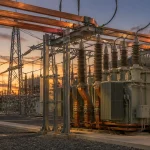
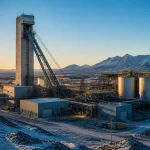
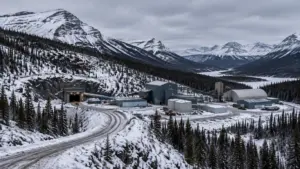
A high-resolution view of modern uranium infrastructure in the Athabasca Basin, reflecting the scale of the Rook I project.

By Penny Langford
The convergence of artificial intelligence and carbon-free energy has created a historic bottleneck in global power markets. As hyperscalers like Microsoft, Google, and Meta scramble to secure baseload electricity for their expanding data center clusters, the conversation has shifted from renewable energy credits to physical fuel security. In this high-stakes environment, NexGen Energy’s Rook I project has emerged as more than just a mining asset; it is being positioned as a "critical infrastructure" play for the 2026 energy landscape.
Located in the southwestern Athabasca Basin of Saskatchewan, Rook I is currently the largest development-stage uranium project in Canada. With the recent Canadian Nuclear Safety Commission (CNSC) approval on March 5, 2026, the project has transitioned from a multi-year permitting phase into active site preparation and construction. For investors and energy policymakers, the asset represents the single most significant new source of Western uranium supply expected to come online this decade.
The AI-Energy Nexus: Why Big Tech Needs Rook I
The primary driver behind the renewed interest in NexGen Energy is the explosive growth of data center electricity demand. Current projections suggest that U.S. data center consumption will grow from 176 terawatt hours to as high as 580 terawatt hours by 2028. This surge is not just about quantity; it is about the quality of power. AI training models require 24/7 "always-on" baseload power: something that intermittent sources like solar and wind cannot provide without massive, yet-to-be-deployed battery storage.
Nuclear power is the only carbon-free solution capable of meeting this demand at scale. This reality has led to a fundamental shift in how tech giants approach the energy market. Rather than simply buying green certificates, companies are now looking for vertical integration.

NexGen Energy CEO Leigh Curyer has noted that the company is in early-stage talks with several technology firms regarding potential financing and long-term uranium supply agreements. This mirrors the trend seen in the electric vehicle sector, where automakers like Tesla and GM secured direct off-take agreements with lithium and nickel miners. In the 2026 uranium market outlook, these "Big Tech" contracts are expected to become a primary catalyst for the next leg of the bull cycle.

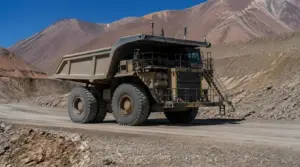
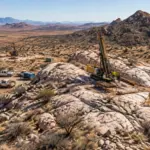
Advanced underground drilling technology, similar to the jumbo drills deployed at the Arrow deposit to maximize extraction efficiency.
The Arrow Deposit: Grade, Scale, and Cost
What sets Rook I apart from other global uranium assets is the Arrow deposit. Discovered in 2014, Arrow is a basement-hosted, high-grade uranium resource that is technically superior to many of the "legacy" assets currently in production.
According to the feasibility study, the mine is expected to produce approximately 29 million pounds of recovered yellowcake (U3O8) annually during its first few years of operation. To put that in perspective, a single year of Rook I production can generate enough carbon-free electricity to power more than 40 million homes.
From an operational standpoint, the project benefits from:
- Low Operating Costs: Due to the high-grade nature of the ore and the competent host rock, Rook I is projected to be in the lowest quartile of the global cost curve.
- Underground Tailings Management: A key differentiator in the 2026 ESG landscape is NexGen’s decision to store tailings underground. This significantly reduces the surface footprint and minimizes environmental risks compared to traditional surface storage.
- Western Jurisdictional Safety: With over 70% of the world’s uranium production currently controlled by state-owned enterprises or quasi-state entities in less stable jurisdictions, Saskatchewan offers a tier-one regulatory environment and geopolitical stability.

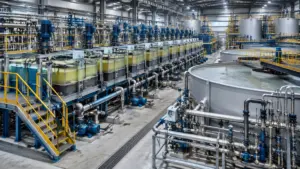
Modern mining control rooms allow for real-time monitoring of extraction metrics, crucial for maintaining the low-cost profile of high-grade assets.
Uranium Price Forecast 2026: The $150/lb Case
As of May 2026, the uranium market is characterized by a structural deficit that shows no signs of easing. While production is increasing at sites like UEC’s Burke Hollow, the total global supply remains insufficient to meet the projected demand from both legacy reactor restarts and the incoming wave of Small Modular Reactors (SMRs).
Our current analysis for 2026 outlines three potential scenarios for uranium prices:
- Base Case ($105 – $120/lb): Prices remain elevated as utilities continue to scramble for long-term contracts. Sustained demand from Western data centers keeps a floor under the market.
- Bull Case ($135 – $155/lb): This scenario assumes a delay in production restarts from major producers (like Kazatomprom) or a major geopolitical disruption in Central Asian supply. A $150/lb breakout would likely be triggered by a "Big Tech" firm taking a direct equity stake in a major developer to guarantee supply.
- Bear Case ($85 – $95/lb): A downside scenario would require a broader global economic slowdown that delays data center expansion, coupled with a faster-than-expected resolution to global supply chain constraints.
Regardless of the short-term price fluctuations, the "incentive price" for new greenfield projects like Rook I has moved higher due to inflationary pressures and the increasing cost of capital.
Geopolitics and the "State-Owned" Risk
A critical factor for the 2026 outlook is the growing realization that uranium is a strategic asset. Currently, a majority of global production is state-controlled. For tech giants and Western utilities, this creates a significant "single-point-of-failure" risk.
The development of Rook I provides a necessary hedge against this dependency. By bringing 29 million pounds of annual supply into the Western market, NexGen acts as a stabilizer for the nuclear fuel cycle. This geopolitical premium is becoming a major component of valuations for mining stocks in the uranium space.

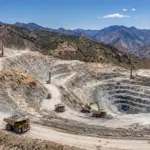
The industrial scale of modern mining sites in Saskatchewan, where infrastructure is designed to support multi-decade operations.
Conclusion: The Strategic Value of Rook I
As we look toward the remainder of 2026, NexGen Energy’s Rook I project stands at the intersection of two of the most powerful trends in the modern economy: the AI revolution and the global energy transition. It is no longer just a mine; it is a vital component of the digital world’s fuel tank.
For operators, the focus now shifts to construction execution in Saskatchewan. For investors, the story is about the "Big Tech" pivot and the potential for a massive repricing as uranium supply contracts become as sought-after as high-end GPUs.
Shareable Social Media Snippet (LinkedIn/X)
The "Holy Grail" of AI Baseload Power? ⚛️
As Big Tech giants like Meta and Google race to secure 24/7 carbon-free energy for AI data centers, one asset is emerging as the ultimate prize: NexGen Energy's Rook I.
With its CNSC construction license now in hand, this Saskatchewan powerhouse is set to deliver 29M lbs of uranium annually. We’re tracking the early-stage talks between tech hyperscalers and uranium developers that could redefine the mining sector in 2026.
Read our deep dive on the Rook I project and the 2026 Uranium Outlook here: [Link]
#Uranium #Mining #AIEnergy #NuclearPower #NexGenEnergy #SaskatchewanMining #EnergyTransition