By Penny Langford

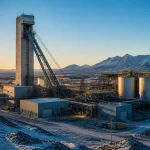
The geographic center of the global copper market is shifting. While the massive pits of the Chilean Andes remain the industry's historical heart, a new, technologically-driven epicenter is emerging in the "Silicon Desert" of Arizona. At the center of this transformation is Freeport-McMoRan’s (FCX) Bagdad operation, where a $3.5 billion expansion project is currently serving as the strategic blueprint for the AI-driven energy transition.
As of early 2026, the convergence of high-performance computing and domestic resource security has elevated copper from a mere industrial commodity to a critical strategic asset. In Arizona, the 500MW AI corridor stretching from Phoenix to Mesa is creating a demand profile that traditional mining cycles have struggled to meet. To close this gap, Freeport-McMoRan is deploying a combination of fully autonomous haulage, advanced leaching catalysts, and a multi-billion dollar capital expenditure program designed to double output at Bagdad by the end of the decade.
The Bagdad Expansion: A $3.5 Billion Investment
The Bagdad mine, located about 60 miles west of Prescott, is currently undergoing one of the most significant transformations in North American mining history. Freeport-McMoRan is expected to reach a final investment decision (FID) on the Bagdad expansion in the first half of 2026, with engineering and early works already well underway.
The scope of the project is massive. FCX has allocated approximately $150 million in 2026 just for early works and engineering, with an additional $170 million dedicated to expanding tailings management infrastructure. This expansion is not merely about moving more rock; it is about doubling the concentrator capacity to ensure that the mine can sustain high-volume production for decades.

This project aligns with a broader trend in the sector where operators are choosing to expand brownfield sites with known geology rather than navigating the decade-long permitting hurdles of greenfield developments. As highlighted in our recent analysis of copper production growth, brownfield expansions are currently the most reliable path to meeting the projected 2026 copper deficit.


The First Fully Autonomous US Mine
Innovation at Bagdad reached a critical milestone in October 2025, when the operation became the first major copper mine in the United States to transition to a fully autonomous haulage fleet. All 33 of the mine’s massive haul trucks are now operated via a central command center, removing operators from the pit and significantly increasing equipment utilization rates.

Autonomous haulage is more than a safety upgrade; it is a fundamental shift in mining economics. By optimizing gear shifts, braking, and speed, the autonomous system reduces fuel consumption and tire wear: two of the highest variable costs in open-pit mining. For an operation like Bagdad, which is scaling up to meet the demands of the Phoenix AI corridor, this level of precision is required to maintain margins in a volatile energy environment.
The AI Energy Nexus: Powering the Phoenix Corridor
The term "AI energy nexus" refers to the symbiotic relationship between high-performance data centers, the power grid, and the raw materials required to connect them. In Arizona, this nexus is more visible than anywhere else in the world. In 2025, over 100 new data center projects valued at nearly $61 billion came online in the state.
These facilities are not just consumers of power; they are consumers of copper. A typical 500MW data center corridor requires tens of thousands of tons of copper for power distribution, cooling systems, and high-speed data transmission. According to our 2026 uranium forecast, the surge in AI-driven energy demand is forcing a total rethink of how industrial hubs are powered, with copper acting as the essential conductor for this new electrical infrastructure.
Freeport-McMoRan’s proximity to these projects is a competitive advantage. By producing copper within the same state where it is being consumed by "Big Tech" infrastructure, the company reduces the carbon footprint associated with long-distance logistics, a key metric in modern mining ESG reporting.

Leaching Innovation: Mining the "Hidden Reserve"
Perhaps the most disruptive element of the Bagdad blueprint is the Americas Leach Innovation Initiative. This program targets the "hidden" copper already sitting on the surface in waste rock and low-grade stockpiles. Traditionally, this material was considered uneconomic because the copper was locked in complex sulfide minerals that traditional leaching could not extract.
Through a partnership with Jetti Resources, Freeport is utilizing proprietary catalysts that break down these mineral barriers. The results have been transformative:
- 2026 Target: FCX is targeting 300 million pounds of copper production from leaching alone this year.
- Cost Efficiency: This "virtual mine" produces copper at a cash cost of less than $1.00 per pound.
- 2030 Outlook: The company aims to reach an annual run rate of 800 million pounds from leaching by 2030.
This technology allows Freeport to increase production without digging new pits or building massive new mills. It is a "low-capex, high-margin" strategy that is essential for maintaining a steady supply of copper to the AI sector while prices remain elevated.

Mining ESG Reporting: Water and Transparency
Operating a massive copper mine in the Arizona desert requires a sophisticated approach to environmental stewardship, particularly regarding water management. As the Bagdad expansion moves forward, mining ESG reporting has become as critical to investors as the balance sheet.
Freeport has implemented a closed-loop water system at Bagdad that recycles the majority of the water used in the concentrator. Furthermore, the company’s use of AI and robotics: developed in partnership with Arizona State University: allows for real-time monitoring of tailings dams and groundwater levels. This level of transparency is no longer optional; it is a requirement for the institutional investors who are funding the energy transition.
For those tracking the broader financial landscape, the 2026 copper deficit highlights that the biggest risk to supply isn't just a lack of ore, but a lack of social license to operate. By prioritizing water conservation and local technology partnerships, Bagdad is setting a standard for how North American mining can coexist with rapid urban and technological growth.
2026 Outlook: Base, Bull, and Bear Cases
As we look toward the remainder of 2026, the "Bagdad Blueprint" serves as a bellwether for the entire copper sector.
The Base Case
Freeport-McMoRan continues to scale its leaching production toward the 300-million-pound mark, while the Bagdad FID is confirmed in H1 2026. Copper prices remain supported above $4.80/lb as the Phoenix data center projects continue their construction phases.
The Bull Case
A faster-than-expected deployment of AI-driven power infrastructure leads to a physical copper shortage in the domestic US market. In this scenario, the "Americas Leach" initiative could be accelerated, and Freeport’s negative cash cost potential becomes the primary driver of record earnings.
The Bear Case
Permitting delays or regional water restrictions slow the pace of the Bagdad expansion. While this would tighten global supply further in the long run, it could lead to short-term volatility for FCX as capital expenditures remain high while production growth is deferred.

The expansion of the Bagdad mine is more than just an industrial project; it is a necessary response to the electrification of the global economy. As the Phoenix AI corridor continues to expand, the copper coming out of the Arizona desert will be the literal and figurative wiring that powers the next generation of technological innovation. For operators and investors alike, the Bagdad Blueprint isn't just about mining; it's about the infrastructure of the future.