By Penny Langford

The global lithium market has shifted from a period of volatile oversupply to a structural realignment driven by a new power dynamic: the AI-Energy Nexus. As of May 2026, the narrative surrounding lithium has moved beyond the single-threaded focus on electric vehicle (EV) adoption. Instead, the market is now fixated on the massive infrastructure requirements of artificial intelligence and the utility-scale battery systems needed to stabilize a straining global grid.
This transition has established a firm lithium price floor at approximately $25,000 per metric ton. While the 2024–2025 period saw prices dip toward marginal production costs, the 2026 landscape is defined by "strategic infrastructure" premiums. Investors and operators are no longer just looking at car sales; they are looking at the GWh-scale requirements of data centers and the concurrent surge in nuclear energy investment.
The $25,000 floor: Why it matters
Market data from the second quarter of 2026 shows battery-grade lithium carbonate spot prices stabilizing between $24,000 and $25,500 per metric ton. This level is significant as it sits just above the incentive price required for high-cost lepidolite and unconventional brine projects to remain viable.
Unlike the speculative spikes of years past, the current $25k floor is defended by structural demand. According to recent analyst reports, global lithium consumption is forecast to rise 13.5% year-over-year to 1.48 million metric tons of lithium carbonate equivalent (LCE) in 2026. This growth is increasingly insulated from the cyclical nature of consumer electronics and EV subsidies, finding a more permanent home in the "baseload storage" category.


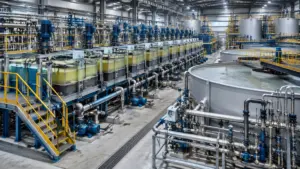
Industrial-scale Battery Energy Storage Systems (BESS) are becoming integral to grid stability.

AI data centers: The missing piece of the forecast
The explosive growth of AI has created an insatiable demand for electricity. For data centers to maintain 99.999% uptime while transitioning to renewable energy, they require massive Battery Energy Storage Systems (BESS). In 2025, demand for lithium in storage applications jumped 71%, and early 2026 data suggests another 55% growth for the current year.
Data centers are moving from being passive energy consumers to active grid participants. By deploying GWh-scale lithium-ion battery banks, these facilities can "peak shave" and provide frequency regulation to the grid. This pivot has essentially created a secondary, non-discretionary market for lithium. When a tech giant like Meta or Microsoft builds a data center, the associated battery storage is a mandatory capital expenditure, not a consumer choice.

The Uranium-Lithium synergy
One of the most striking developments in 2026 is the synergy between the lithium and uranium markets. As tech companies sign landmark nuclear power agreements to provide 24/7 baseload power, lithium-ion batteries act as the necessary buffer.
Nuclear energy provides the constant flow, while lithium storage provides the flexibility. This "Nuclear-Battery Nexus" is the foundation of the 2026 energy transition. It explains why both commodities are experiencing concurrent bull runs. While uranium prices have tested the $100/lb mark, the uranium forecast for 2026 suggests that the demand for lithium to manage that power output will only intensify.

Modern data centers are now major drivers of battery material demand.
2026 Market Snapshot: Supply vs. Demand
The market has shifted into a deficit that many major banks, including Morgan Stanley and UBS, had predicted. The following table illustrates the tightening balance as we move through the year.
| Metric | 2025 (Actual) | 2026 (Forecast) | % Change |
|---|---|---|---|
| Global LCE Demand (mt) | 1.30M | 1.48M | +13.5% |
| Global LCE Supply (mt) | 1.44M | 1.58M | +9.9% |
| Market Balance (mt) | +140k | -22k to -80k | (Shift to Deficit) |
| Spot Price (Carbonate) | $18,500/t | $25,150/t | +35.9% |
| BESS Deployment (GWh) | 273 | 359 | +31.5% |
Data sourced from Skillings Mining Intelligence and consensus analyst estimates.
Operational impact: Production and exploration
For mining operators, the $25k floor provides the price certainty needed to move stalled projects into the construction phase. We are seeing a renewed focus on regional refining corridors rather than just raw extraction.
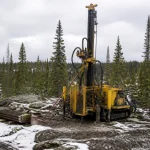
In South America, companies are double-down drilling on high-grade targets, but the "margin gravity" has shifted toward those with integrated processing capabilities. The cost of production in the "lithium triangle" remains competitive, but the environmental, social, and governance (ESG) requirements for data-center-grade lithium are more stringent than those for the general market.

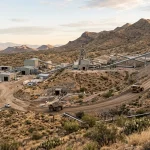
Heavy machinery at an open-pit lithium operation in Western Australia.
2026 Outlook: Base, Bull, and Bear cases
As we look toward the second half of 2026, the lithium price trajectory depends on three primary scenarios:
Base Case: $24,000 – $27,000/ton
In this scenario, EV sales continue to grow at a steady 20% pace, and BESS deployments meet current 359 GWh forecasts. The market remains in a slight deficit, and the $25k floor holds as the industry's cost-plus-margin benchmark.
Bull Case: $28,000 – $32,000/ton
The "AI Acceleration" scenario. If data center power requirements are revised upward by another 10-15%, the surplus of carbonate inventory will be depleted faster than expected. Any supply disruptions in Australia or Chile would immediately push prices toward $30k.
Bear Case: $18,000 – $22,000/ton
The "Macro Stall" scenario. A significant global recession or a breakthrough in alternative battery chemistries (like sodium-ion) that captures more than 15% of the stationary storage market could erode the lithium floor. However, the 2026 lithium forecast suggests that the oversupply narrative is largely a thing of the past.
Summary for investors and operators
The AI-Energy Nexus has fundamentally altered the floor for lithium prices. By decoupling a significant portion of demand from the consumer EV market and anchoring it to mission-critical AI infrastructure, the commodity has gained a "strategic" status it previously lacked. For those in the mining and energy sectors, 2026 is the year where the grid finally became the primary driver of the lithium market.
Social Media Snippet (LinkedIn/X):
The lithium market has found its new floor at $25,000/ton, but the driver isn't just EVs. The AI-Energy Nexus is fundamentally rewriting the commodity playbook. As data centers scramble for 24/7 power, the synergy between nuclear baseload and lithium-ion storage is creating a "strategic infrastructure" premium. Read why the $25k floor is the new baseline for 2026. #MiningNews #Lithium #AI #EnergyTransition #Uranium