By Penny Langford
**LIMA, Peru : ** In a move that has sent shockwaves through the global base metals market, the Peruvian government has abruptly revoked the construction permit for Southern Copper Corporation’s (NYSE: SCCO) $1.8 billion Tía María project. The decision, announced late Monday by the Ministry of Energy and Mines, marks a stunning reversal for a project that was widely considered the linchpin of Peru’s 2026 copper production targets.
The revocation comes at a critical juncture for the global energy transition, as analysts warn of an intensifying supply gap. With Tía María’s 120,000 tonnes of annual copper cathode production now effectively sidelined, the copper price forecast 2026 is being aggressively recalibrated by major financial institutions. For Peru mining, this represents more than just a lost project; it signals a potential shift in the country's investment climate as it approaches a pivotal national election.
The $1.8 Billion Regulatory Earthquake
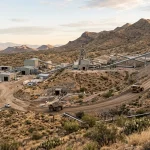
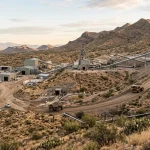
The Tía María project, located in the Islay province of the Arequipa region, has been a flashpoint for social and environmental tension for over a decade. Despite Southern Copper’s recent progress in securing local support and completing nearly 25% of initial infrastructure work, the government cited "unresolved technical reassessments" and "shifting environmental compliance standards" as the primary reasons for the permit withdrawal.

Southern Copper, a subsidiary of Grupo México, has long maintained that Tía María would be a model for modern extraction, utilizing state-of-the-art Solvent Extraction and Electrowinning (SX-EW) technology. The project was expected to generate over 600 direct jobs and thousands of indirect roles, while contributing billions in royalties and taxes over its 20-year lifespan.

Industry observers note that the timing of the revocation is particularly damaging. "This is a significant blow to investor confidence," says a senior commodities analyst based in Lima. "When a project of this scale, which has already seen nearly $800 million in committed investment, is halted by a sudden regulatory pivot, it raises questions about the stability of the entire pipeline."
Global Supply and the 2026 Copper Deficit
The removal of Tía María from the immediate supply map complicates an already strained global market. Copper is the "metal of electrification," essential for everything from electric vehicle (EV) batteries to the massive data centers powering artificial intelligence.

At Skillings Mining Intelligence, we previously analyzed the 2026 copper deficit, noting that the market was already teetering on the edge of a structural shortfall. The Tía María "shock" removes a significant volume of planned output that was supposed to hit the market by late 2027.

Copper Price Forecast 2026: The New Base Case
Before this announcement, the consensus copper price forecast 2026 hovered around $5.10/lb. In the wake of the Tía María news, several desks have shifted their projections:
| Scenario | 2026 Target Price | Drivers |
|---|---|---|
| Bull Case | $5.85/lb | Persistent Peru supply disruptions, accelerated China stimulus, AI-driven demand surge. |
| Base Case | $5.35/lb | Tía María delay, steady demand from EV sector, moderate global inventory draws. |
| Bear Case | $4.60/lb | Global recessionary fears, unexpected resolution of Peru labor strikes, higher scrap recovery. |
The "bull case" is gaining traction as traders price in the heightened regional risk. Southern Copper is known for its operational efficiency, often achieving negative cash costs through high-grade byproduct credits. Losing such a low-cost producer’s expansion volume adds upward pressure on the global cost curve.
Peru Mining: A Jurisdiction at a Crossroads
For decades, mining news out of Peru has alternated between record-breaking production and intense social conflict. Peru remains the world’s second-largest copper producer, but its lead is narrowing as neighboring jurisdictions like the Democratic Republic of Congo (DRC) aggressively expand.
The Tía María revocation is inextricably linked to the broader political landscape. With a presidential election looming in 2026, the current administration is under immense pressure to balance economic development with the demands of rural constituencies. The Islay province, where Tía María is located, has a history of violent protests against mining, and the government’s move is seen by many as a concession to regional political pressure.

"The risk for Peru mining isn't just about one project; it’s about the precedent," says an executive at a competing copper major with assets in the Andes. "If a permit can be revoked after years of technical approval and substantial capital expenditure, every project in the $64 billion pipeline is now under a cloud of uncertainty."
The Road Ahead for Southern Copper
Southern Copper has vowed to appeal the decision, stating that it has complied with all existing regulations and environmental mandates. In a press release, the company emphasized that Tía María is designed to use desalinated seawater, specifically to avoid competition with local agricultural water needs: a primary concern of the opposition.
However, legal battles in Peru can be protracted. If the revocation stands, Southern Copper may be forced to write down significant portions of its investment or reallocate capital to its Mexican or other South American assets. This would be a major setback for the company’s goal of reaching 1.8 million tonnes of annual production by 2030.
Regional Contagion and Investor Sentiment
The "Tía María shock" is also affecting other operators in the region. Stocks of companies with significant Peruvian exposure, including Freeport-McMoRan (NYSE: FCX) and MMG Limited, saw increased volatility following the news. Investors are now closely scrutinizing the permitting status of other major projects, such as Antamina’s expansion and the Zafranal project.

Key Risks to Watch in 2026:
- Election Volatility: Any shift toward a more nationalistic mining policy during the 2026 campaign could trigger further permit reviews.
- Social License: The "Ismays" (opponents of Tía María) may see this as a blueprint for stopping other greenfield projects.
- Infrastructure Bottlenecks: Even if permits are restored, the delay in construction complicates the synchronization of local power and transport grids.
Strategic Implications for the Energy Transition
The global race for copper is no longer just a commercial endeavor; it is a matter of national security for many OECD countries. The United States and the European Union have both listed copper as a critical mineral. Disruptions in Peru, a key supplier to both the U.S. and China, ripple through the entire supply chain.
As Tía María stalls, the industry is looking toward "lower-risk" jurisdictions, yet the grades and scale found in the Peruvian Andes are difficult to replicate elsewhere. This creates a paradox: the world needs Peruvian copper more than ever, yet the path to extracting it is becoming increasingly treacherous.
Final Thoughts
The revocation of the Tía María permit is a sobering reminder of the "above-ground" risks that dominate modern mining. While the geology of the deposit is world-class, the social and political geology of Peru has proven far more difficult to navigate. For the copper price forecast 2026, this event acts as a significant tailwind for prices but a headwind for the global transition to a net-zero economy.
Decision-makers must now weigh the cost of these delays against the urgent need for raw materials. For Southern Copper, the battle for Tía María is far from over, but for the global copper market, the shock is already being felt in every trade.
Shareable Social Media Snippet
LinkedIn / X (Twitter) Alert:
? Mining Market Shock: Peru has officially revoked Southern Copper’s $1.8B Tía María permit. As a 120,000-tonne-per-year supply hole opens up, what does this mean for the copper price forecast 2026? We dive into the regulatory earthquake, regional risk, and the impact on the global energy transition.
Read the full intelligence report here: [Link] #MiningNews #Copper #PeruMining #EnergyTransition #Commodities