High-purity silver ingots stacked in a high-security industrial vault as market demand for haven assets accelerates.

By Charles Pitts
The global silver market witnessed a significant breakout on Tuesday, May 12, 2026, as spot prices surged to a two-week high near $86 per ounce. The rally, which saw silver jump more than 6% in a single trading session, is being fueled by a hardening geopolitical deadlock between the United States and Iran, alongside mounting technical evidence that the metal is entering a new phase of a multi-year bull market.
As traditional safe-haven assets gain favor, silver is once again outperforming gold, drawing interest from both institutional hedgers and retail investors. With the $86 resistance level now tested, analysts are increasingly pointing toward a short-term price target of $90 per ounce, a psychological threshold that has not been sustained since the high-volatility window in early 2026.
Geopolitical Stalemate: The US-Iran Factor
The primary catalyst for Tuesday’s price action was the collapse of high-level diplomatic efforts to de-escalate tensions in the Middle East. Reports emerged early in the day that the U.S. administration had rejected a revised peace proposal from Tehran, labeling the terms “totally unacceptable” and signaling a shift toward more stringent secondary sanctions.
More Read
For the mining and precious metals markets, this deadlock introduces a significant risk premium. Silver, often viewed as the “leveraged play” on gold during times of geopolitical strife, responded more aggressively than its yellow counterpart. While gold rose a modest 0.4% on the news, silver’s 6.15% gain reflects its dual nature as both a monetary asset and a critical industrial material that is sensitive to supply chain disruptions.

The rejection of the proposal has stymied hopes for a diplomatic breakthrough, leading many market participants to brace for a prolonged period of regional instability. In this environment, the “flight to quality” has moved beyond government bonds and into hard assets. Silver’s relatively lower entry point compared to gold has made it the preferred vehicle for investors looking to hedge against a potential broadening of the conflict.

A large-scale silver processing refinery operating at sunset as industrial demand remains a core pillar of the market.
More Read

Silver Technical Outlook: The Road to $90
From a technical perspective, silver’s move past $85.30 marks a definitive breakout from a month-long consolidation pattern. Analysts at several major financial institutions, including J.P. Morgan, have revised their immediate outlooks, noting that the velocity of the move suggests strong underlying momentum.
“Silver has been coiling for several weeks,” noted one senior commodity strategist in London. “The break above $85 on high volume indicates that the market is no longer just looking at geopolitical risk; it is pricing in a structural deficit that the current mine supply simply cannot fill.”
The following table outlines the current price dynamics and the projected base, bull, and bear cases for the remainder of Q2 2026:
| Scenario | Price Target (per oz) | Primary Driver | Risk Factor |
|---|---|---|---|
| Base Case | $88.50 | Sustained Middle East tension | Moderate US dollar strength |
| Bull Case | $92.00 | Breakdown in trade talks + Iran escalation | Rapid short-covering rally |
| Bear Case | $78.00 | Surprise diplomatic breakthrough | Profit-taking at $86 level |
The path to $90 is largely clear of major technical resistance, though some psychological selling is expected at $88. If silver can close the week above $86.50, the technical setup favors a rapid extension toward the $90–$92 range.
Silver Outperforming Gold: A New Paradigm
One of the most striking features of the 2026 market is the rapid compression of the gold-silver ratio. On May 11, the ratio fell to 55.46, down from levels above 61 just a month prior. This compression is a classic signal of a “hot” precious metals market, where silver’s lower liquidity and higher industrial utility cause it to overshoot gold’s performance during rallies.
Unlike the 2024-2025 period, where gold dominated the headlines, the current cycle is increasingly defined by silver’s role in the energy transition. This dual-demand profile is creating a “perfect storm” for the metal. When geopolitical fears drive haven buying, it stacks on top of an already strained industrial supply-demand balance.
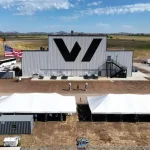
Companies like Vizsla Silver are navigating complex operational environments to bring new ounces to market, yet the lead times for major new primary silver mines remain long. This scarcity is reflected in the market’s willingness to pay a premium for spot delivery during periods of geopolitical uncertainty.

A mining professional examines silver-rich ore samples, highlighting the increasing value of high-grade primary silver discoveries.
Industrial Backstop: Beyond Safe-Haven Demand
While the US-Iran deadlock is the immediate headline driver, the long-term price floor for silver is being set by the solar and electric vehicle (EV) sectors. In 2026, industrial applications are expected to account for approximately 60% of total silver demand.
The ongoing Trump-Xi summit in Beijing, scheduled for May 13–15, is the other major factor hanging over the market. Investors are closely watching for any updates regarding the “Board of Trade” framework. If the summit results in an extension of the current tariff truce, it would likely provide a massive boost to industrial silver demand, as China remains the world’s largest consumer of the metal for photovoltaic and semiconductor manufacturing.
The convergence of trade optimism and geopolitical dread is creating a unique environment where silver wins regardless of the specific outcome. Stronger trade supports industrial demand; weaker diplomacy supports haven demand. This “win-win” scenario for silver bulls is why many analysts believe the current rally has more staying power than the brief spikes seen earlier in the decade.
The Lithium price forecast for 2026 has already shown how critical minerals can decouple from broader market trends when supply constraints hit. Silver is now following a similar trajectory, albeit with the added complexity of its historical role as money.
Supply Deficits and 2026 Forecasts
The physical market remains in a state of structural deficit for the fifth consecutive year. According to the Silver Institute and recent LBMA consensus reports, the global supply gap is widening as mine production in major regions like Mexico and Peru struggles to keep pace with demand from the burgeoning AI data center and BESS (Battery Energy Storage Systems) industries.
In the Yukon, exploration is picking up as companies look for domestic sources of critical metals. Recent developments, such as the district-scale discovery at the Wolf Project, highlight the renewed interest in safe-jurisdiction mining, but these projects are years away from production.

A modern open-pit mining facility in a key resource region, illustrating the scale required to meet global mineral demand.
As silver approaches the $90 mark, the question for investors and industrial consumers alike is whether this represents a temporary peak or the new market floor. With J.P. Morgan forecasting a 2026 average of $81 per ounce: up significantly from previous years: the market seems to be adjusting to a higher-for-longer price environment.
For now, the focus remains on the headline-driven volatility. As long as the US-Iran diplomatic deadlock persists, the “haven” bid for silver is unlikely to evaporate. Should the $90 level be breached, the market may enter a period of price discovery where even the most bullish forecasts of $125 per ounce begin to look less like outliers and more like a potential reality for the late-2020s commodities supercycle.

Solar arrays utilizing silver-backed technology represent a growing segment of the structural demand for the metal in the energy transition.