



The Record Ridge project site near Rossland, British Columbia, faces a construction halt.

By Charles Pitts
The British Columbia Court of Appeal has halted ground-disturbing work at the Record Ridge magnesium project, dealing a setback to West High Yield Resources and to a closely watched Canadian critical minerals development. The injunction followed a legal challenge by the Sinixt Confederacy and local community groups. It also raises wider questions about how British Columbia reviews industrial mineral projects in sensitive areas.
The dispute centers on whether the project should move forward without a full provincial environmental assessment. West High Yield says the mine fits within the legal production threshold. Opponents, however, argue that the project’s long life, environmental risks, and Indigenous rights issues require deeper review.
Record Ridge project and why it matters
The Record Ridge Industrial Mineral Mine Project is about 10 kilometers southwest of Rossland, British Columbia. Calgary-based West High Yield Resources owns the project. It targets a large magnesium-bearing serpentinite deposit.
More Read

Magnesium is on the critical minerals lists of both Canada and the United States because it is used in aluminum alloys, die-casting, and energy transition supply chains. That gives the project importance beyond British Columbia.

Record Ridge hosts a measured and indicated resource of about 43 million tonnes grading 24.6% magnesium. Under its current permit, West High Yield plans to extract 200,000 tonnes of mineralized material each year. At that rate, the mine could run for more than 170 years.
The project had attracted attention as a potential low-cost, high-purity source of magnesium outside China. However, the shift from exploration to operations has run into a legal and regulatory barrier. That reflects the broader challenge of modern open-pit mining in environmentally and culturally sensitive regions.
More Read


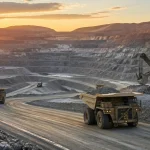
Mining trucks operate in an open-pit setting; such operations at Record Ridge are now paused.
Why the regulatory threshold is under scrutiny
A central issue in the case is British Columbia’s Environmental Assessment Act. In 2023, the province lowered the threshold that triggers a mandatory environmental assessment for industrial mineral quarries from 250,000 tonnes a year to 200,000 tonnes.
Critics say West High Yield adjusted its plans to stay just under the line. The company’s earlier proposal targeted 249,000 tonnes a year, only 1,000 tonnes below the old threshold. After the 2023 change, it resubmitted the project at 200,000 tonnes a year, exactly at the exemption line.
In August 2025, the Chief Environmental Assessment Officer ruled that a full provincial assessment was not required because the project remained within the threshold. That allowed the project to proceed under a Mines Act permit instead of the more extensive Environmental Assessment Office process. Opponents, however, say that approach overlooks the project’s total footprint and its projected 172-year mine life.
Indigenous consultation is at the center of the case
The legal fight is also about consultation and Indigenous rights. The Sinixt Confederacy, whose traditional territory covers the Columbia River basin in southeastern British Columbia and Washington State, has strongly opposed the project.
The Sinixt say the province did not meet its duty to consult before issuing the permit in October 2025. That claim carries added legal weight because of the Supreme Court of Canada’s 2021 decision in R. v. Desautel. The ruling confirmed that the Sinixt hold constitutionally protected rights in Canada, even though many members are based in the United States.
The Confederacy says the project sits on culturally significant land. It also says risks to local water systems that feed the Columbia River could affect traditional land use. Because of that, the injunction acts as a temporary safeguard until the courts decide whether the province met its constitutional obligations.

The BC Court of Appeal’s decision hinges on whether the project requires a more robust environmental review.
Environmental concerns extend beyond permitting
Environmental concerns have also sharpened opposition in Rossland and the surrounding region. The Record Ridge deposit is hosted in serpentinite rock, which can contain asbestos minerals, including chrysotile.
Opponents say blasting, crushing, and hauling 200,000 tonnes of rock a year could release harmful dust. West High Yield says its dust controls meet provincial standards. However, critics argue those plans have not faced the level of public and scientific review that would come with a full environmental assessment.
The site also lies near riparian areas. Because of that, local groups have raised concerns about runoff, sediment, and possible heavy metal impacts on nearby watersheds. Those risks are part of the upcoming judicial review. The court will consider whether the Chief Environmental Assessment Officer should have used discretionary powers to order a full assessment anyway.
Magnesium supply risks give the case wider relevance
The injunction comes as the global magnesium market remains highly concentrated. China produces nearly 90% of global supply, which leaves Western automotive and aerospace manufacturers exposed to disruption.
Canada has promoted itself as a reliable supplier of critical minerals with strong ESG standards. However, the Record Ridge case shows how difficult that strategy can be to execute. Governments want more domestic supply because of geopolitical risk, but projects still face local opposition, environmental review, and legal duties to consult Indigenous groups.
For investors, the delay adds another risk factor to mining investments and valuation metrics. West High Yield announced a definitive offtake agreement on March 12, 2026, to support the project’s financing outlook. However, the injunction and the $162,500 security bond requirement, which the company is challenging as insufficient, have increased uncertainty around timing and capital needs.

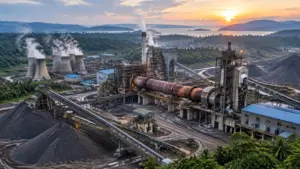
Advanced processing plants like this one are dependent on a steady supply of critical minerals like magnesium.
What happens at the May 5 judicial review
The injunction is temporary, not final. The BC Supreme Court had originally set the judicial review for August 2026. However, the hearing was moved forward to May 5, 2026, because the consequences for the company, the community, and the province are significant.
The court is expected to focus on three main questions:
- The threshold determination: Was the 200,000-tonne limit a genuine operating plan or an effort to avoid a higher level of review?
- The duty to consult: Did the BC Ministry of Mining meet its constitutional obligations to the Sinixt Confederacy?
- The CEAO’s discretion: Should the environmental risks linked to asbestos-bearing rock have triggered an assessment even below the formal threshold?
West High Yield says it has followed all applicable provincial rules. The company also says Record Ridge is an important part of Canada’s critical minerals strategy.

Development at the site, including drilling and ground clearing, is prohibited until the court rules in May.
Why the ruling could shape future BC mine permitting
The Record Ridge review could set an important precedent for industrial mineral projects in British Columbia. If the court sides with the Sinixt Confederacy and the Save Record Ridge Action Committee, it could narrow the use of threshold-based permitting strategies. If the court sides with West High Yield, however, it would reinforce the current Mines Act pathway for projects that remain below the environmental assessment trigger.
For the mining sector, the case underlines a familiar reality. Resource quality and project economics matter, but they are not enough on their own. In 2026, social license, environmental scrutiny, and Indigenous consultation remain central to mine development in Canada. Because of that, the May 5 hearing will be closely watched by operators, investors, and policymakers alike.







This article is materially wrong and should be corrected.
The current Record Ridge proposal is not 200,000 tonnes per year. It is approximately 63,500 tonnes per year. The “170-year mine life” claim is built on the wrong premise and leaves readers with a false impression of the permitted project.
The court posture is also wrong. The injunction is temporary. The judicial review was heard in B.C. Supreme Court and the decision is reserved. There is no final court ruling that the project required a full environmental assessment.
The threshold issue is badly distorted. This is not simply a company “staying under a number.” The real dispute is classification: whether this quarry-style industrial mineral project belongs under the industrial mineral / quarry pathway in the Reviewable Projects Regulation, or whether it was later reframed as a mineral mine for EA-threshold purposes. No final court order has resolved that issue.
The RPR includes a construction stone and industrial mineral quarry category with a 250,000-tonne threshold. That is central. Leaving it out while presenting the opposition narrative as settled fact is misleading.
The project is currently permitted as an industrial mineral mine under the Mines Act for 65000 mt a year 127000 pilot project and has undergone years of regulatory review and numerous environmental and technical reports since 2016. The article omits that context.
It also presents allegations about asbestos, water, runoff, Indigenous consultation, and environmental risk as if they are findings. They are not. They are disputed allegations in a live legal and regulatory matter.
This is how public records get polluted: wrong tonnage, inflated mine-life framing, blurred court status, omitted regulatory history, skipped RPR category, and opposition claims dressed up as fact.
Correct the article.
Hi Mike,
Thanks for reaching out and catching those details on our Record Ridge story. We really appreciate readers like you who keep us on our toes—accuracy is everything to us at Skillings.
We’ve personally gone through the article and updated it to reflect the facts you pointed out:
= Tonnage: Corrected the production rate to 63,500 tpy (down from the 200,000 tpy figure).
= Mine Life: Removed the “170-year mine life” claim.
= Court Status: Clarified that the B.C. Supreme Court has reserved its decision and that the current injunction is interim/temporary.
= Regulatory Context: Updated the classification details regarding the Reviewable Projects Regulation to accurately reflect the project’s status.
= Tone: Reframed the environmental and consultation allegations as disputed claims rather than established findings.
We also added a “Story Correction” tag to the headline to make sure the record is clear for everyone. You can see the updated piece here:
Thanks again for helping us get it right.
Best,
Skillings Mining Review