By Penny Langford
MIRANDA, Venezuela / GEORGETOWN, Guyana : In a dual development for South American nuclear security and energy transition, the United States has successfully completed the extraction of highly enriched uranium (HEU) from Venezuela, while neighboring Guyana is seeing its first major uranium exploration advancement in a decade.
The U.S. National Nuclear Security Administration (NNSA), in collaboration with the United Kingdom and the International Atomic Energy Agency (IAEA), finalized the removal of 13.5 kilograms of HEU from Venezuela’s RV-1 research reactor in late April 2026. Simultaneously, U92 Energy Corp. (TSXV: UTWO) has mobilized equipment for a 5,000-meter diamond drill program at its Kurupung project in Guyana, signaling a shift in the regional uranium landscape from legacy cleanup to active development.
Venezuela Mission: A Non-Proliferation Landmark
The removal of HEU from the Venezuelan Institute for Scientific Research (IVIC) in Miranda state marks the end of a multi-year diplomatic and technical negotiation. The RV-1 reactor, which had been decommissioned since 1991, held material enriched to over 20%, a threshold that poses significant proliferation risks if left unsecured.
More Read

Under heavy security and international oversight, the material was loaded into specialized lead-lined transport containers and moved to a coastal port for shipment. Officials confirmed the material has been safely received at the Savannah River Site in South Carolina, where it will be down-blended for use as low-enriched uranium in commercial or research reactors.

"This operation eliminates a potential security vulnerability in the region," a senior NNSA official stated during a briefing. "It demonstrates that even in complex geopolitical environments, technical cooperation on nuclear non-proliferation remains a priority for the international community."

More Read

Guyana’s Kurupung Project: Drilling for the Future
While Venezuela closes its chapter on HEU, Guyana is opening a new one in the critical minerals sector. U92 Energy has initiated a Phase One drill program at the Kurupung Uranium Project, the only active uranium asset in the country.
The project, located within the Aricheng Batholith, covers a 92-square-kilometer land package with a substantial historical data set. According to company filings, the Kurupung project hosts a historical resource estimate of 20.6 million pounds of $U_3O_8$, split between 10.6 million pounds in the Indicated category (0.072% $U_3O_8$) and 10 million pounds Inferred (0.067% $U_3O_8$).
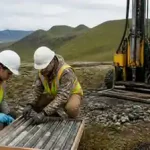
The 5,000-meter program, contracted to Orbit Garant, targets high-priority zones including Accori North C. The program aims to validate historical results and test for extensions of high-grade mineralization that remain open in all directions.
"The rig is on-site and we are focused on converting the massive historical database into a modern, compliant resource estimate," said a spokesperson for U92 Energy. "With the uranium spot price trading above $100 per pound, the economics of advanced-stage projects like Kurupung have shifted dramatically."

Uranium Security: The Global Supply Context
The divergence in these two stories highlights the growing tension between nuclear security and the urgent need for new supply. The global uranium market is currently facing a projected 40-million-pound deficit in 2026, exacerbated by the construction of 61 new nuclear reactors worldwide.
Guyana’s entry into the exploration race comes at a time when Western utilities are seeking to diversify supply away from traditional sources. The Kurupung project is noted for its low discovery costs: estimated at approximately US$0.31 per pound: and its location in a jurisdiction that has recently updated its mining regulations to support critical mineral development.
For investors, the Kurupung advancement provides a rare exposure to South American uranium. While other regional players like Peru are focusing on gold and copper: seen in Buenaventura's recent life-of-mine extensions: Guyana is positioning itself as a potential source of clean energy fuel.
Market Snapshot: Uranium Sector Indicators 2026
| Metric | Current Value (May 2026) | 12-Month Change |
|---|---|---|
| Uranium Spot Price ($/lb) | $104.50 | +18% |
| Global Production Deficit | 42.5M lbs | +6.2% |
| Active Reactors (Global) | 442 | +3 |
| Reactors Under Construction | 61 | +12% |
| Avg. Discovery Cost (U92) | $0.31/lb | N/A |
Technical Analysis: Drilling Targets at Kurupung
The current 5,000-meter program is the first major drilling in the district since the mid-2010s. U92 Energy’s technical team, supported by consultants from Watts, Griffis & McOuat (WGM), has reinterpreted approximately 129,000 meters of historical drilling.
Key areas of interest include:
- Accori North C: Previous drilling here intersected high-grade mineralization outside the current resource shell.
- Aricheng West: A structurally controlled zone with potential for strike extensions.
- Shear-Hosted Targets: Eight additional follow-up targets that have been identified but not yet fully tested by modern diamond drilling.
"The mineralization at Kurupung is hosted in shear zones within the batholith, a geological setting similar to some of the world’s most productive districts," noted a technical advisor to the project. "The goal of this 5,000-meter campaign is to demonstrate scale."

Strategic Realignment in South America
The successful U.S.-led operation in Venezuela and the commercial push in Guyana represent a broader strategic realignment. As countries move away from fossil fuels, the demand for uranium and lithium is driving a new wave of exploration.
While the lithium market has seen price volatility, the uranium market remains underpinned by long-term utility contracts and a lack of new "greenfield" discoveries over the last decade. U92 Energy’s milestone-driven approach reflects the "disciplined growth" currently demanded by the capital markets.
Guyana’s government has signaled its support for the project as part of its broader Low Carbon Development Strategy (LCDS). By facilitating uranium exploration, the country aims to become a significant player in the global energy supply chain, moving beyond its recent oil and gas success.
2026 Outlook: What to Watch
The coming months will be critical for both the non-proliferation and exploration fronts. In the U.S., the Savannah River Site will begin the processing of the Venezuelan HEU, a process expected to take several months. In Guyana, the first assay results from the Kurupung 5,000-meter program are expected by late Q3 2026.
If U92 Energy successfully validates the historical resource and expands the known mineralization, it could spark a renewed interest in South American uranium assets. Investors will be watching for the updated resource estimate, slated for year-end 2026, which will incorporate both the historical core data and the new Phase One drilling.

Featured Lead / M&A Snippet for Social Media:
☢️ Big shifts in South American Uranium: The U.S. completes the removal of 13.5kg of highly enriched uranium from Venezuela, closing a decade-long security gap. Meanwhile, U92 Energy (TSXV: UTWO) kicks off a 5,000m drill program at Guyana's Kurupung project. With spot prices >$100/lb, the race for secure supply is heating up. Read the full analysis at Skillings.net. #Uranium #MiningNews #Guyana #EnergySecurity #U92Energy
For more on the uranium sector and regional mining updates, visit our Uranium Market Outlook 2026 and follow our daily news feed.