By Penny Langford
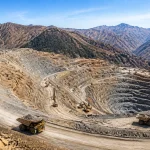
Nouveau Monde Graphite (NMG) officially commenced construction Wednesday at its Matawinie project in Quebec, which is set to become the largest graphite mine in the G7 once operational.
The project is a key pillar in Canada’s strategy to build an integrated electric vehicle (EV) battery supply chain.
Located in Saint-Michel-des-Saints, approximately 150 kilometers north of Montreal, the mine represents a significant shift in North American mineral sovereignty.

Annual production is projected at 106,000 tonnes of graphite concentrate over a 25-year mine life.

The project has secured $459 million in financing from Export Development Canada (EDC) and the Canada Infrastructure Bank.
Prime Minister Mark Carney and Quebec officials attended the groundbreaking, highlighting the mine's role in reducing North American dependence on Chinese graphite.

China currently accounts for nearly 80% of global graphite supply, a concentration that has long concerned Western policymakers and mining industry professionals.
NMG is also developing a downstream spherical graphite plant in Bécancour to process the mine's output into battery-grade material.
Construction is expected to support up to 1,000 jobs during the peak development phase.
The Matawinie project is being built as a zero-emission open-pit mine, utilizing an all-electric fleet of machinery.
NMG has partnered with Caterpillar to develop and deploy the heavy equipment required to meet these environmental mandates.
This move aligns with Quebec's broader strategy to position itself as a "green" hub for the global energy transition.
The 106,000-tonne annual output will specifically target the anode manufacturing sector for lithium-ion batteries.
Government officials emphasized that the project is not just a mining venture but a strategic industrial asset.
Prime Minister Carney stated that the mine is essential for the "de-risking of the continental supply chain."
Quebec's Minister of Natural Resources noted that the province's hydroelectric grid provides a unique competitive advantage for carbon-neutral processing.
The financing package includes a US$290 million senior secured term loan and a US$45 million cost-overrun facility.
These funds will cover the initial capital expenditures required to bring the site into commercial production.
Total initial capital costs for the Phase 2 mine and concentrator are estimated at US$421 million.
NMG has already secured long-term offtake agreements for approximately 75% of its planned production.
Key customers include Panasonic Energy Co. and Traxys North America LLC, providing revenue visibility for the next two decades.
The project is situated on the Matawinie property, which holds probable reserves of 61.7 million tonnes at 4.23% graphitic carbon.
The strip ratio for the life of the mine is estimated at a highly efficient 1.16 to 1.
Construction at the site includes the installation of a high-capacity concentrator and the development of the primary pit.
The integrated Bécancour plant is designed to produce 44,000 tonnes of active anode material annually.
This facility will receive the concentrate from Matawinie and transform it into spherical graphite through chemical purification.
The Bécancour industrial park is rapidly becoming a cluster for battery materials, with several other major players established nearby.
Industry analysts suggest that the completion of the Matawinie mine will make Canada the primary non-Chinese source of graphite.
China’s recent export controls on graphite products have accelerated the urgency for domestic Western production.
Graphite is the largest component of an EV battery by weight, making it a critical bottleneck in the transition to electric mobility.
The Matawinie project is expected to reach full commercial production by late 2027 or early 2028.
NMG’s commitment to a zero-emission fleet is expected to reduce carbon dioxide emissions by over 300,000 tonnes over the mine's life.
The transition to autonomous haulage and electric technology is a central part of the company's operational philosophy.
The project also includes a collaboration agreement with the Atikamekw First Nation of Manawan.
This agreement ensures community participation in environmental monitoring and economic benefits throughout the mine life.
Local employment is a priority, with many of the 1,000 construction roles expected to be filled by residents of the Lanaudière region.
The mine's infrastructure will include advanced water management systems to protect local watersheds.
NMG has completed over 80% of the detailed engineering for the project prior to the official construction start.
Site preparation and early works were concluded earlier this year, allowing heavy machinery to begin earthmoving immediately.
The Canada Infrastructure Bank’s involvement underscores the federal government’s view of the mine as critical public-interest infrastructure.
Export Development Canada’s role highlights the export potential of Quebec-refined graphite to the United States and Europe.
The global demand for graphite is expected to triple by 2030 as EV adoption continues to climb.
Despite the recent softening in some commodity markets, the 2026 outlook for critical minerals remains bullish due to structural supply deficits.
The Matawinie mine is anticipated to operate at the lower end of the global cost curve due to its high-grade ore and proximity to infrastructure.
Logistics for the project are simplified by the site's accessibility via existing road networks and proximity to the Port of Montreal.
NMG's shares have seen increased interest from institutional investors focused on ESG-compliant mineral extraction.
The company is positioning itself as a transparent, sustainable alternative to the opaque supply chains often associated with critical minerals.
The groundbreaking ceremony was held near the site of the future processing plant, where foundations are currently being poured.
Engineers at the site confirmed that the first fleet of electric trucks is scheduled for delivery in the coming months.
The project’s tailings management facility will utilize a co-disposal method, which reduces the environmental footprint and improves stability.
This method involves mixing tailings with waste rock to create a solid, stable landform.
The project has undergone rigorous environmental assessments at both the provincial and federal levels.
The Bureau d'audiences publiques sur l'environnement (BAPE) issued a favorable report on the project in 2020.
Subsequent optimizations have further reduced the planned land usage for the site.
The Matawinie project is expected to contribute billions of dollars to Quebec’s GDP over its 25-year lifespan.
Tax revenues from the operation will support local municipal services and regional development projects.
The Bécancour downstream facility is also expected to create approximately 200 permanent high-skilled jobs.
NMG’s integrated model from mine to battery-grade material is unique in the Western world.
Most other graphite developers focus on either mining or processing, rather than a full vertical integration.
This model allows for better quality control and a clearer chain of custody for battery manufacturers.
The "Matawinie" brand is being marketed to automakers as a premium, traceable source of graphite.
Recent legislation in the United States and Europe has mandated stricter reporting on the origin of minerals used in EVs.
The Inflation Reduction Act in the U.S. provides incentives for vehicles that use minerals sourced from North American allies.
This regulatory environment has made the Matawinie project a focal point for North American battery strategy.
During the ceremony, Prime Minister Carney noted that Canada must "not only mine the future but refine it."
Officials from the Lanaudière regional government expressed optimism about the long-term economic stability the mine provides.
The project’s construction schedule remains on track despite global inflationary pressures in the industrial sector.
NMG has locked in several key contracts for long-lead equipment to mitigate supply chain delays.
The company’s management team stated that the $459 million financing package provides sufficient liquidity to reach commercial production.
Contingency funds are included in the financing to account for potential cost overruns during the two-year build.
The Matawinie mine is expected to be a lighthouse project for the Canadian mining industry’s digital transformation.
Integrated sensors and real-time data analytics will be used to optimize the electric fleet’s performance.
This technology is expected to lower operating costs by reducing energy waste and maintenance downtime.
As construction progresses, NMG plans to provide regular updates to shareholders and the local community.
The project's success is seen as a bellwether for other critical mineral projects in the Canadian Shield.
With the first shovels now in the ground, Quebec has cemented its position as a global leader in the graphite sector.
The focus now shifts to the rapid scaling of the Bécancour facility to meet the delivery timelines of major EV manufacturers.
The Matawinie mine is the first of what policymakers hope will be many "integrated mineral solutions" in the region.
Final commissioning of the concentrator is expected to take place in the fourth quarter of 2027.
The mining world will be watching Matawinie closely as a test case for large-scale electric open-pit operations.
For now, the site is a hive of activity as the G7's largest graphite mine finally takes shape.