By Penny Langford
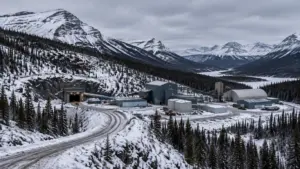
The Canadian Arctic is reclaiming its status as a high-stakes frontier for the global gold industry. Agnico Eagle Mines has officially greenlit a massive US$2.4 billion redevelopment plan for the Hope Bay project in Nunavut. This decision ends years of uncertainty for an asset that once sat at the center of a geopolitical firestorm.
Hope Bay is located 120 miles north of the Arctic Circle. It represents one of the most significant gold deposits in North America. However, its path to production has been anything but smooth. After a failed takeover by Chinese interests and a period of care and maintenance, the project is now positioned as a cornerstone of Agnico Eagle’s 2030 growth strategy.
A Geopolitical Pivot: Securing the North
The story of Hope Bay’s resurrection began with a national security intervention. In 2020, the project was owned by TMAC Resources. At the time, TMAC faced mounting debt and operational hurdles. Shandong Gold Mining, a Chinese state-linked entity, moved to acquire the site for C$230 million.
The Canadian government intervened. Citing the Investment Canada Act, Ottawa blocked the sale in December 2020. The decision centered on Arctic sovereignty. Hope Bay sits near the Northwest Passage, a region of growing strategic importance as polar ice recedes.

Agnico Eagle stepped in weeks later. They acquired TMAC for approximately C$287 million. The deal kept the critical infrastructure in Canadian hands. Since then, Agnico has spent years re-engineering the project. They shifted from a small-scale, high-cost operation to a massive, long-life industrial hub.
The $2.4 Billion Redevelopment Blueprint
Agnico Eagle’s new plan is aggressive. The company will invest US$2.4 billion in upfront capital to transform Hope Bay. This is not a simple restart. It is a complete overhaul of the existing mine plan.

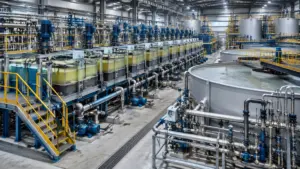
The redevelopment focuses on three main deposits: Doris, Madrid, and Boston. Agnico plans to build a new 4,000-tonne-per-day processing plant. This facility will replace the underperforming mill installed by previous owners.

Key technical milestones include:
- Infrastructure: A new diesel power plant and an expanded permanent camp.
- Underground Development: Extensive tunneling to connect the Madrid and Boston deposits.
- Logistics: Enhancing the sealift and airstrip capacity to handle the increased scale.
The company estimates sustaining capital at US$1.1 billion over the life of the mine. At current gold prices, the project offers a robust internal rate of return (IRR).
Target: 400,000 Ounces Per Year
Agnico Eagle is targeting an annual production profile of 400,000 to 435,000 ounces of gold. This would make Hope Bay one of the largest gold mines in Canada.
The project currently has an 11-year mine life. However, Agnico executives see significant upside. The Hope Bay greenstone belt is roughly 80 kilometers long. Exploration has only scratched the surface. The company is betting that Hope Bay will eventually rival its Meliadine and Meadowbank operations in Nunavut.
By 2030, Agnico aims to produce over 1 million ounces of gold annually from Nunavut alone. This regional focus allows for shared logistics, supply chains, and workforce development. You can see similar strategic shifts in other sectors, such as how SMRs and data centers are concentrating energy demand in specific hubs.

The Green Frontier: Inuit-Led Wind Energy
Operating in the Arctic requires immense energy. Traditionally, this meant burning millions of liters of diesel. Agnico Eagle is shifting this paradigm through a unique Inuit-led partnership.
The company has partnered with Tarquti Energy, an Inuit-owned firm. Together, they are developing a wind power and battery storage project. The federal government is providing C$25 million in funding for this initiative.
The project includes:
- 4.2 MW of wind capacity: Harvesting the consistent Arctic winds.
- 4 MW of battery storage: Smoothing out the power supply for the mine's grid.
This partnership is a model for modern ESG (Environmental, Social, and Governance) standards. It ensures that Inuit communities own a stake in the energy infrastructure. It also significantly reduces the project’s carbon footprint. For investors, this reduces long-term carbon tax exposure and operational risk. This trend mirrors the autonomous haulage transition seen in other global mining jurisdictions.
2026 Outlook: Pre-Construction Momentum
As we move through 2026, Hope Bay is in a critical pre-construction phase. Agnico is finalizing the detailed engineering and procurement for the new mill.
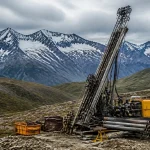
The 2026 focus remains on exploration and site preparation. The company is drilling deeper into the Madrid deposit to firm up the 2030 production start date. Investors should watch for updates on the environmental impact assessment (EIA) amendments required for the larger mill capacity.
The project is expected to support 2,000 jobs during its peak. This will provide a massive economic boost to Nunavut. It also solidifies Agnico Eagle's position as the primary economic driver in the Canadian North.

Market Impact and Regional Significance
The resurrection of Hope Bay is a signal to the global market. It proves that massive Arctic projects are viable if they have the right scale and sovereign support.
While gold remains the primary focus, the infrastructure developed at Hope Bay could pave the way for other critical mineral projects in the region. The Northwest Passage is becoming a corridor for resource security. As we’ve noted in our analysis of the copper deficit, secure domestic supply chains are becoming a priority for Western governments.
Agnico Eagle is not just building a mine. It is building a regional stronghold. With US$2.4 billion on the line, the "Arctic Gold Rush" is no longer a prospect: it is a reality.

Key Data Points: Hope Bay Redevelopment
| Metric | Estimate |
|---|---|
| Initial Capital Investment | US$2.4 Billion |
| Sustaining Capital (Life of Mine) | US$1.1 Billion |
| Target Annual Production | 400,000 – 435,000 oz Gold |
| Targeted Cash Costs | < US$1,000 / oz |
| Anticipated Production Start | 2030 |
| Estimated Employment | 2,000 (Direct & Indirect) |
| Renewable Energy Capacity | 4.2 MW Wind + 4 MW Battery |
LinkedIn/X Shareable Snippet:
Agnico Eagle has greenlit a $2.4B redevelopment of the Hope Bay gold project in Nunavut. From a blocked Chinese takeover to a 400k oz/year Inuit-partnered powerhouse, the Arctic gold rush is back. Read the full analysis of Agnico's 2030 roadmap and the national security context. #MiningNews #GoldMining #Arctic #ESG #AgnicoEagle #MiningFinance