By Penny Langford
The global race to secure battery materials reached a critical milestone this month in Saint‑Michel‑des‑Saints, Québec. Nouveau Monde Graphite (NMG) officially commenced full-scale construction at its Matawinie graphite mine. This move signals a major shift in the Western effort to decouple electric vehicle (EV) supply chains from Chinese dominance.
For decades, China has maintained a near-monopoly on the production and processing of natural graphite. Graphite serves as the primary material for the anodes in lithium-ion batteries. Without it, the energy transition stalls. The groundbreaking at Matawinie, supported by the Canadian federal government and G7 partners, represents more than just a new mine. It is a strategic hedge against geopolitical supply risks.
The Matawinie Milestone: Construction Begins
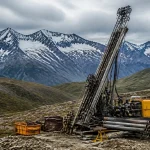
NMG’s Matawinie project is now moving from the drawing board to the dirt. While early site preparation began in 2021, the May 2026 groundbreaking marks the start of Phase 2: full mine construction and commissioning.

The project is ambitious in scale and scope. At full capacity, Matawinie is expected to produce approximately 106,000 tonnes of natural graphite per year. This output is roughly eight times Canada’s current total graphite production. The mine has a projected life of 25 years, positioning Québec as a primary hub for G7 mineral security.

Construction and commissioning are slated to run for approximately 31 months. NMG targets commercial production by mid-to-late 2028. To ensure the project moves at the speed of the market, the Canadian government has designated Matawinie a “major project of national interest.” This status allows the Bureau des grands projets to fast-track coordination across federal departments.
Integrated Value Chains: The Bécancour Connection
A mine alone is not enough to break a monopoly. China’s true strength lies in its processing capacity. To counter this, NMG is developing the Bécancour battery materials plant near Trois‑Rivières.

Matawinie will provide the raw feedstock. Bécancour will refine that material into spherical, battery-grade anode material. This "mine-to-anode" strategy creates a fully integrated Canadian value chain. By eliminating the need to ship raw ore overseas for processing, NMG reduces both costs and carbon footprints.

NMG is targeting a final investment decision (FID) for the Bécancour plant in the second half of 2026. The facility is already anchored by high-profile off-take agreements. Panasonic Energy, a major supplier to the global EV market, has secured 13,000 tonnes per year of anode material from the site. These agreements, which cover over 70% of planned output, provide the financial stability required for such a massive capital expenditure.
Geopolitical Strategy: The G7 vs. The Monopoly
The timing of NMG’s construction start is no coincidence. Graphite has become a flashpoint in the trade tensions between the West and China. In late 2023, China implemented export controls on certain graphite products, citing national security. For G7 nations, this was a wake-up call.
The G7 Critical Minerals Production Alliance is now actively funding and fast-tracking projects like Matawinie. The goal is "friend-shoring": moving critical supply chains to allied nations with shared environmental and labor standards.
Table 1: Global Graphite Landscape (2026 Outlook)
| Metric | China | Canada (NMG/Others) | G7 Strategy |
|---|---|---|---|
| Market Share (Processing) | ~90% | Growing | Diversification to 30%+ by 2030 |
| Energy Source | Coal-heavy grid | 100% Hydropower | Net-zero alignment |
| Supply Risk | High (Export controls) | Low (Domestic/Allied) | Regional hubs |
| Primary Project | Heilongjiang Hub | Matawinie/Bécancour | Integrated corridors |
By leveraging Québec’s low-cost, low-carbon hydropower, NMG is positioning its graphite as the "cleanest" in the world. This is a significant competitive advantage as automakers face increasing pressure to report on Scope 3 emissions.
ESG and Operational Technology
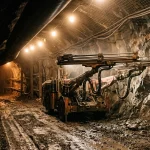
The Matawinie mine is designed to be the world's first all-electric open-pit mine. NMG is partnering with heavy equipment manufacturers to deploy zero-emission haul trucks and shovels. This commitment to electrification aligns with the broader ESG (Environmental, Social, and Governance) goals of its investors and customers.

Operational efficiency is also driven by advanced telemetry and autonomous systems. In a high-labor-cost environment like Québec, automation is not just a luxury; it is a necessity for maintaining competitiveness against low-cost producers in Africa and Asia. The use of real-time data monitoring ensures that the project hits its aggressive production targets while maintaining the highest safety standards.
The Road to 2028: Risks and Opportunities
While the start of construction is a victory, the road to 2028 is not without hurdles. Large-scale mining projects often face inflationary pressures and labor shortages. NMG must also navigate the volatile pricing of the graphite market, which remains influenced by Chinese inventory levels.
However, the floor for graphite demand is rising. Every EV battery requires between 50 and 100 kilograms of graphite: significantly more than the amount of lithium used. As the world shifts toward autonomous haulage and more efficient extraction, the demand for high-purity natural graphite will only intensify.
The G7 push is providing the "geopolitical floor" that projects like Matawinie need. With the support of federal grants, off-take deals with Panasonic, and a strategic location in the heart of Québec’s battery valley, Nouveau Monde Graphite is no longer just a junior miner. It is the spearhead of a new, Western-aligned critical minerals industry.
Summary of Impact
The Matawinie construction start is a definitive signal to the market. The era of total reliance on a single source for battery anodes is ending. For operators and investors, the project offers a blueprint for how to build a resilient, ESG-compliant supply chain in a fragmented world.
As we look toward the 2028 production window, the focus will shift from permitting to execution. If NMG can deliver on its 106,000-tonne promise, it will not just be breaking a monopoly: it will be building the foundation for the next century of industrial energy.
Shareable Social Media Snippet (LinkedIn/X)
Graphite Monopoly Under Pressure: Nouveau Monde Graphite has officially broken ground on the Matawinie mine in Québec. With 106k tonnes/year planned, this G7-backed project is the cornerstone of the West’s plan to decouple from China’s battery anode dominance. Read how NMG and Panasonic are reshaping the EV supply chain: [Link] #MiningNews #Graphite #EVSupplyChain #SkillingsMining
References and Further Reading: