By Penny Langford
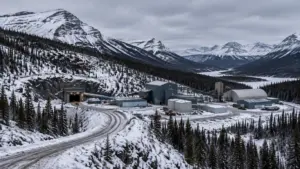
The race to secure the North American electric vehicle (EV) battery supply chain has reached a critical milestone in the forests of Saint-Michel-des-Saints, Quebec. Nouveau Monde Graphite (NMG) is currently transitioning its Matawinie project from site preparation into full-scale construction, positioning it as the only significant graphite mine under development in a G7 country.
With over US$600 million in coordinated financing and strategic offtake agreements with global giants like Panasonic Energy and the Government of Canada, Matawinie is no longer just a project on paper: it is a cornerstone of the West’s strategy to decouple its energy transition from Chinese market dominance.
The Strategic Imperative: Breaking the Graphite Monopoly
Graphite is the single largest component of an EV battery by weight, yet the supply chain remains heavily centralized. China currently controls nearly 70% of global natural graphite production and over 90% of the processing required to create anode-grade material. For North American automakers, this creates a precarious bottleneck, exacerbated by China’s 2023 decision to impose export permits on graphite products.
The Matawinie Mine is designed to address this vulnerability directly. By integrating mining operations at Matawinie with a dedicated battery material refinery in Bécancour, Quebec, NMG is creating a vertical pipeline: from the pit to the battery plant: entirely within the borders of a critical minerals friendly jurisdiction.

Construction Progress and Technical Milestones
As of early 2026, the Matawinie project is described as "shovel-ready" and substantially de-risked. Detailed engineering is approximately 80% complete, and more than half of the capital expenditure (CAPEX) contracts have been signed.
The transition to full construction follows several years of groundwork:
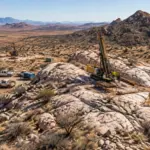
- Environmental Approval: The project received its environmental decree in 2021, one of the most rigorous regulatory hurdles in Quebec.
- Infrastructure Ready: Access roads and initial civil works for the industrial platform are complete.
- Community Integration: NMG signed an Impact and Benefit Agreement (IBA) with the Atikamekw First Nation of Manawan, ensuring local participation and social license.
The construction phase is expected to last between 18 and 22 months, putting the mine on a trajectory for commercial production within the next two years.

Financing the Future: The US$600M+ Stack
Developing a tier-one graphite asset in a high-cost jurisdiction requires a sophisticated capital structure. NMG has successfully assembled a financing package that exceeds US$600 million, heavily backed by government institutions and strategic commercial partners.
The financing breaks down into several key tranches:
- Senior Debt Facility (C$459M): Provided by the Canada Infrastructure Bank (CIB) and Export Development Canada (EDC). This facility is dedicated to the development, construction, and commissioning of the mine.
- Strategic Equity (C$113M): The Canada Growth Fund (CGF) committed substantial capital as part of a larger C$411 million financing round that included Mitsui, Pallinghurst, and Investissement Québec.
- Innovation Grants: Natural Resources Canada (NRCan) provided C$4.4 million specifically for the deployment of zero-emission heavy equipment, part of the project’s all-electric mandate.
This level of state involvement underscores the project’s status as a matter of national economic security rather than a purely commercial venture.
Commercial De-risking: Offtake Agreements
Construction is moving forward with the confidence of guaranteed buyers. NMG has secured high-profile offtake agreements that cover a significant portion of Matawinie’s projected annual output:
- Panasonic Energy: 25% of Matawinie’s production is committed to Panasonic, which will use the material in its U.S.-based battery gigafactories. This agreement is a primary driver for the integrated Bécancour refinery.
- Government of Canada/G7: In a rare move for a government body, a 7-year offtake agreement was signed for 30,000 tonnes per year of graphite concentrate. This material is destined for a national stockpile and strategic applications, including defense.
- Traxys: A major offtake focused on the industrial and refractory markets, ensuring that the non-battery grade portions of the ore body also find immediate revenue streams.
Market Snapshot: Matawinie Project Economics
The following table highlights the projected economic performance of the Matawinie operation, based on current feasibility data and offtake weighted pricing.
| Metric | Value (Projected) |
|---|---|
| Annual Production (Concentrate) | 103,000 tonnes |
| Mine Life | 26 Years |
| Average Realized Price (Offtake Weighted) | US$1,334 / tonne |
| Projected Cash Cost (FOB) | US$419 / tonne |
| Operating Margin | ~68% |
| Power Source | 100% Quebec Hydropower |
Technological Innovation: The All-Electric Mine
Matawinie is being built as a "Green Mine," a concept that is increasingly necessary for automakers trying to lower the Scope 3 emissions of their supply chains. The project aims to be the first all-electric open-pit mine in the world.
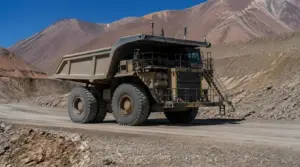
Through a collaboration with Caterpillar, NMG is deploying a zero-emission fleet, including electric hydraulic excavators and haul trucks. Combined with Quebec’s low-cost hydropower, the project is expected to have one of the lowest carbon footprints in the global graphite industry. This "green premium" is a significant competitive advantage when bidding for contracts with ESG-conscious EV manufacturers.

Geopolitical Impact: The G7 Critical Minerals Alliance
At the 2025 G7 Leaders’ Summit, the Matawinie project was formally recognized as a strategic asset under the Critical Minerals Production Alliance. This alignment is designed to counter the volatility of global markets and provide G7 nations with a "trusted" source of supply.
For mining industry professionals, the Matawinie story is a blueprint for how large-scale resource projects will be built in the next decade: a combination of high-tech automation, state-backed financing, and deep integration with downstream manufacturers.
Risks and Outlook
Despite the strong tailwinds, the project is not without risks. Like all major mining developments in northern climates, NMG must navigate seasonal construction windows and the logistical challenges of a remote site. Additionally, while the current margin profile is robust, the graphite market remains subject to price volatility and the potential emergence of synthetic graphite as a viable (though energy-intensive) alternative.
However, the 2026 outlook for Matawinie remains overwhelmingly bullish. With construction teams mobilized and the capital stack largely secured, the focus now shifts to execution.
About the Author: Penny Langford is a lead analyst for Skillings Mining Review, specializing in critical minerals and the energy transition. For more insights on the global mining landscape, visit our About Us page.
Shareable Social Media Snippet (LinkedIn/X)
?️ Building the G7's Graphite Anchor: Nouveau Monde Graphite's Matawinie project is officially under construction in Quebec. With US$600M+ in funding and offtakes from Panasonic and the Canadian Government, this all-electric mine is the West's answer to China's graphite dominance. #Mining #Graphite #EV #CriticalMinerals #QuebecMining #SkillingsMining