By Charles Pitts

The global mining industry is undergoing a fundamental reclassification of copper. Once viewed primarily through the lens of traditional industrial activity and residential construction, the red metal has transitioned into a “tech-critical” mineral. As we move into 2026, the primary catalyst for this shift is the AI-energy nexus: the intersection of massive artificial intelligence compute requirements and the physical infrastructure needed to power them.
Data centers, particularly those optimized for AI training and high-density workloads, have emerged as the new “mega-consumers” of copper. While traditional data centers were already significant users of the metal for power distribution and cooling, the shift toward “AI factories” has nearly doubled the copper intensity per megawatt (MW) of capacity.
The Rise of the Mega-Consumer: Why 2026 Matters
The year 2026 represents a critical juncture for the copper market. Industry analysts, including those at BloombergNEF and S&P Global, project that the structural supply gap will begin to widen significantly during this period as the first wave of massive AI-driven capital expenditures (capex) from 2024–2025 results in commissioned, operational facilities.
Traditional cloud and enterprise data centers typically require between 20 and 30 metric tonnes of copper per MW. However, high-density AI data centers: characterized by liquid-cooled racks and power densities exceeding 50 kW to 100 kW per rack: require significantly more. Current data suggests these facilities consume between 40 and 70 metric tonnes per MW.
More Read

This increased intensity is driven by three primary factors:

- Power Distribution: Higher power requirements per rack necessitate larger busways, thicker cabling, and more robust switchgear.
- Cooling Infrastructure: The shift from air to liquid cooling involves extensive copper-based heat exchangers, piping, and pump systems.
- Redundancy Requirements: Tier III and IV data centers, which house the most valuable AI training models, often utilize 2N or N+1 power paths, effectively doubling the physical infrastructure needed for reliability.
Quantifying the Impact: The 50-Tonne Rule
For investors and operations managers, the “50-tonne rule” has become a useful benchmark for modeling upcoming demand. If we assume a central estimate of 50 metric tonnes of copper per MW for AI-optimized builds, the scale of the demand shock becomes clear.
2026 Copper Market Snapshot: Data Center Demand
| Metric | 2026 Base Case Forecast | 2026 Bull Case Forecast |
|---|---|---|
| Total DC Copper Demand | ~300,000 tonnes | ~400,000+ tonnes |
| Copper Intensity (AI-Factory) | 50 t/MW | 65 t/MW |
| Projected Annual Deficit | 250,000 tonnes | 500,000+ tonnes |
| Average Price (LME Cash) | $11,000/tonne | $13,500/tonne |
Note: Data synthesized from S&P Global and Skillings internal market analysis.
More Read


High-density power distribution systems in modern data centers are primary drivers of increased copper intensity.
Copper Price Forecast 2026: Drivers and Scenarios
The market consensus for 2026 points to a tightening supply-demand balance, with AI-related demand serving as a “new floor” for prices. Unlike traditional industrial demand, which is highly sensitive to general economic cycles, the build-out of AI infrastructure is currently viewed as a strategic necessity by major hyperscalers (Microsoft, Google, Meta, and AWS), making this demand segment relatively price-inelastic.
Base Case: $10,000 – $12,000 per Tonne
In this scenario, global economic growth remains steady, and the AI build-out proceeds along current aggressive trajectories. While incremental supply from projects like Fuerte Metals or major mid-tier expansions helps mitigate the shortfall, it is insufficient to close the gap. Prices remain elevated, incentivizing scrap recovery and secondary production.
Bull Case: $12,500 – $15,000 per Tonne
The bull case assumes that AI capex exceeds expectations and coincides with a faster-than-anticipated rollout of grid infrastructure for the energy transition. If major copper projects in jurisdictions with high geopolitical risk face delays, the resulting supply squeeze could push prices toward all-time highs. This scenario would significantly benefit top mid-tier dividend payers with low-cost production profiles.
Bear Case: $7,500 – $9,000 per Tonne
A major global recession or a significant “AI winter” where tech companies scale back infrastructure spending could see prices retract. However, given the long-term nature of the energy transition, any price drop toward $7,500 would likely trigger significant “buy the dip” activity from long-term institutional investors.
Supply-Side Constraints: Why the Response is Lagging
The mining industry faces a significant challenge in responding to this surge in demand. The lead time for a new greenfield copper mine, from discovery to first production, often exceeds 10 to 15 years. Environmental regulations, permitting hurdles, and the increasing complexity of ore bodies mean that “quick wins” in supply are rare.

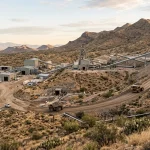
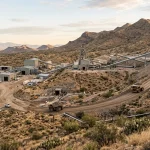
Scale and complexity of mineral processing infrastructure contribute to long lead times for new copper supply.
Most of the supply additions slated for 2026 are brownfield expansions of existing operations. While these are more capital-efficient, they are often just enough to offset declining grades at older mines. This lack of significant new supply is why Skillings’ tracking of copper stocks remains a priority for analysts looking for exposure to this trend.
The Geopolitical Dimension
The “race for copper” is also becoming a matter of national security. As data centers are now critical infrastructure for sovereign AI capabilities, governments are increasingly involved in securing supply chains. We are seeing more frequent M&A activity and strategic partnerships between tech giants and mining majors.
The focus on critical minerals has led to a re-evaluation of mining jurisdictions. Projects that were once considered marginal are being revisited due to their proximity to end-markets or their favorable ESG profiles. The “green premium” for responsibly sourced copper is likely to become more pronounced by 2026, as data center operators seek to minimize the Scope 3 emissions of their hardware.
Operational Implications for the Mining Sector
For mining operators, the AI-energy nexus is a double-edged sword. While it drives the price of their primary product, it also increases the cost of their own digital transformations. Modern mines are becoming “data centers with pits,” utilizing autonomous haulage, real-time telemetry, and AI-driven predictive maintenance.
The infrastructure required to run these “smart mines” is itself a consumer of copper. An ultra-class mining haul truck today carries more telemetry and electrical wiring than its predecessors, mirroring the broader trend of electrification and digitization across the industry.
Conclusion: Preparing for a Copper-Constrained 2026
The convergence of AI growth and the energy transition has created a perfect storm for copper demand. Data centers are no longer just facilities for storing data; they are the engines of the 2026 economy, and they are built on a foundation of copper.
For investors, the key is identifying companies with the operational leverage to capitalize on higher prices while navigating the inflationary pressures of a tight market. For operators, the focus remains on efficiency and the adoption of technologies that can maximize recovery from existing ore bodies.
As we move toward 2026, the narrative is clear: the digital world is inextricably linked to the physical reality of mineral extraction. The AI-energy nexus has guaranteed that copper will remain at the center of the global economic stage for the foreseeable future.