By Charles Pitts

The global nickel market in 2026 has reached a definitive crossroads. What was once a relatively unified commodity market has split into two distinct tiers: high-volume, carbon-intensive supply from Indonesia and a premium-priced, ESG-compliant “green nickel” segment emerging from Western jurisdictions. As the industry grapples with a persistent supply glut from the East, the “Great Bifurcation” is no longer a theoretical forecast: it is the operational reality for every battery material analyst and resource investor.
For those tracking mining stocks to watch 2026, the distinction between these two supply chains is the primary driver of valuation. While the London Metal Exchange (LME) continues to serve as the global price floor, the real action is happening in bilateral offtake agreements where carbon footprints are scrutinized as closely as nickel purity.
The Indonesian Juggernaut: The “OPEC of Nickel”
Indonesia now controls nearly 65% of the world’s mined nickel supply. In 2026, the nation has effectively solidified its role as the “OPEC of nickel,” utilizing a sophisticated system of one-year production quotas to maintain a price floor near US$18,500 per tonne. This policy shift, moving away from multi-year approvals, has introduced a new level of volatility and political leverage into the market.
The backbone of this expansion is High-Pressure Acid Leach (HPAL) technology. By converting low-grade laterite ores into mixed hydroxide precipitate (MHP), Indonesia has successfully bridged the gap between stainless steel feed and battery-grade Class 1 nickel. However, this volume comes at an environmental cost. Most Indonesian HPAL plants remain tethered to captive coal-fired power plants, creating a carbon intensity that many Western OEMs are increasingly hesitant to include in their Scope 3 emissions reporting.
More Read


Indonesian HPAL facilities have become the primary source of global nickel growth, though carbon intensity remains a key concern for Western buyers.

The Rise of the Green Premium
In response to the Indonesian surge, producers in Canada, Australia, and Scandinavia have doubled down on the “Green Nickel” narrative. This isn’t just marketing; it is a survival strategy. With the European Union’s Carbon Border Adjustment Mechanism (CBAM) entering a more aggressive phase in 2026 and the U.S. Inflation Reduction Act (IRA) maintaining strict “friend-shoring” requirements, the price gap is widening.
Current market data indicates that “Green” nickel: defined as metal produced with less than 10 tonnes of CO2 per tonne of nickel: is fetching a premium of 5% to 15% in long-term offtake contracts.
More Read

2026 Nickel Market Snapshot
| Metric | 2026 Forecast (Base Case) | 2026 Forecast (Bull Case) |
|---|---|---|
| LME Average Price | US$19,200 / t | US$22,500 / t |
| Global Demand Growth | 6.8% YoY | 8.2% YoY |
| Indonesian Market Share | 64% | 61% (due to quota caps) |
| “Green” Premium Range | US$800 – $1,500 / t | US$2,000+ / t |
| Primary Demand Driver | EV Batteries (NCM/NCA) | Grid-Scale Storage |
Mining Stocks to Watch 2026: Navigating the Split
Investors are no longer buying “nickel” as a monolith. Instead, portfolios are being balanced between high-yield Indonesian exposure and high-growth Western “green” developers. For a broader look at the sector, our analysis on execution over speculation highlights how mid-tier players are managing these macro shifts.
The Indonesian/HPAL Plays
- PT Vale Indonesia (INCO): Despite recent quota-related production halts, PT Vale remains the premier vehicle for Indonesian exposure, recently benefiting from a more streamlined partnership with state-owned entities.
- Nickel Industries (NIC): Highly leveraged to the Indonesian NPI-to-matte conversion, NIC continues to offer high beta to the LME price but carries a higher ESG discount in Western markets.
The Western “Green” Leaders
- Canada Nickel Company (CNC): The Crawford project in Ontario is the industry’s “Green Nickel” poster child. By utilizing carbon-sequestering tailings and a zero-carbon power grid, CNC is positioning itself to be the primary supplier for the North American EV supply chain.
- BHP (BHP): Through its Nickel West division, BHP remains the most liquid way to play the high-grade sulphide market. The company’s focus on “future-facing commodities” has kept it at the top of the critical minerals watchlist.
- Talon Metals (TLO): With its Tesla offtake agreement firmly in place, Talon’s Tamarack project in Minnesota is a critical litmus test for domestic U.S. nickel production and permitting efficiency.

Western developers are prioritizing high-grade sulphide deposits, which typically offer a lower carbon footprint than Indonesian laterites.
Operational Technology and ESG Tracking
The bifurcation of the market has also accelerated the adoption of blockchain-based mineral tracking. In 2026, it is no longer enough to claim your nickel is “green.” Every tonne must be accompanied by a digital “battery passport” that verifies its origin and carbon footprint from the mine gate to the cathode plant.
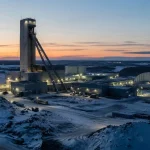
Facilities like the one shown below are now standard for top-tier producers, integrating ESG metrics directly into the daily production dashboards.

2026 Outlook: The Strategic Choice for Investors
As we move toward 2027, the nickel market is likely to remain in a state of “unstable equilibrium.” While the massive volumes coming out of Indonesia prevent a return to the US$30,000/t spikes of years past, the structural deficit in IRA-compliant, low-carbon nickel creates a lucrative niche for Western miners.
For analysts, the key metric to watch is the “Spread of Divergence”: the delta between the LME spot price and the realized price of ESG-certified offtakes. Those who can navigate this spread will find the most resilient opportunities in the mining sector this decade.
The great bifurcation is here. In the 2026 nickel market, the question is no longer how much you produce, but how you produce it.